


What makes coffee in Vietnam taste and feel different?
Vietnamese coffee culture includes both quick everyday drinking and longer social café time. Pavement cafés, neighbourhood shops, chains and specialty roasters can all sit within the same city, so there is no single “correct” way to experience coffee as a traveller.For trip planning, separate three decisions: how the coffee is prepared (phin, espresso or another method), what kind of drink you want (black, condensed milk, egg, salt, coconut or another café recipe), and what role the stop plays in the day (quick neighbourhood break, specialty-coffee visit or longer café experience). Hanoi, Hue, Ho Chi Minh City and Da Lat have recognisable coffee associations, but sweetness, bean profile, recipe and café format still vary within each city.How coffee became part of everyday life in Vietnam
Coffee arrived in Vietnam during the colonial period in the 19th century, and cultivation later expanded strongly in highland growing regions. That history helps explain why Robusta, Arabica, condensed milk and phin brewing all sit together in today’s coffee scene. The Central Highlands later became the country’s major coffee-growing zone, especially for Robusta. For travellers, Buon Ma Thuot is the stronger production story, while Da Lat adds a more accessible café, farm and highland-travel layer.
Robusta, condensed milk and the flavours you are likely to notice
Many traditional Vietnamese coffee styles use Robusta-heavy blends, which can taste darker, more bitter and more intense than lighter Arabica-led coffees. That is a common pattern, not a rule: cafés now serve everything from traditional phin coffee to Arabica, espresso and specialty brews.Robusta generally contains more caffeine than Arabica and is widely used in Vietnamese production. Traditional black coffee can taste bitter, nutty or chocolate-like depending on the bean, roast and brewing method. Condensed milk is one common way to add sweetness and body, but it is not a requirement for Vietnamese coffee.If coffee is one small part of the practical pre-trip planning, keep this page focused on the drink itself and use the Vietnam travel tips guide for broader arrival, money, transport and everyday travel decisions.
Why a phin coffee feels different from an espresso
Traditional Vietnamese cafés often use a phin, a small metal drip filter placed directly over the cup or glass. Espresso machines are also common in newer cafés, so the brewing method depends on the venue and drink rather than one fixed café style.The phin is a gravity-driven drip filter made of stainless steel or aluminum. It creates a slow-brewing process that produces a highly concentrated, syrupy extract. For travellers, the practical difference is pace: phin coffee usually takes longer than an espresso shot, so it fits a seated café stop better than a rushed transfer.A phin typically uses a metal chamber, perforated filter plate or insert and lid, with the coffee dripping directly into the cup below. Designs vary, so the exact parts and pressure on the grounds are not identical from one filter to another. The finished coffee may be served black, with condensed milk, hot or over ice depending on the drink and café.Which Vietnamese coffee should you try first?
Vietnamese café menus include both straightforward black or milk coffee and drinks that use egg, coconut, salt or other ingredients. Some styles are strongly associated with particular cities, while modern cafés may reinterpret them, so recipes and availability vary rather than following one national standard.This section covers several drinks travellers commonly encounter, including iced coffee with condensed milk, egg coffee, coconut coffee and salted coffee. Availability and recipes vary by city and café.Iced coffee with condensed milk
Cà phê sữa đá combines concentrated coffee with condensed milk and ice. Sweetness, coffee strength and serving size vary by café, especially between traditional shops and newer chains.Egg coffee
Egg coffee is strongly associated with Hanoi and is commonly traced to the mid-20th century. The drink typically combines coffee with a whipped egg-and-condensed-milk mixture, although recipes and texture vary by café.Salted coffee
Salted coffee is strongly associated with Hue. Many versions pair coffee with condensed milk or a creamy layer seasoned with salt, creating a sweet-salty contrast; recipes vary by café.Coconut coffee
Coconut coffee is a newer café-style drink in which coffee is blended or served with a coconut-based creamy mixture. Texture and sweetness vary widely by café.If the coffee stop sits inside a Ho Chi Minh City food day, use the Ho Chi Minh City food guide for meal and neighbourhood decisions rather than treating coffee as a separate cross-city attraction.
What a street-side coffee stop is actually like
Street-side coffee does not need an elaborate café setting. The useful part for travellers is the pace: a small shop or pavement table can fit naturally between sightseeing stops without turning coffee into a separate attraction hunt.A street-side café is usually a practical neighbourhood stop: small tables or low stools, quick service and a close view of the street around you. The setup varies by city and venue, so do not treat one pavement-café image as the standard for all Vietnamese coffee culture.For travellers, the useful difference is pace and location. A street-side stop can fit naturally before breakfast, between nearby sights or during an afternoon break without requiring a detour across the city. Choose a place that looks busy and comfortable enough for your group, keep bags and phones secure near the road, and move on when the rest of the day’s route calls for it.Street café, chain or specialty roaster: which suits your day?
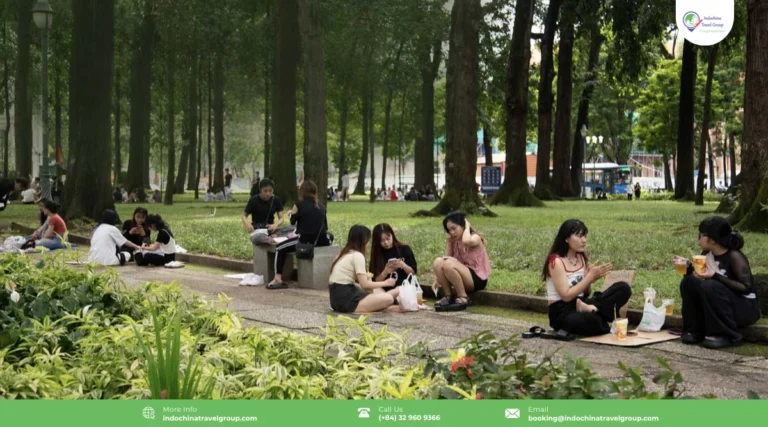 Vietnamese cities now support several café formats at the same time: simple neighbourhood shops, traditional phin-focused cafés, chains, specialty roasters and concept cafés. The useful distinction is not old versus new, but what kind of stop fits the traveller’s route, budget and interest in coffee itself.Choose a neighbourhood café for convenience, a specialty roaster when bean origin or brewing technique matters, and a scenic or concept café when the setting is part of the break. There is little value in crossing a city only because one venue is popular online.In cities like Da Lat and Saigon, a new generation of roasters is experimenting with honey-processed Arabica and cold brews. Specialty roasters, neighbourhood cafés and apartment-style café clusters show a newer side of the coffee scene alongside traditional phin shops. Individual venues change, so choose by neighbourhood, brewing style and the day’s route rather than travelling across a city for one fixed recommendation.
Is a coffee farm or highland stop worth adding?
Travellers who want to understand coffee beyond the café can add a highland growing-region visit. This is optional rather than essential, and it works best when agriculture, processing or roasting is already part of the traveller’s interest.Buon Ma Thuot and Da Lat play different roles in the coffee story. Farm and roastery visits can cover cultivation, drying, roasting or tasting, but the format varies by operator and season, so check what the visit actually includes before adding it to the route.Da Lat’s cooler highland conditions support Arabica as well as other coffee production, while Buon Ma Thuot is strongly associated with Vietnam’s Robusta-growing industry. In Da Lat, a coffee stop can pair naturally with a countryside day; in Buon Ma Thuot, coffee production can be a more central part of the destination itself. Choose the visit by route and learning interest rather than one named farm.In Hanoi, keep the coffee stop inside the same neighbourhood as breakfast, sightseeing or the next meal. The Hanoi food guide handles the wider meal-by-area decision.
How to order coffee without overcomplicating it
Many cafés have English or picture menus, but a few Vietnamese terms make ordering easier: “cà phê đen” for black coffee, “cà phê sữa” for coffee with condensed milk, “ít sữa” for less milk and “mang đi” for takeaway.Some traditional cafés serve complimentary tea with coffee, while others do not. Payment timing, sweetness and ice level also vary by venue, so confirm the order rather than assuming one nationwide café routine.What to eat with Vietnamese coffee
Coffee can sit beside breakfast, a small snack or dessert depending on the time of day and café. There is no fixed pairing rule; choose by the drink and what the venue actually serves. Sunflower seeds, banh mi, pastries and modern café desserts can all appear alongside coffee, but availability varies by city and venue. If the café does not serve food, ask before bringing something from another shop rather than assuming outside food is welcome.
A few practical things before your first cup
Café customs vary by venue, so follow the setup in front of you rather than a fixed national rule. If you are sensitive to caffeine, remember that Robusta-heavy drinks can feel stronger than the coffee you normally drink, especially when the serving is concentrated. Egg coffee contains egg, many milk coffees use condensed dairy milk, and coconut drinks may still include dairy depending on the recipe, so ask about ingredients when allergies or dietary restrictions matter. A few other useful habits:- Payment: Some cafés take payment when ordering, while others settle the bill at the end.
- Takeaway: Ask for “mang đi” if you want the drink to go; takeaway is common in many cities.
- Outside food: Ask before bringing food from another vendor because policies vary by café.
- Shared seating: Small cafés may use communal or closely spaced tables during busy periods.
If the next question is how to choose a stall, order, pay or judge a street-food stop, continue to the Vietnam Street Food Guide; keep this page focused on coffee styles, café formats and ordering.
Which city fits the coffee experience you want?
Coffee fits different city plans in different ways, so use the destination itself—not one famous café—as the starting point.- Hanoi: use the Old Quarter and central districts for egg coffee, phin coffee and compact café stops between heritage sights.
- Hue: salted coffee can fit naturally into a heritage day without turning the drink into a separate attraction hunt.
- Ho Chi Minh City: neighbourhood cafés, modern roasters and street-side coffee fit around food and city exploration.
- Da Lat: cafés and coffee-growing context can add a highland layer, but plantation visits should be chosen by route and interest rather than treated as compulsory.
Choose the coffee stop that fits the route
Coffee is easiest to enjoy when it belongs to a day you already want: a morning phin in Hanoi, salted coffee during a Hue heritage day, a highland café in Da Lat or a neighbourhood break in Ho Chi Minh City. You do not need to chase every famous drink or cross a city for one viral café. Pick one or two styles that genuinely interest you, keep the stop close to the rest of the route, and let the café be a pause rather than another box to tick.
Recommended Tours
Group Tour
Hanoi – Sapa – Danang – Ho Chi Minh 10D9N
Hanoi - Sapa - Fansipan Peak - Ninh Binh - Halong Bay Overnight On Cruise - Danang - Hoi An Ancient Town - Bana Hills - Golden Bridge - Ho Chi Minh - Cu Chi Tunnels - Mekong Delta

Private Tour
Ho Chi Minh – Cu Chi Tunnels – Mekong Delta 4D3N
Ho Chi Minh - Cu Chi Tunnels - Mekong Delta

Private Tour
Vietnam Highlights 7 Days 6 Nights Tour
Hanoi Arrival - Hanoi City Tour - Ha Long Bay Day Cruise - Fly to Da Nang - Coconut Village - Hoi An Ancient Town - Ba Na Hills - Golden Bridge - Fly to Ho Chi Minh City - Cu Chi Tunnels - Mekong Delta - Departure
5D4N DELIGHT DANANG TOUR (DANANG – BA NA HILL FRENCH VILLAGE – HOI AN – HUE CITY) (SEAT IN COACH)


Private Tour
Vietnam Panorama Discovery 16D15N
Ho Chi Minh - Cu Chi Tunnels - Mekong Delta Tour - Can Tho - Da Lat - Nha Trang - Hoi An - Da Nang - Hue - Hanoi - Halong Bay Overnight On Cruise