
When people ask me where the true soul of modern Vietnam lies, I don’t point toward the quiet temples of the north – we point toward the neon-lit, coffee-scented streets of Saigon. Ho Chi Minh City (HCMC), or Saigon as we locals still affectionately call it, is a city that never sleeps and rarely slows down. It is a place where you can find a Michelin-starred restaurant hidden inside a colonial-era apartment building or eat the world’s best broken rice on a plastic stool next to a five-star hotel. This Ho Chi Minh City Travel Guide is born from a decade of professional planning and a lifetime of local passion. If you are looking for a journey that handles the logistics while you soak in the energy, we invite you to explore our professionally curated Vietnam Tour Packages.

Ho Chi Minh City at a glance

Ho Chi Minh City is the economic locomotive of Vietnam, a sprawling metropolis where heritage and ambition collide. Formally renamed in 1976, the city still wears its “Saigon” identity with pride, especially in the central districts where French colonial architecture stands in the shadow of glass skyscrapers. For many international visitors, this is their first introduction to Vietnam, and it is a sensory explosion.

HCMC is Vietnam’s largest city, a hub of history, commerce, and gastronomy. It is worth visiting because it offers a unique “lived-in” history – from the somber artifacts of the Vietnam War to the vibrant, cosmopolitan life of a city that is rapidly becoming a global mega-hub.

To understand the city, you must understand its layout. The city is divided into several districts, each with a distinct personality.

  • District 1: The commercial and tourist heart.
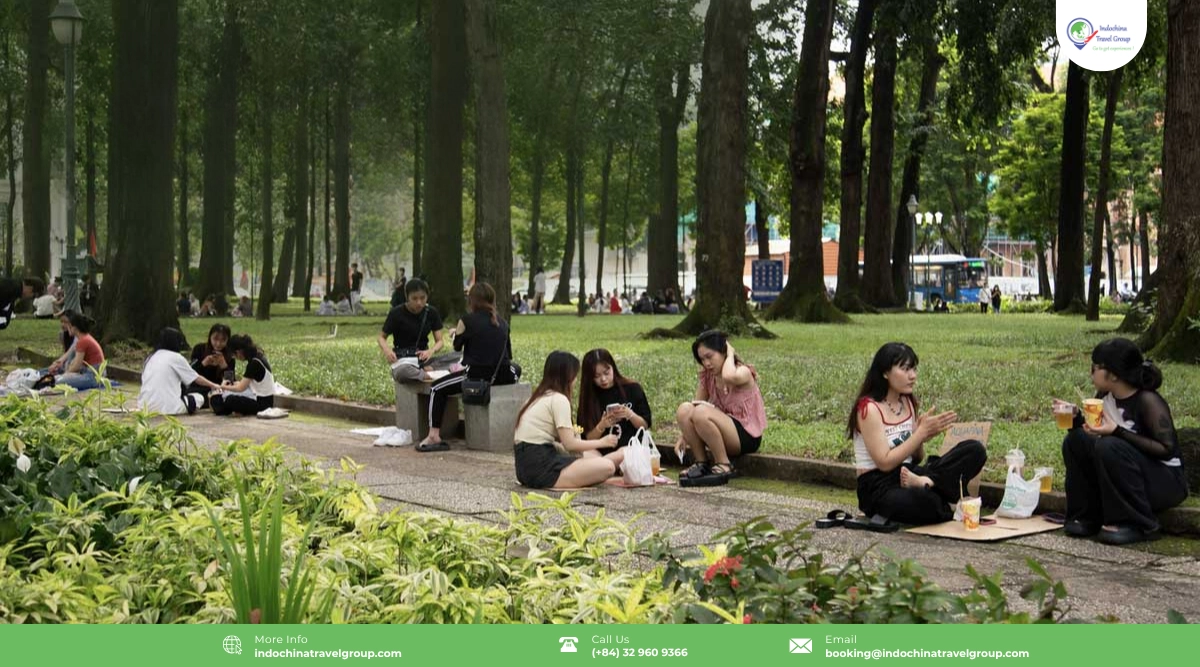
  • District 3: A leafy, residential area with French villas and trendy cafes.
  • District 5 (Cholon): The historic Chinatown, rich with incense-filled pagodas.
  • District 2 (Thao Dien): The riverside expat enclave with luxury villas and craft breweries.

Best time to visit Ho Chi Minh City

Unlike the north of Vietnam which has four seasons, we in the south have two: the Dry and the Rainy. Planning your visit around these two cycles is the difference between a comfortable stroll and a sudden dash for cover under a street vendor’s umbrella.

The “Golden Window” is from December to March. During these months, the humidity drops, and the temperatures are a pleasant 25°C to 32°C, making it ideal for the extensive walking required by a good Saigon Travel Guide.

If you visit during the rainy season (May to November), don’t be discouraged. The rain usually arrives in short, predictable afternoon bursts. It’s actually quite a romantic way to see the city – sitting in a high-rise cafe, watching the sky open up over the Bitexco Tower, and then seeing the city sparkle just 30 minutes later when the sun returns.

Getting to and around HCMC

Tan Son Nhat International Airport (SGN) is the primary gateway to southern Vietnam. It is located surprisingly close to the city center, though the traffic can make the 7km journey feel much longer. Navigating the city itself is an art form that every visitor eventually masters.

For arrivals, use official airport taxi stands or the Grab app. Within the city, Grab (both cars and motorbikes) is the gold standard for transparent pricing and safety, while walking is best for the compact core of District 1.

The transportation landscape in 2026 has seen a “Green Revolution.” I always recommend my guests try Xanh SM, our new all-electric taxi fleet. They are quiet, clean, and professional.

  • GrabCar/GrabBike: Essential for most hops.
  • Walking: Best for District 1’s “Golden Triangle” (Nguyen Hue, Dong Khoi, and Le Loi).
  • Public Bus: Improving, but still a challenge for non-Vietnamese speakers.
  • The Metro: The long-awaited Line 1 is finally operational, connecting District 1 to the eastern suburbs.

Where to stay in Saigon?

Where you sleep in HCMC determines your daily rhythm. Whether you want to be in the center of the nightlife or tucked away in a quiet riverside boutique, there is a district that fits your travel style. Based on many years of booking hotels for diverse groups, here is the breakdown:

  • District 1 (The Center): Home to luxury icons like the Park Hyatt and boutique gems. Stay here to be walking distance from the Opera House and the Cathedral.
  • District 3: Stay near the Pink Church (Tan Dinh). It’s quieter than District 1 but still filled with incredible food and local life.
  • District 2 (Thao Dien): If you are a slow traveler or a digital nomad, this riverside area offers a “Westernized” version of HCMC with incredible pools and international schools.
  • District 5 (Cholon): Not many hotels here, but great for those who want to be immersed in the traditional Chinese-Vietnamese atmosphere.

Top attractions and must-see sights in this Ho Chi Minh City guide

HCMC is a city where every corner tells a story. From the somber reminders of the “American War” to the grand architecture left by the French, the sights here are as diverse as the population.

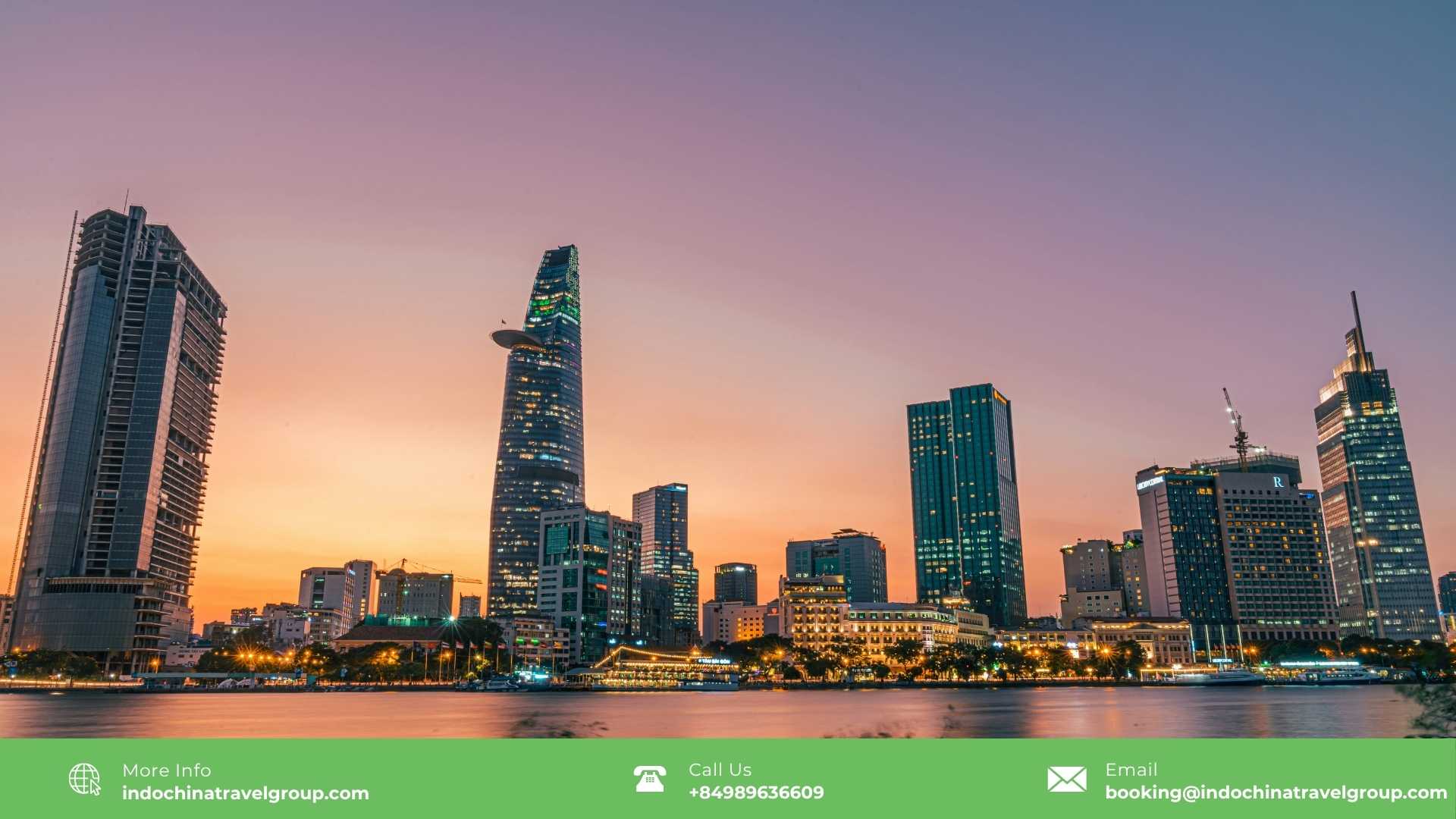
The primary sights include the War Remnants Museum, the Notre-Dame Cathedral, and the Reunification Palace. For a more modern perspective, the view from Landmark 81 and a walk down Nguyen Hue Pedestrian Street are essential.

War-related and historical landmarks

The War Remnants Museum is often the most impactful stop for our guests. It offers a powerful, though sometimes difficult, look at the Vietnam War. Just a short walk away is the Reunification Palace, frozen in time since 1975 when a North Vietnamese tank crashed through its gates. For those willing to travel 1.5 hours out of the city, the Cu Chi Tunnels offer a mechanical look at the resilience and ingenuity of the Viet Cong.

Colonial and city-center landmarks

The “French Quarter” of HCMC is centered around the Saigon Central Post Office (designed with input from Gustave Eiffel) and the Notre-Dame Cathedral Basilica. While the cathedral is currently undergoing extensive restoration (check local updates for interior access), its exterior remains the city’s most iconic photo spot. Nearby, the Saigon Opera House hosts the world-class A O Show, a contemporary circus performance that tells the story of Vietnamese village life.

Markets and modern skyscrapers

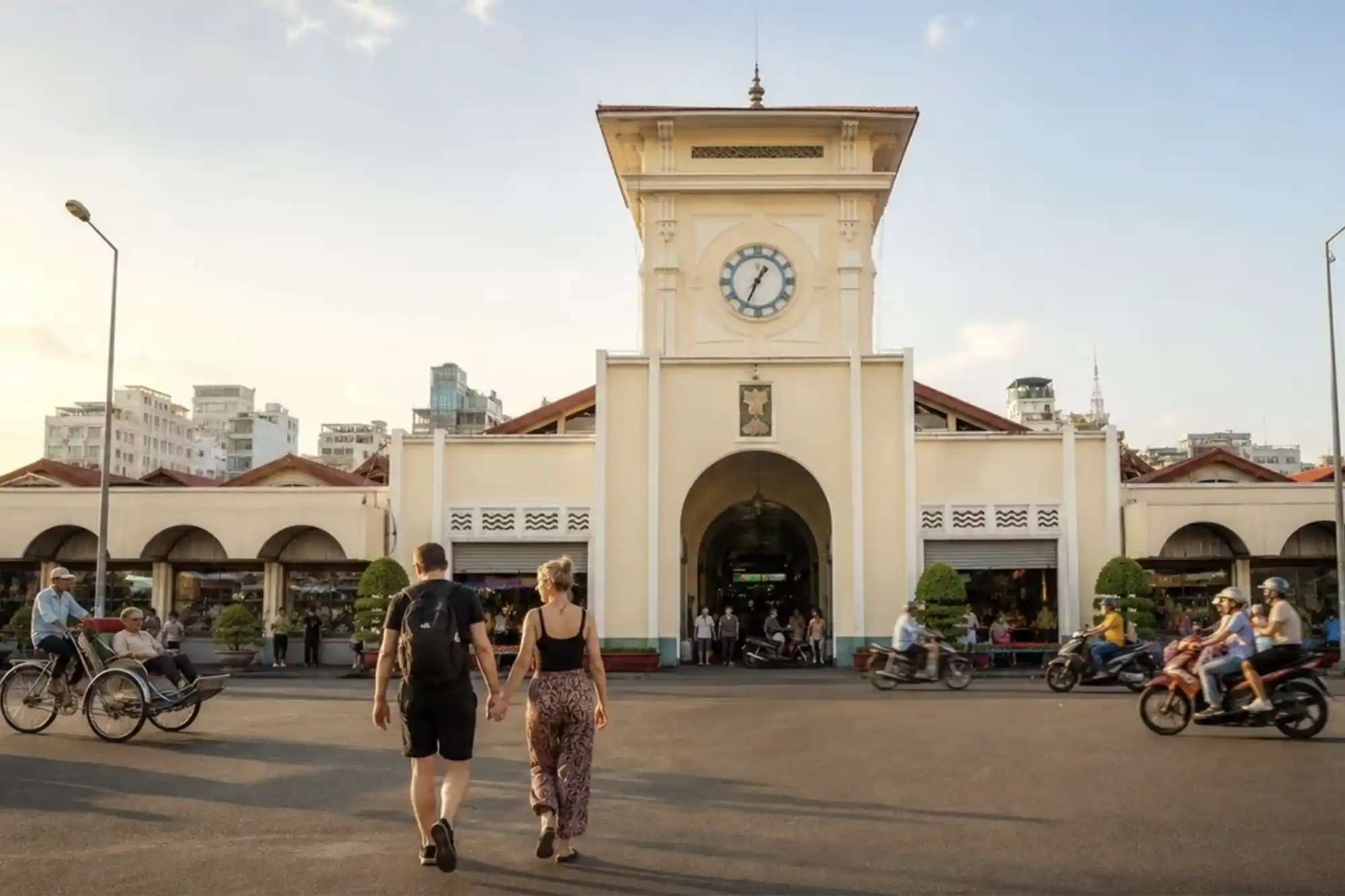
Ben Thanh Market is the city’s oldest surviving market and a must-visit for souvenirs and street food snacks. For a 360-degree view of the “Motorcycle Ocean,” head to the Saigon Skydeck in the Bitexco Tower. However, if you want to be on top of the world, Landmark 81 in Binh Thanh District is the tallest building in Vietnam and offers a futuristic look at the city’s skyline.

Top food and drink experiences

If you ask a Hanoian what they like about Saigon, they will say “the weather.” If you ask a Saigonese what they like about their city, they will say “the food.” This is a city that eats 24 hours a day.

Saigon’s culinary scene is vast. To help you navigate, I suggest focusing on these “Food Institutions”:

  • Com Tam: Try Com Tam Thuan Kieu for a classic experience.
  • Banh Mi: Banh Mi Huynh Hoa is legendary for its layers of pate and cold cuts.
  • The Coffee culture: You haven’t experienced HCMC until you’ve sat on a low plastic stool at 7:00 AM drinking a Ca Phe Sua Da (iced coffee with condensed milk). For a more modern vibe, visit the “Cafe Apartments” at 42 Nguyen Hue, where dozens of boutique cafes are packed into an old residential building.
  • Snails (Oc): Head to Vinh Khanh Street in District 4. It’s a sensory overload of grilling seafood and local families “nhậu” (drinking and eating) late into the night.

Nightlife and evening activities: From rooftops to backstreets

When the sun goes down, Saigon transforms. The humidity breaks, and the city lights up. Whether you want to sip a $20 cocktail overlooking the river or a $1 beer on a busy sidewalk, the nightlife here is remarkably inclusive.

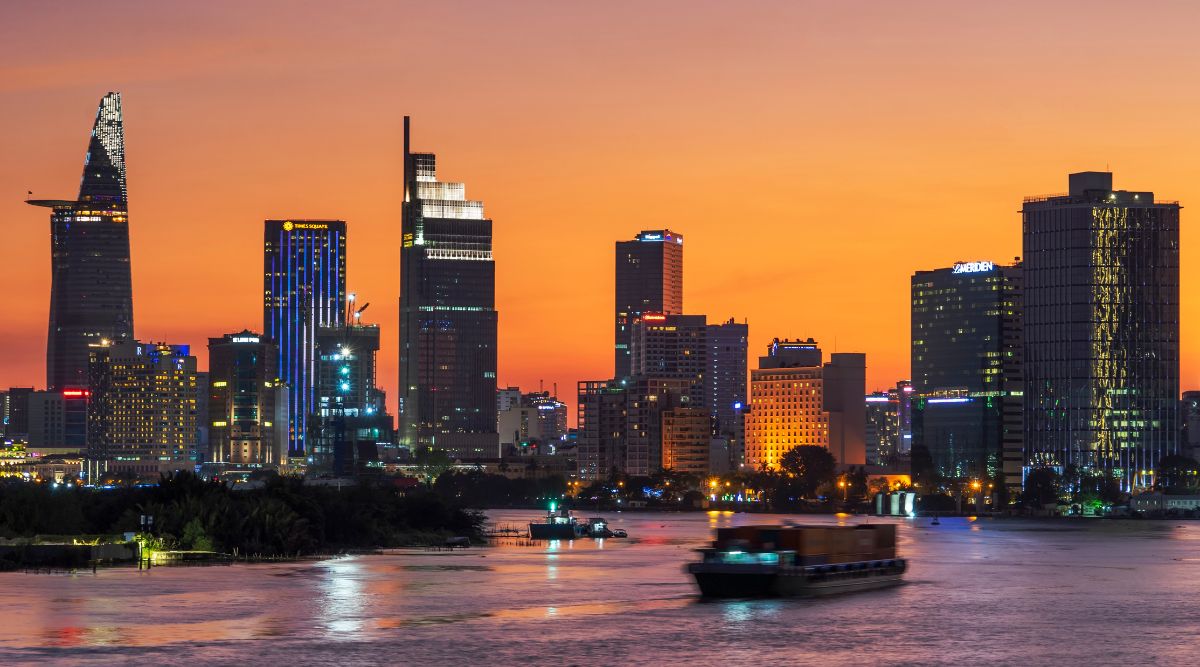
The nightlife ranges from the high-energy (and very loud) Bui Vien Walking Street to sophisticated rooftop bars like Saigon Saigon or The Social Club. For a more cultural evening, a Saigon River Dinner Cruise offers a peaceful view of the lit-up bridges.

For our guests, we usually recommend a “Contrast Evening.” Start with a sunset cocktail at a rooftop bar in District 1 to see the scale of the city. Then, hop on the back of a motorbike for a street food tour. There is nothing like the thrill of zipping through the traffic at night to find a hidden noodle stall in District 10. If you prefer something quieter, the promenade along the Saigon River has been beautifully renovated and is perfect for a breezy walk.

Day-trip ideas from Ho CHi Minh City

Saigon is the perfect “anchor” for exploring the southern region. Two of Vietnam’s most iconic experiences are located just a few hours from the city center, making them essential additions to any Saigon Travel Guide. At Indochina Travel Group, we offer specialized versions of these trips to avoid the crowds.

  • Cu Chi Tunnels: We recommend the Ben Duoc site rather than the more touristy Ben Dinh. It is further away but offers a much more authentic and quiet experience of the tunnel system.
  • Mekong Delta: Skip the crowded bus tours to My Tho. Instead, take a private boat into Ben Tre or Cai Be. Here, you can see the coconut orchards and small family industries that define the “Rice Bowl of Vietnam” without being surrounded by hundreds of other tourists.

Practical tips for visiting Saigon

What are the most important practical tips for HCMC? The most vital skill is learning to cross the street with a steady, predictable pace. You should also use Grab to avoid taxi scams, and always carry a small umbrella or poncho for the sudden afternoon rain.

Here is our “Local expert” checklist:

  • Crossing the street: Do not run. Do not stop. Walk at a steady pace and the motorbikes will flow around you like water around a stone.
  • Bargaining: In Ben Thanh Market, always start at 50% of the initial price and meet in the middle. However, in cafes, convenience stores, and malls, the price is fixed.
  • Safety: HCMC is very safe for violent crime, but bag snatching can happen on motorbikes. Keep your phone and bag away from the street-side, and don’t pull out your phone while standing on the curb.
  • Hydration: Drink only bottled or filtered water. Even most locals don’t drink the tap water here.

2 – 3 day Ho Chi Minh city sample itineraries

If you are short on time, you need an itinerary that hits the “Big Three”: History, Food, and Modernity. This is the flow I often recommend for my private tour guests.

How should you spend 48 to 72 hours in Saigon? Day 1 should be dedicated to the landmarks of District 1. Day 2 is for the Cu Chi Tunnels and a rooftop evening. Day 3 is for the Mekong Delta or a deep dive into the Chinatown of District 5.

Day 1: The classic core

  • Morning: Notre-Dame Cathedral, Central Post Office, and the War Remnants Museum.
  • Lunch: Com Tam (Broken Rice) near District 3.
  • Afternoon: Reunification Palace and a walk down Nguyen Hue Pedestrian Street.
  • Evening: Street food tour by motorbike and a drink at a rooftop bar.

Day 2: Under the ground and above the sky

  • Morning: Half-day trip to the Cu Chi Tunnels.
  • Afternoon: Relax at a “Hidden Cafe” in an old apartment building.
  • Evening: Dinner cruise on the Saigon River or a show at the Opera House.

FAQs

  • Is Ho Chi Minh City safe? Yes, it is very safe for solo travelers and families. Just be mindful of your belongings in crowded markets and on street corners.
  • How many days do you need? 3 days is perfect for the city highlights and one day trip. If you want to see the Mekong Delta properly, add a 4th day.
  • Is the street food safe? Generally, yes! Look for stalls with high turnover and lots of locals. My rule of thumb: If there is a crowd of Vietnamese people on small stools, the food is fresh and delicious.
  • Grab vs. Taxi? Use Grab. It eliminates the language barrier and the price is fixed before you get in.

Conclusion

Ho Chi Minh City is not a city you “see” – it is a city you “experience.” It is loud, hot, and frantic, but it is also incredibly generous, innovative, and warm. After ten years of showing this city to the world, we still find new alleys that surprise me and new flavors that remind me why we love our home.

At Indochina Travel Group, we believe that the best way to see Saigon is through the eyes of a local friend. Whether you are navigating the Ben Thanh Market or crawling through the tunnels of Cu Chi, we are here to ensure your journey is seamless. We invite you to check our Vietnam Tour Packages and let us help you write your own Saigon story.