


Understand Vietnam’s 3‑region climate and plan accordingly
One of the most common mistakes travelers make when planning their first time Vietnam is assuming the weather is uniform across the country. Vietnam is geographically diverse, stretching over 1,600 kilometers from north to south, which creates three distinct climate bands that often operate independently of one another.Vietnam does not have one national “best month.” Northern, Central and Southern routes respond differently to rain, heat, cooler weather and tropical systems, so choose the route first and then check the forecast for the actual destinations.Northern Vietnam can become cool or cold in winter, especially at elevation. The Central coast has a different rainfall pattern and needs more late-year flexibility for heavy rain or tropical-system disruption. Southern Vietnam stays warm for most of the year but still has wetter and drier periods. Treat these as planning patterns, not guarantees for a specific travel week. Use the best time to visit Vietnam guide for regional season trade-offs and the month-by-month weather guide when your dates are fixed.READ MORE: Vietnam Travel Guide: Everything You Need to Know Before You Go
Visa, e‑visa and entry‑rules in simple terms
Entry requirements depend on nationality, passport, trip length and the way you enter Vietnam. Check the current rule for your own passport rather than relying on an older visa-on-arrival process or a generic travel article. Vietnam has visa-exemption arrangements for some travellers and an electronic-visa system for eligible trips. Because the exemption list and application details can change, verify the current requirement on the official Vietnam Immigration portal before booking around a visa assumption.Use the official Vietnam Immigration e-visa portal at evisa.gov.vn or thithucdientu.gov.vn, and follow the instructions shown there for the current application fields, fee, processing and permitted entry points. Recheck the approved visa details against your passport and itinerary before departure. The Vietnam visa guide explains the planning layer without replacing the current official rule for your passport.
Pack for the route and season, not for one “Vietnam climate”
What belongs in the bag changes with the route. Lightweight clothing works well for many warm and humid days, but Northern mountains can need warmer layers and Central or Southern routes may need rain protection depending on the travel period.
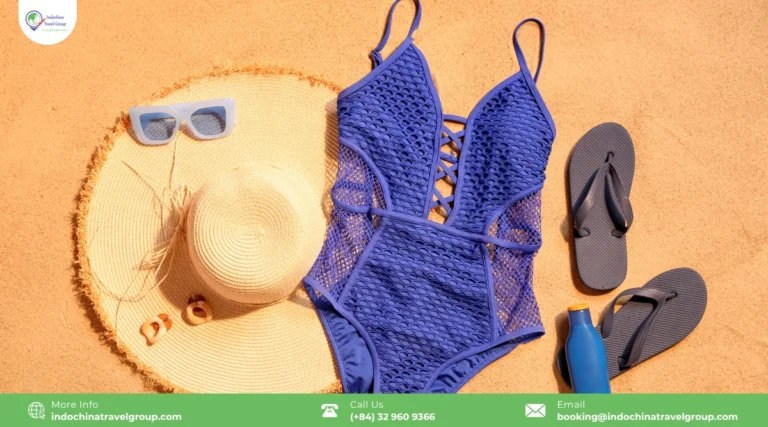
Pack enough to stay comfortable between laundry stops without building the suitcase around one fixed laundry price or one national weather assumption. For a multi-region trip, layers are usually more useful than heavy single-purpose clothing.
| Category | Useful items | Why they help |
| Warm-weather clothing | Breathable tops, quick-dry layers and comfortable walking clothes | Useful for warm cities, long walking days and clothes that need to dry between uses. |
| Outer layer | Light rain layer plus a warmer layer when the route includes cooler northern or high-elevation stops | Weather can change sharply between regions and elevations. |
| Respectful cover-up | Light scarf, overshirt or other easy cover-up | Useful when a religious or memorial site has a stricter dress requirement. |
| Tech | Appropriate adapter, charging cable and power bank when needed | Keeps maps, tickets and contact details available on transfer days. |
READ MORE: What To Pack For Vietnam?
Plan to use both cash and cards in Vietnam
Payment options vary by venue. Cards and digital payments are common in many hotels, malls and established businesses, while cash is still useful for smaller vendors, markets and some local transport. Carry some Vietnamese Dong (VND) for small purchases and places that do not accept your card, but avoid assuming every small business is cash-only or every larger business accepts your card network.Exchange rates change, so check the current rate through your bank or a reliable currency source. When paying cash, read the denomination carefully before handing over a note. For ATMs, compare your bank’s foreign-withdrawal fees, the local ATM fee and any currency-conversion prompt before accepting the transaction. Use the Vietnam currency and money guide for the deeper cash, card, ATM and exchange layer.
Learn a few basic Vietnamese phrases for your first time in Vietnam
You do not need to speak Vietnamese to travel, but a few basic words can make everyday interactions easier and show courtesy.Use simple phrases as a courtesy, not as a way to expect discounts or special treatment. A few practical examples are:- Xin Chào (Sin chow) – Hello.
- Cảm ơn (Gahm un) – Thank you.
- Bao nhiêu? (Bow nyew) – How much?
- Tính tiền (Tinh tyen) – The bill, please.
- Ngon quá! – Very delicious.
Street food: use normal food-safety judgment
Street food can be one of the most accessible ways to try local dishes, but preparation and hygiene vary by vendor just as they do elsewhere.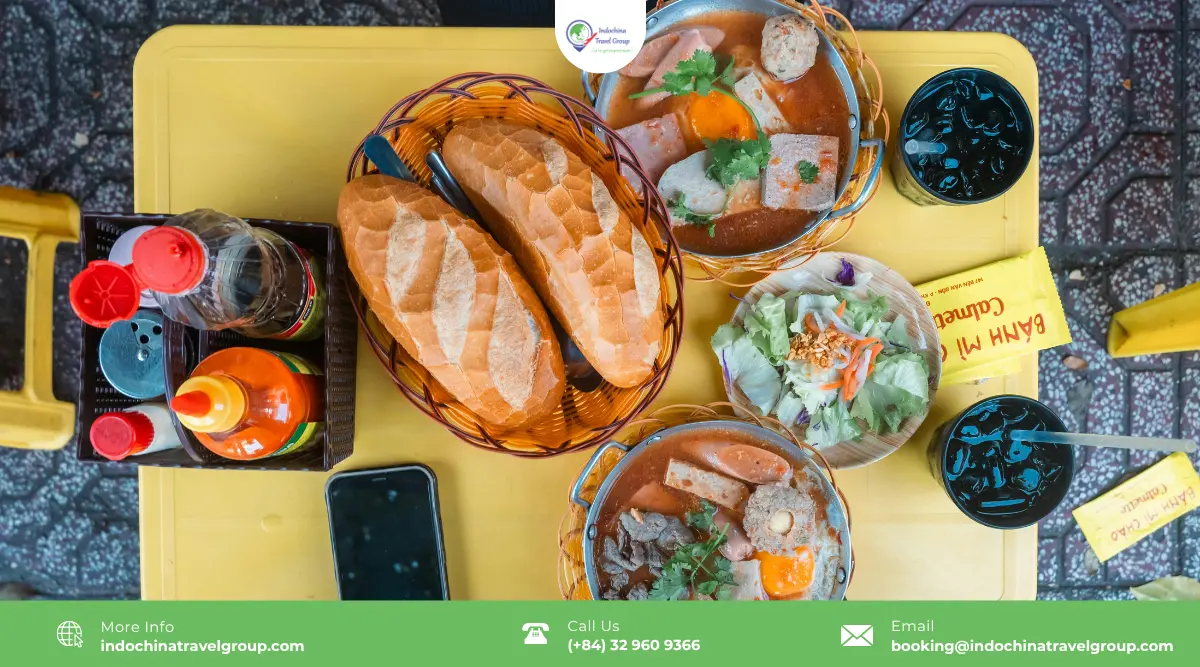 Street food can be part of the trip, but no popularity rule can guarantee food safety. Prefer food that is cooked thoroughly and served hot, choose places with visibly clean handling, and use your own dietary or medical needs to decide what to skip.Use sealed bottled or reliably treated drinking water when you are unsure about the local supply. For ice, raw ingredients or food handling, choose venues you are comfortable with rather than assuming a city-wide standard or treating visible steam as a safety guarantee. For stall choice, ordering, allergies and deciding whether a food tour helps, continue with the Vietnam street food guide.
Use safer crossing points in busy traffic
Crossing busy roads in Hanoi or Ho Chi Minh City can take time. Use marked crossings, pedestrian signals, overpasses or underpasses where available, and do not assume drivers will automatically yield.Before stepping into the road, check all directions and follow current traffic signals. Avoid sudden moves into active traffic, and use a different crossing point if the junction feels unsafe.If you are unsure how to cross a particularly busy junction, ask hotel staff, a guide or nearby officials for the safer route rather than copying another pedestrian into moving traffic.Taxi, Grab and moto‑taxi tips for beginners
App-based transport can simplify city travel because the pickup point and quoted fare are visible before the ride, but availability still varies by city, time and location.If an app-based car service operates where you are staying, it can be useful for short city trips. Keep a second option for airports, early departures or places with limited app coverage.Motorbike taxis can reduce travel time in heavy traffic, but only use them when you are comfortable with two-wheel transport and a suitable helmet is provided. For luggage, families or unfamiliar traffic, a car or pre-arranged transfer is usually simpler.Transportation between cities and regions
Vietnam is a long country, and how you move between regions will dictate your energy levels. You have three main choices: flying, taking the train, or using the sleeper bus.For multi-region trips, compare the full door-to-door time of flying, rail and road rather than assuming one mode is always faster. The Hue–Da Nang rail section can be scenic, while flights may reduce overland time on much longer north–south jumps.Sleeper-bus berth size, road time and sleep quality vary by operator and vehicle. Check the current layout and arrival time before using an overnight bus or train as a substitute for a hotel night, especially if comfort is a priority. For airport transfers, domestic flights, trains, buses and point-to-point route choices, continue with the Vietnam transportation guide.Ask whether a price is fixed before bargaining
At some markets and souvenir stalls, prices may be negotiable; at others they are fixed. Ask politely before bargaining rather than assuming the first price is always only a starting point.Fixed prices are the norm in malls, convenience stores, and most restaurants. At some traditional markets or souvenir stalls, a price may be negotiable; ask politely rather than assuming every vendor expects bargaining.If a seller does negotiate, decide what the item is worth to you and keep the exchange friendly. Avoid fixed percentage rules because the starting price, product and selling context vary widely.Follow the table setting you are actually in
Shared dishes are common in many Vietnamese meals, but dining habits vary by household, restaurant and occasion. Follow the host or group rather than assuming every meal uses the same format.Dining habits vary by household and setting. When sharing a meal, follow the host’s lead, use serving utensils where provided and avoid leaving chopsticks standing vertically in a bowl of rice.If you are eating with a host family or group, observe how shared dishes are handled and ask when unsure. A simple “Cảm ơn” is enough when someone offers food or helps you at the table.Check dress and photography rules at religious sites
Temples, pagodas, memorial spaces and other religious sites can have different expectations for clothing, footwear, photography and behaviour. Treat posted instructions and the guidance at the site as the rule for that visit.Dress and footwear rules vary by site. For temples, pagodas and memorial spaces, carry clothing that can cover shoulders and knees when required, and follow posted instructions about shoes, photography and restricted areas. A light scarf or cover-up can be useful when a site has stricter dress requirements. Keep noise low in active worship areas and follow local instructions rather than assuming every religious site uses the same rules.
Choose your first time Vietnam route wisely
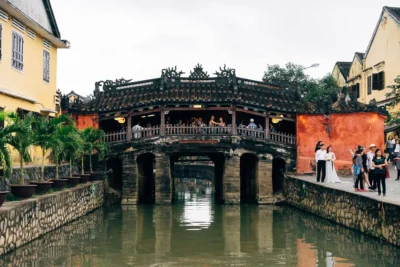
With 7–10 days, choose a route that protects enough time in each base instead of measuring success by the number of regions covered. A North–Central or Central–South route can reduce long transfer days, but the right shape depends on arrival airport, interests and pace.Hoi An can work as a useful Central Vietnam base when heritage, food, tailoring, countryside or beach time justify several nights. It should not be treated as a compulsory halfway stop for every itinerary. If the route is still open, use the Vietnam itinerary guide to compare realistic 7-, 10-, 14- and 21-day route shapes before adding more stops.Safety tips: Crime, scams and digital‑safety
Travel safety varies by place, time and situation, so use current local guidance rather than relying on a broad country-level label.In crowded areas, keep phones, wallets and bags controlled and avoid standing at the road edge while using a phone. On shared networks, use the same digital-security precautions you would use elsewhere and store important travel documents securely.If you need to check a map near busy traffic, step well away from the road edge. For current destination-specific risks, check your government’s travel advisory and local guidance close to departure.READ MORE: Is Vietnam Safe For Tourists? A Vietnam Safety Tips Guide
Stay healthy: Water, food and weather
Heat, sun, insects and changes in food or water can affect travellers differently, so plan health precautions around your itinerary and personal needs.Stay hydrated, use sun and insect protection suitable for you, and reduce strenuous outdoor activity when heat or weather conditions are demanding. Use reliably treated drinking water when you are unsure about the local supply.If you rely on prescription or specialist medication, bring it in the original packaging with any documentation required for travel. Check official travel-health and medicine-entry guidance before departure rather than relying on a general tourism article for medical advice.Use apps and maps wisely for Vietnam travel
A phone can simplify navigation, translation and booking access, but keep important addresses and confirmations available offline as a backup.Offline maps and a translation app are useful even when mobile data is available. Save hotel addresses, tickets and essential contacts before long road or boat days.SIM and eSIM availability, price and coverage change by provider and location. Use the Vietnam SIM and eSIM guide to compare device compatibility, local SIM versus eSIM, registration, dual-SIM setup and route coverage rather than choosing a carrier from an old fixed-price recommendation.Keep communication simple when there is a language gap
English support varies by hotel, guide, restaurant, transport operator and destination, so do not assume the same level of communication everywhere.When there is a language gap, be patient and use a combination of simple English, gestures, written addresses and translation tools. When there is a language gap, patience, simple phrases and a translation app usually work better than speaking faster or using complicated English.A simple “Cảm ơn” is useful. For prices or menus, typing numbers into a phone or pointing to a menu item can reduce misunderstandings without turning the interaction into a performance.Check the service context before tipping
Tipping expectations vary by service, booking type and venue. Do not assume one national percentage or one rule applies to restaurants, guides, drivers, spas and everyday purchases.Tipping is optional in many everyday situations. Where you do choose to tip, use the service context, any stated service charge and your own judgment rather than a fixed amount from an article.For private guides, drivers, boat services or spas, expectations vary by operator and booking type. Check whether a service charge or gratuity guidance is already included before adding anything extra. For specific situations and practical ranges, use the tipping in Vietnam guide.Travel insurance and emergency‑planning
Travel insurance is worth evaluating against your medical, cancellation, baggage and activity risks, especially when the itinerary includes remote areas or higher-risk activities.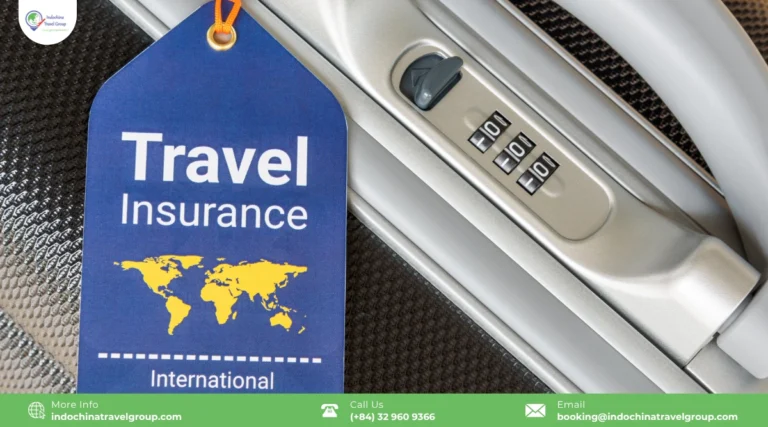 Compare the policy limits and exclusions against the itinerary. If you plan to ride a motorbike, trek, dive or do another higher-risk activity, verify that the policy actually covers that activity and that you meet any licence or safety conditions.Keep the following emergency numbers saved in your phone:
- 113: Police
- 114: Fire
- 115: Ambulance.
READ MORE: Do I Need Travel Insurance For Vietnam? Practical Guide
Embrace flexibility and culture
The final practical point is to leave some flexibility for weather, transport changes and opening-hour changes instead of building every day around tight connections.A delayed flight, rain or a changed transport schedule can alter the day. Keep one or two parts of the itinerary adjustable so a disruption does not force the rest of the trip to unravel.Treat unfamiliar routines as something to understand rather than judge, but keep practical boundaries around safety, comfort and time. Flexibility should make the trip easier, not pressure you into an experience you do not want.Conclusion
A useful first-trip checklist should reduce avoidable friction: confirm entry requirements, match the route to regional weather, protect transfer time, keep money and documents secure, and leave room for the trip to change when conditions do. Once those basics are covered, the destination guides and regional route pages can help you decide where the available days are best spent.
Recommended Tours



Group Tour
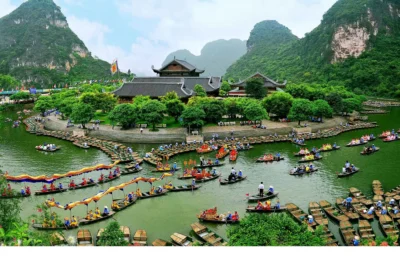
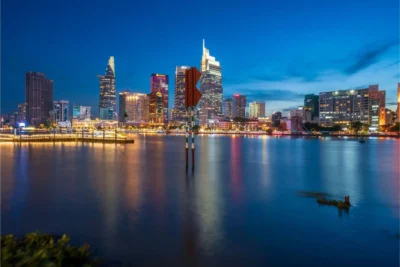
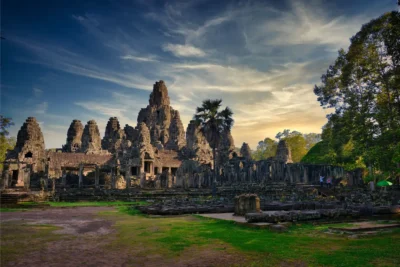
Vietnam – Cambodia Discovery – Joining Group Tour
Hanoi - Ninh Binh - Halong Bay - Hue - Hoi An - Ho Chi Minh City - Mekong Delta - Chau Doc - Phnom Penh - Siem Reap

Group Tour
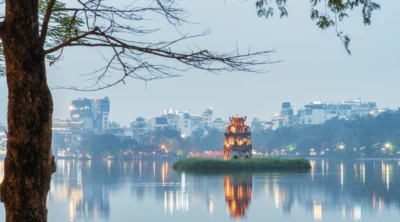
Hanoi – Sapa – Danang – Ho Chi Minh 10D9N
Hanoi - Sapa - Fansipan Peak - Ninh Binh - Halong Bay Overnight On Cruise - Danang - Hoi An Ancient Town - Bana Hills - Golden Bridge - Ho Chi Minh - Cu Chi Tunnels - Mekong Delta

Group Tour
Vietnam – Joining Group Tour 12 Days
Ha Noi City Tour - Ninh Binh - Halong Bay Overnight On Cruise - Hue - Hoi An Eco Tour - Ho Chi Minh City - Cu Chi Tunnels - Mekong Delta