
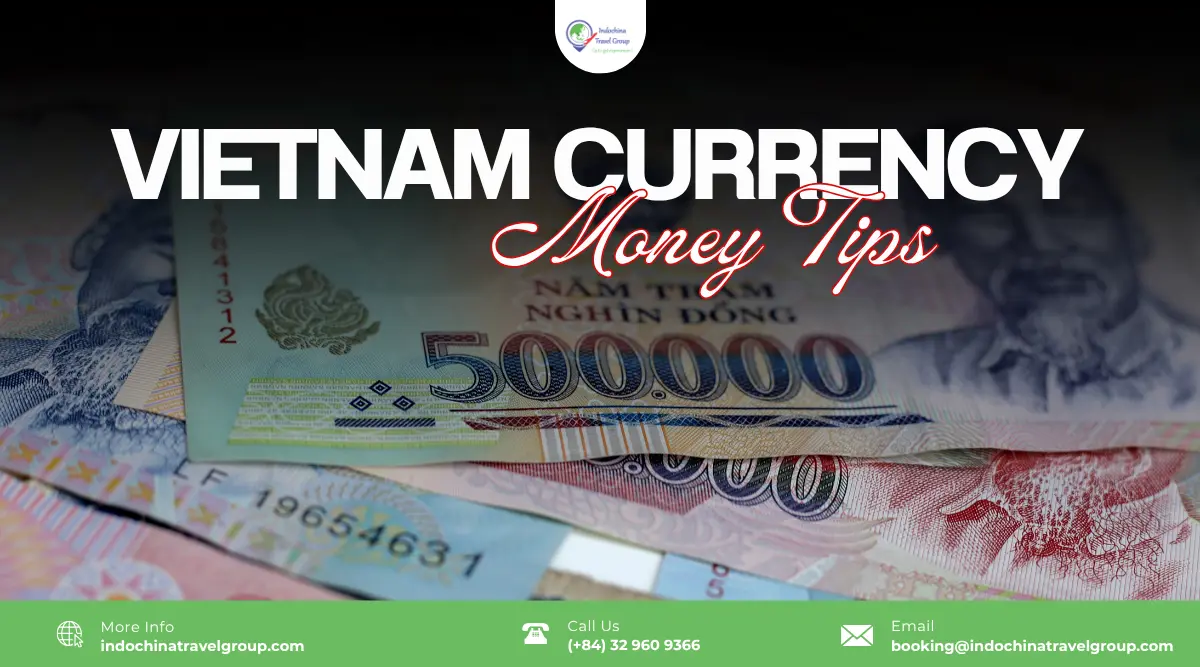
Vietnam’s official currency is the Vietnamese đồng (VND). For most trips, you do not need to convert the whole travel budget into cash on arrival. Keep enough VND for smaller vendors, local transport and backup needs, use a working card where it is accepted, and keep a second payment method separate. If an ATM or card terminal offers to charge you in your home currency, compare that conversion with paying in VND before accepting it.
Vietnam currency in a nutshell
- Currency: Vietnamese đồng (VND).
- Cash: still useful for markets, small vendors and places that do not take international cards.
- Cards: more common at hotels, malls, established restaurants and larger retailers, but acceptance varies.
- ATMs: common in major cities and many tourist destinations; fees and withdrawal limits vary by bank and card.
- Exchange: use banks, licensed institutions or clearly authorised exchange agents.
The largest commonly used banknote is 500,000 VND. Because several notes can look similar at a glance, check the printed denomination and number of zeros before paying.
Is Vietnam a closed currency?
“Closed currency” is an informal travel term, not the most useful way to describe the Vietnamese đồng. VND is the domestic currency used for prices and payments in Vietnam, while foreign-currency exchange is regulated. Travellers should plan to obtain and use VND in Vietnam and exchange foreign cash through banks, licensed credit institutions or authorised exchange agents rather than assuming any shop can legally change money.
You may find VND outside Vietnam, but availability and exchange rates can be poor or inconsistent. For most trips, it is more practical to arrive with a working card or exchangeable foreign currency and obtain a modest amount of VND after arrival.
Vietnamese banknotes: check the denomination, not just the colour
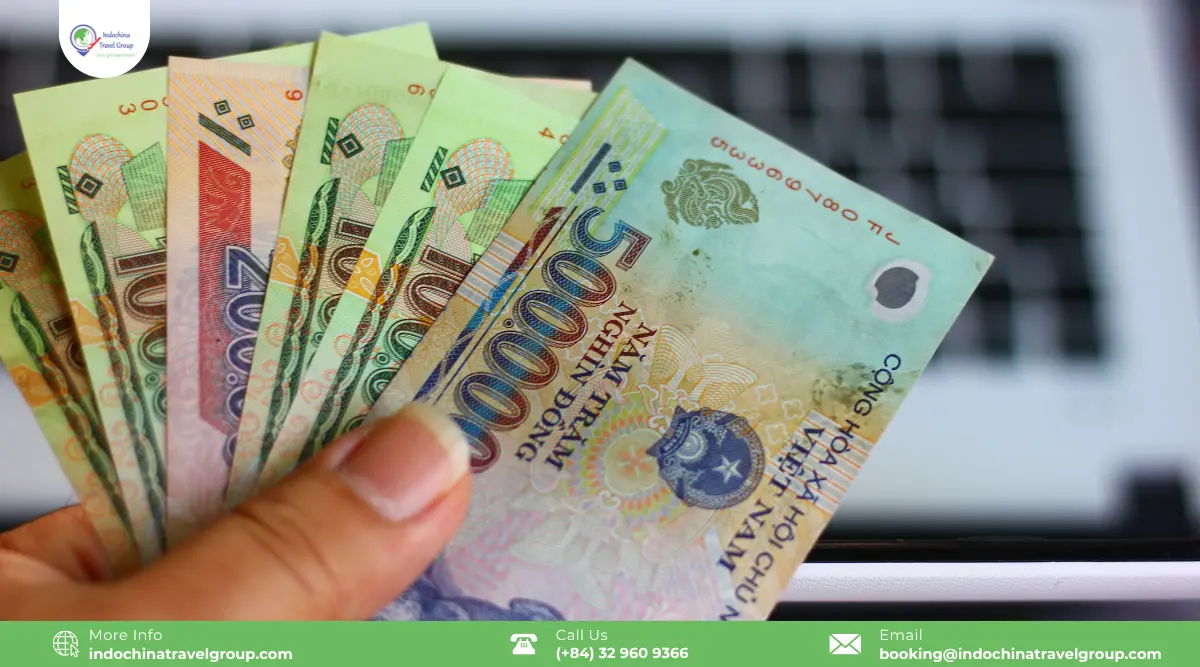
Travellers commonly encounter VND banknotes from small paper denominations up to higher-value polymer notes. The most useful habit is to read the printed denomination and count the zeros before handing over a note.
| Common denomination | Practical note |
|---|---|
| 500,000 VND | High-value note; check it carefully before small purchases. |
| 200,000 / 100,000 VND | Useful for larger everyday payments when the vendor can make change. |
| 50,000 / 20,000 / 10,000 VND | Useful for smaller purchases, cafés, local transport and change. |
| Lower denominations | Still circulate, though how often you receive them depends on the transaction. |
Do not rely on colour alone: lighting, wear and similar colour families can make notes easy to confuse when you are in a hurry. Keeping higher-value notes separate from smaller notes can reduce payment mistakes.
Exchange rates: check the live rate, then check the fees
The VND exchange rate moves over time, so a fixed conversion from an older article can quickly become misleading. Check the current rate from your bank, card provider or a reputable market reference close to the day you exchange or withdraw money.
For practical decisions, separate three things:
- Exchange rate: the currency conversion used by the provider.
- Provider fee: any ATM, exchange-counter or card-processing fee charged on top.
- Dynamic currency conversion: if a terminal or ATM offers to charge you in your home currency, compare that offered conversion with paying in VND before accepting it.
When the number of zeros feels unfamiliar, use your phone calculator or banking app rather than relying on one memorised VND-to-USD shortcut that may no longer match the live rate.
Travelling from Australia? The Vietnam currency guide for Australians handles the AUD-to-VND, Australian-card, ATM-fee and backup-payment decisions without changing the ownership of this generic currency page.
How to get Vietnamese Dong: ATMs, banks and money changers
When you arrive, you do not need to exchange a large amount immediately. A small amount of VND can cover early transport or small purchases while you compare the payment options available at your destination.If you carry foreign cash, the condition and denomination of notes can affect whether an exchange provider accepts them. Use clearly authorised services and check the displayed rate and any fee before handing over money. Vietnam’s central-bank framework allows licensed credit institutions and registered exchange agents to handle foreign-currency exchange, with agents operating only at authorised locations; this is why an informal shop offering a good-looking rate should not be treated as equivalent to an authorised counter. For a traveller-facing overview, the official Vietnam Tourism currency and payments guide is a useful current reference.- Banks and authorised exchange counters: Useful when you want a clearly identified provider and a displayed transaction process. Opening hours, paperwork and rates vary.
- ATMs: Convenient for travellers with an international card. Prefer machines in well-used, well-lit locations and review the withdrawal limit, local ATM fee and your own bank’s charges before confirming.
- Other exchange providers: Only use a provider you can identify as authorised to exchange foreign currency. Do not choose a shop simply because a crowd is present or because an informal recommendation promises the “best rate”.
Separate payment planning from the total trip budget
This page answers how to pay, withdraw and exchange money in Vietnam. For the total trip cost, use the Vietnam travel budget guide. The practical cash decision here is simpler: carry enough VND for the day’s smaller purchases and backup needs, while using cards or prepaid arrangements where they are accepted and make sense.
Choose cash, card or an ATM by the situation
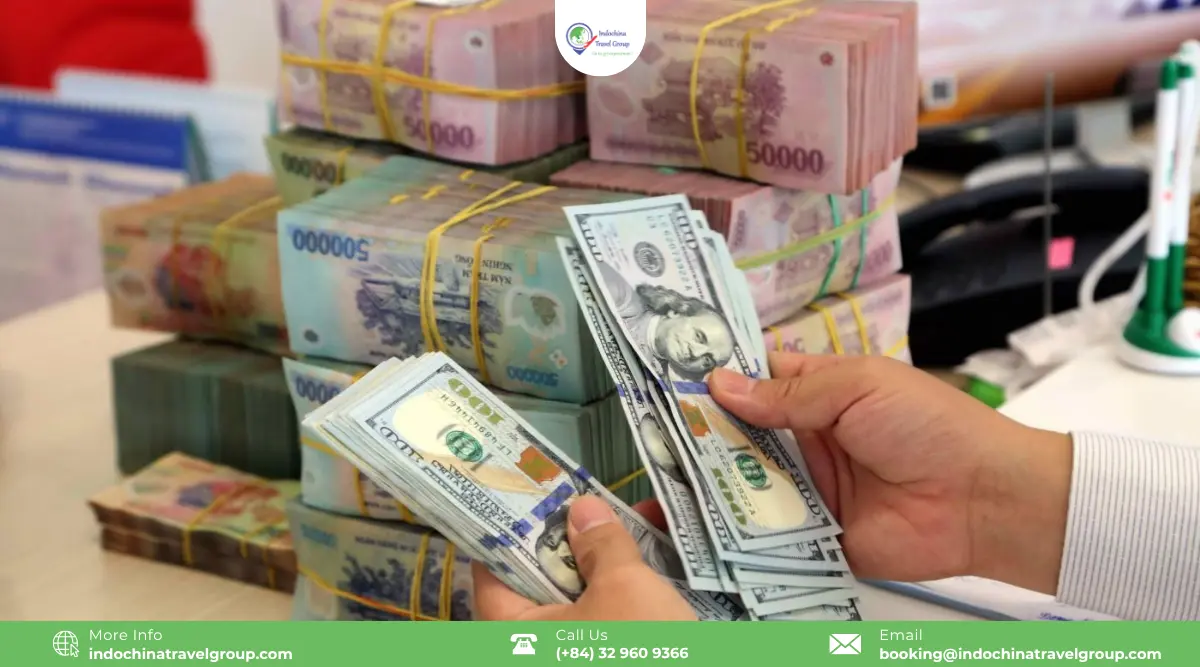
Card and cash acceptance varies by business. Instead of looking for one payment method that works everywhere, use the method that best fits the transaction:
| Situation | Practical first choice | What to check |
|---|---|---|
| Market, small café or local vendor | VND cash | Use a suitable denomination and confirm the price before paying. |
| Hotel, larger restaurant or established retailer | Card where accepted | Check the amount, currency, any surcharge and whether the terminal offers home-currency conversion. |
| Need more local cash | ATM at a well-used location | Review the local ATM fee, your own bank’s fee, withdrawal limit and conversion prompt. |
| App-booked ride or service | Use the payment method shown in the booking | Confirm whether payment is in-app or made directly before the service begins. |
| Remote or rural day | Cash plus a separate backup method | Do not assume card or QR acceptance will be available throughout the route. |
A simple money setup for the trip: get only enough VND for the first day or two when you arrive, confirm that your main card works before relying on it, keep a backup card or payment method separately, and top up cash before remote or rural sectors instead of carrying the entire trip budget at once.
Local QR and mobile-wallet systems often depend on Vietnamese banking arrangements or supported cross-border schemes, so an overseas traveller should not assume a domestic QR code will work with a home-bank app. Treat QR as a convenience only when your own banking or wallet app confirms support. Tipping is a separate decision; use the tipping in Vietnam guide rather than applying one fixed percentage to every service.
How much cash should you carry?
The useful amount depends on the day’s plan and the payment methods available at the places you expect to use. Carry enough VND for smaller vendors, transport or a backup payment method without keeping more cash on you than you are comfortable managing.
- Use smaller notes for small purchases: this reduces the need to make change from a high-value banknote at a small vendor.
- Check the denomination before paying: several Vietnamese notes use similar colour families, and the large number of zeros can cause mistakes when you are in a hurry.
- Separate backup money and cards: avoid keeping every payment method in one wallet, especially on busy sightseeing or market days.
For theft and personal-security advice, follow the current official travel guidance for your nationality rather than treating Vietnam as uniformly “very safe” or applying one fixed cash-carry rule. The broader phone, bag, transport and emergency layer belongs in the Vietnam safety guide.
ATMs, fees and card-usage checks
ATM withdrawal limits and fees vary by bank, machine and card, and your own issuer may add a separate foreign-transaction or cash-advance charge. Review the amount, local fee and any currency-conversion prompt shown on the ATM before confirming the withdrawal.
- Check your card settings before travel: make sure overseas use is enabled if your bank requires it and know how to contact the issuer if a transaction is blocked.
- Compare the total cost, not a card brand: reimbursement rules, exchange rates and overseas withdrawal allowances vary by account and can change.
- Use a sensible ATM location: a well-lit machine at or near a bank or established commercial location can make support easier if the card is retained or the transaction fails. Cover the keypad when entering your PIN.
Legal and safety checks when paying or exchanging money
Use clearly identified, authorised providers for foreign-currency exchange and review the amount before leaving the counter. When paying in cash, count the change and check the banknote denomination before putting it away.
- Payment disputes: keep the transaction calm, check the displayed price or receipt where available, and avoid handing over another high-value note until the first payment is clear.
- Bargaining: some markets or souvenir stalls may allow negotiation, while fixed-price shops, restaurants, pharmacies and convenience stores generally should be treated as fixed-price unless the seller indicates otherwise. There is no universal discount percentage.
- Before departure: if you have more VND than you expect to use, compare the available authorised exchange options and current rates rather than assuming the currency must be converted at one specific place.
Conclusion
Money planning in Vietnam is easiest when you use VND for smaller purchases, keep a working card or second payment method available, and compare the actual exchange rate and fees at the moment you pay, exchange or withdraw cash.
Before the trip, check your bank’s overseas-use settings and fees. During the trip, review the amount and currency before authorising card or ATM transactions, and keep backup payment methods separate. If you are comparing a fully arranged trip, use the written quotation to see which services are already prepaid and which local expenses remain outside the package.
If money is only one part of your first-trip preparation, return to the Vietnam travel tips for first-time visitors for the wider entry, weather, transport, packing and safety sequence.
Confirm what is prepaid before deciding how much cash to carry. For example, a 4D3N Hanoi–Ha Long day-cruise tour can combine hotel, road transfers and boat services, but the agreed quote determines meals, tickets, drinks and personal expenses actually payable locally. If you are booking through ITG, share dates, group size and hotel standard via Plan Your Holiday and ask for an itemised inclusion/exclusion list; calculate your VND cash buffer from that list rather than the headline tour price.

Recommended Tours




Private Tour
Vietnam Panorama Discovery 16D15N Private Tour: South to North
Ho Chi Minh - Cu Chi Tunnels - Mekong Delta Tour - Can Tho - Da Lat - Nha Trang - Hoi An - Da Nang - Hue - Hanoi - Halong Bay Overnight On Cruise

Group Tour
Hanoi – Ha Long Bay – Da Nang & Hoi An 5D4N Tour
Hanoi Arrival - Hanoi City Tour - Ha Long Bay Day Cruise - Fly to Da Nang - Coconut Jungle - Hoi An Ancient Town - Ba Na Hills - Golden Bridge - Departure


Private Tour
Hanoi – Ha Long Bay – Hoa Lu & Tam Coc 5D4N Private Tour
Hanoi - Halong - Hoa Lu - Tam Coc


Da Nang, Cham Islands & Hoi An 4D3N Seat-in-Coach Tour


Da Nang, Ba Na Hills & Hoi An 4D3N Seat-in-Coach Tour