

How Vietnam’s climate works?
Vietnam’s climate is shaped by latitude, monsoon patterns, elevation and the long coastline. For travel planning, it is more useful to compare the North, Central coast and South separately, then account for mountain destinations such as Sapa, Ha Giang and Da Lat where elevation can change temperature and visibility.The monthly breakdown below is a planning framework, not a guarantee. Use it to identify the likely heat, rain and sea-condition trade-offs, then check the short-range forecast and any operator notices close to the actual travel dates. If you are still deciding which season should drive the trip rather than comparing a fixed month, start with our Best Time to Visit Vietnam guide.If your travel month is fixed, compare the regions below before choosing the route; if your dates are still flexible, use the linked Best Time guide to choose the season first.
Overview of Vietnam’s three main regions
For travel planning, separate the North, Central coast and South first, then treat mountain destinations such as Sapa, Ha Giang and Da Lat as additional elevation-driven cases. These are broad planning zones rather than fixed weather boundaries.Northern Vietnam (Hanoi, Sapa, Halong Bay)
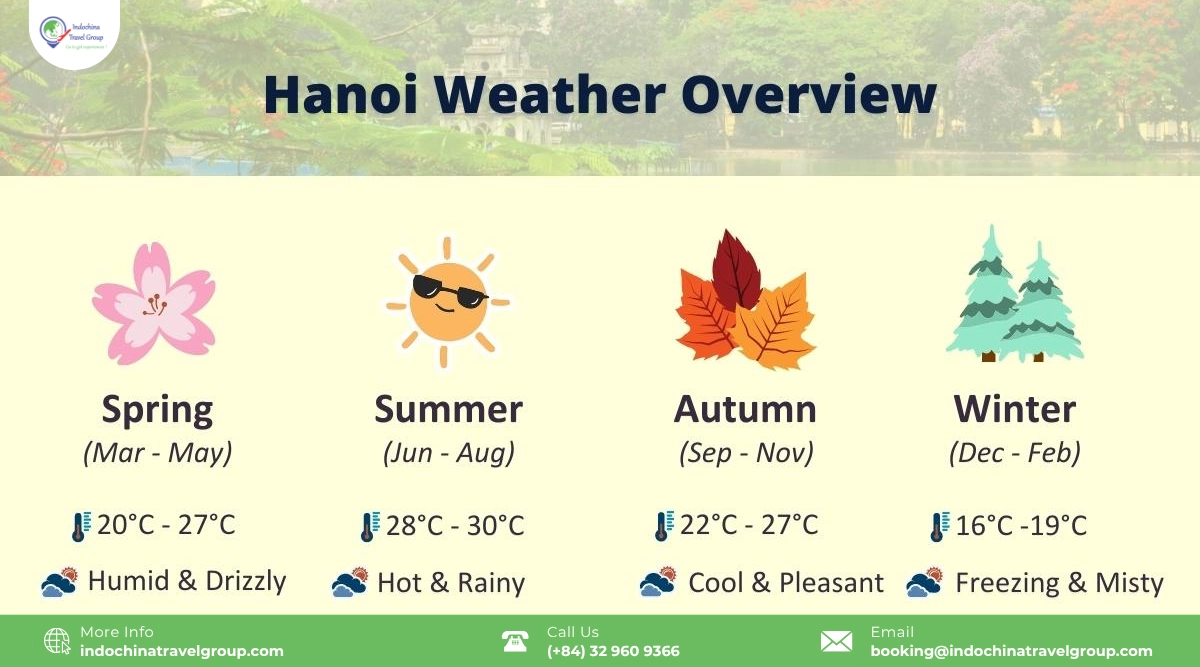
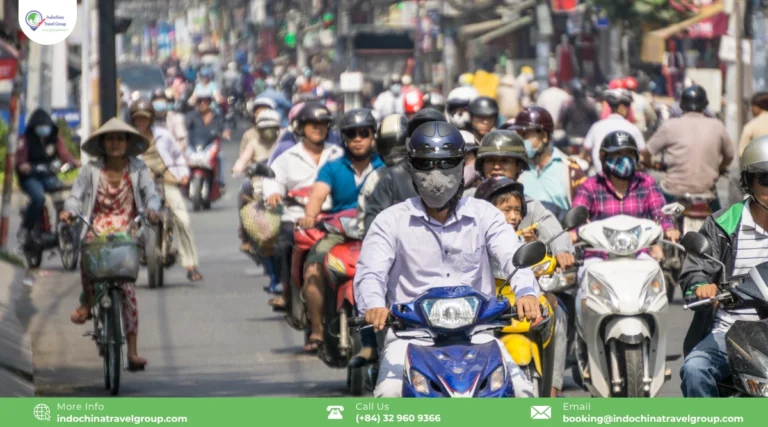 Northern Vietnam has a stronger seasonal swing than the South. Winter can be cool in Hanoi and much colder at higher elevations, while summer is generally hotter, more humid and wetter. Spring and autumn can be comfortable for many itineraries, but visibility, rainfall and mountain conditions still vary from week to week.
For route planning beyond weather, compare the Northern Vietnam route guide.
Central Vietnam (Hoi An, Hue, Da Nang, Da Lat)
The Central coast often has a different rainfall calendar from Hanoi and Ho Chi Minh City, with a greater late-year rain and storm risk on parts of the coast. Da Lat should be treated separately because elevation makes it cooler and changes the daily weather pattern compared with Da Nang, Hoi An or Hue.For how Hue, Da Nang, Hoi An, Phong Nha and the south-central extensions fit together, use the Central Vietnam route guide.
Southern Vietnam (Ho Chi Minh City, Mekong Delta, Phu Quoc)
Southern Vietnam stays warm through the year and is commonly planned around broader wetter and drier periods. Rain can arrive in short bursts, but longer wet spells also occur, so do not assume every rainy-season shower will clear quickly enough for the original programme.For Ho Chi Minh City, Mekong Delta and Phu Quoc sequencing, compare the South Vietnam route guide.
Monthly climate table: Vietnam as a whole
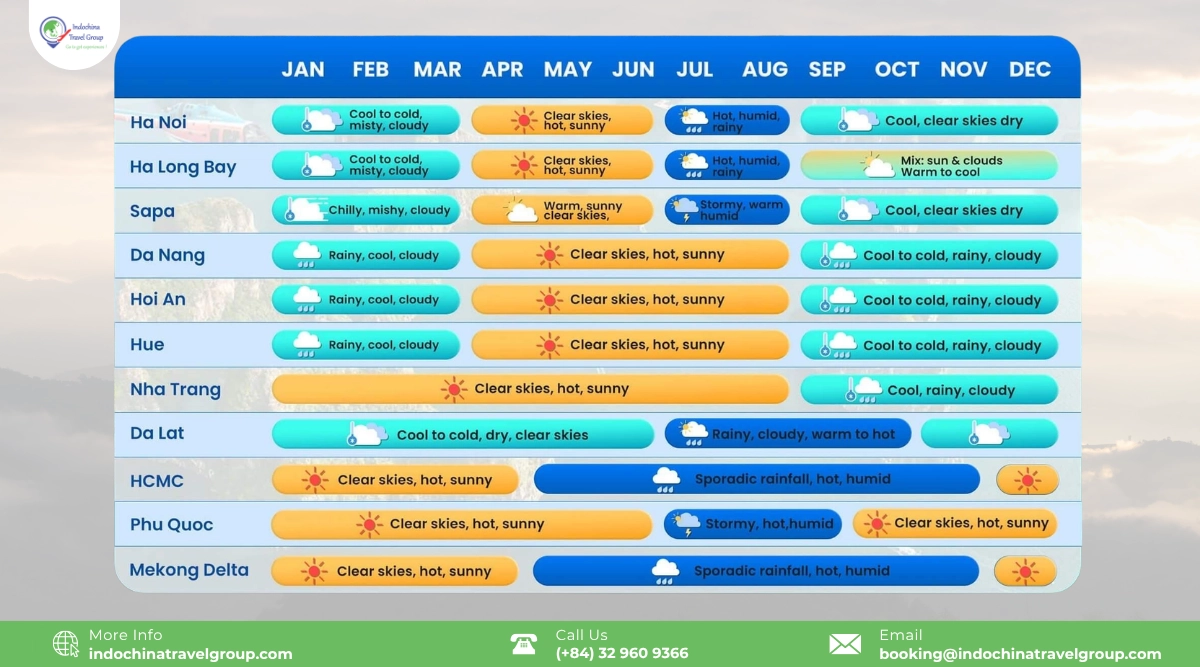 A month-by-month overview is useful only as a cross-country reference. The same month can feel very different in the North, Central coast, highlands and South, so use the national table to spot broad patterns and then return to the regional section for the actual itinerary.
- January – February: Northern cities and mountains can be cool or cold, while southern destinations are often easier for dry-season travel. Central conditions still vary by coast and year.
- March – April: Often a flexible period for multi-region trips, but the North can still be humid or drizzly and the South can already feel hot.
- May – June: Heat and rain increase in parts of the North and South. The central coast can still work well for beach time, but heat and sea conditions should be checked separately.
- July – August: Expect high heat in many regions, with frequent rain or storms in some northern and southern areas. Central-coast beach plans can still work, but afternoon heat and local weather matter.
- September – October: Northern weather begins changing while central-coast storm and flood risk becomes a more important planning factor. Keep transfer and outdoor days flexible.
- November – December: The North often becomes cooler and the South moves toward a drier period. Parts of Central Vietnam can still be wet, so route planning should stay region-specific.
North Vietnam month-by-month
Northern Vietnam has the clearest seasonal swing in this comparison, but Hanoi, Sapa and Ha Long Bay still need separate checks because elevation and marine conditions change the experience.- Hanoi: Cooler months can make long city walks easier, while spring may feel humid or drizzly and summer brings more heat, humidity and rain. Use the actual forecast to shape outdoor blocks and museum time rather than assuming every day in one season behaves the same.
- Sapa: Winter can be cold and foggy, while terrace colour changes with planting and harvest timing. If rice scenery matters, check the seasonal stage for the specific year instead of relying on one fixed “golden” week.
- Ha Long Bay: Cooler or drier periods can be easier for cruising, but visibility and sea conditions still vary by day. Warmer months can suit swimming, while tropical weather may disrupt sailing, so the current marine forecast and cruise-operator notice should override a month label.
Central Vietnam month-by-month
The Central coast follows a different rainfall calendar from much of the North and South, and late-year rain, flooding or tropical-system disruption can become a more important planning factor. Treat Da Lat separately because elevation gives the highlands a different temperature and rainfall pattern from Hue, Da Nang or Hoi An.- Hoi An and Da Nang: Drier periods are usually easier for beach and heritage days, but heat, sea state and short heavy showers still vary within the season. Late-year months generally need more flexibility for heavy rain, flooding and tropical-system disruption, so check the current forecast instead of treating one fixed window as guaranteed.
- Da Lat: Da Lat stays cooler than many lowland destinations because of its elevation. Drier periods are often easier for countryside drives and walking, while wetter months can bring greener scenery but also heavier rain, fog and more variable road conditions.
READ MORE: Vietnam Travel Guide: Everything You Need to Know Before You Go
Southern Vietnam month-by-month
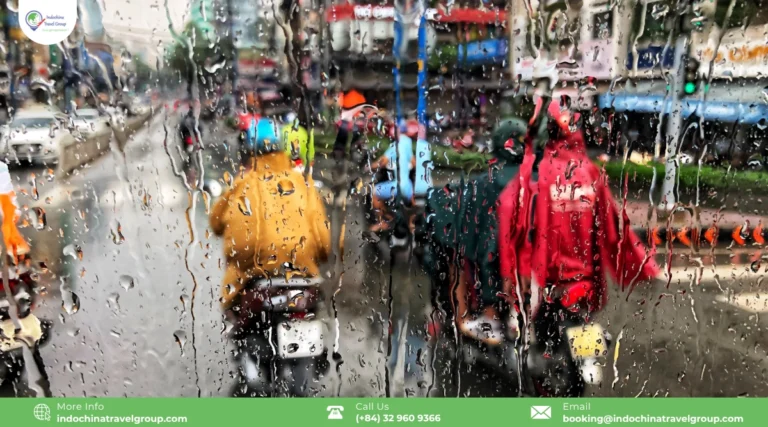 Southern Vietnam stays warm through the year, but rainfall, humidity and river conditions still vary by month and year. Use the broader wetter–drier pattern as a planning baseline rather than assuming the region behaves the same every season.
- Ho Chi Minh City and the Mekong Delta: Drier periods can make city walking and road transfers easier, while wetter months need more flexibility around outdoor blocks and river excursions.
- Phu Quoc and Con Dao: Drier periods are often easier for beach and boat planning, while wetter or windier months can affect sea conditions. Check the marine forecast and current boat operations rather than assuming one fixed island season will behave the same every year.
Rain, storms and flood risk
Storm and flood risk should be treated as a route-planning factor rather than a fixed nationwide calendar. Tropical systems can affect different parts of Vietnam at different times, while the Central coast often needs more late-year flexibility. Heavy rain can also disrupt mountain roads, low-lying urban areas and delta routes even without a named storm.
If you are travelling in a storm-prone or flood-prone period, keep exposed road days, boat plans and same-day flight connections flexible. Check current local warnings and transport status close to travel rather than assuming another region will automatically be clear.
Useful travel windows by region
There is no single national “best month.” A useful travel window depends on the route and the activity that matters most:
- North: cooler or drier periods can be easier for city walks and mountain roads, while terrace colour, fog and rain follow their own calendars.
- Central coast: drier periods are generally easier for heritage and beach plans, but heat, sea state and late-year storm risk still need separate checks.
- South: drier periods often simplify city, delta and island plans, while wetter months can still work when the itinerary has weather flexibility.
For a multi-region trip, choose the route first and then match the dates to the most weather-sensitive part of that route instead of chasing one nationwide “winner.”
What to pack by month and region
 Packing for Vietnam works better when you plan for the regions in your actual itinerary. A North-to-South trip may need a warm layer for higher or cooler northern stops, lightweight clothing for warmer lowlands and rain protection where the forecast is unsettled.
- For the North in cooler months: Pack a warm layer that matches the forecast, especially for Sapa and other higher-elevation stops. Hanoi can also feel damp and cool, but the amount of insulation needed varies by week.
- For warmer southern routes: Lightweight clothing, sun protection and a hat are useful for long outdoor days. Add a light rain layer when the forecast is unsettled.
- For wetter periods: Carry a lightweight rain shell or poncho and keep phones, passports and other important items in a water-resistant pouch. For road transfers, let current weather and road conditions decide whether an outdoor or motorbike-led plan still makes sense.
Weather and activities: What to do when
The final layer is to match weather with the activity that actually matters. Mountain walking, beach days, cruising and long road journeys respond differently to rain, wind, heat and visibility, so use the month as a starting point rather than the decision by itself.- Mountain walks in Sapa: Spring and autumn can be useful starting points, but trail conditions, fog and rice timing still vary by elevation and year.
- Mountain-road trips in Ha Giang: Spring and autumn can also work well, but current road conditions, rain and visibility matter more than a fixed month label.
- Beaches: Use current sea conditions and each destination’s regional weather pattern rather than one national beach season. For a city-resort coast, see our Nha Trang travel guide; Phu Quoc follows a different southern-island pattern.
- Cruising Ha Long Bay/Lan Ha Bay: Seasonal patterns are useful, but visibility, wind and marine conditions vary by day. Check the forecast and operator status close to departure, especially when photography or kayaking matters.
- Hoi An Old Town: Drier periods often make walking easier, but heat and rain still vary within the season. If a lantern event matters, check the lunar calendar and the actual forecast for the visit date.
Conclusion
Vietnam can be travelled year-round, but the route should change with the season. Weather affects mountain visibility, sea conditions, walking comfort and transfer reliability differently in each region, so use the calendar to narrow the options and the short-range forecast to shape the actual day.Use the monthly pattern to narrow the options, then let the short-range forecast and local operating conditions decide weather-sensitive activities such as trekking, cruises, beach days and mountain-road travel.If your dates are fixed and you need to compare routes that fit them, use our Vietnam Tour Packages as the final planning hand-off.
Recommended Tours

Group Tour
Hanoi – Sapa – Danang – Ho Chi Minh 10D9N
Hanoi - Sapa - Fansipan Peak - Ninh Binh - Halong Bay Overnight On Cruise - Danang - Hoi An Ancient Town - Bana Hills - Golden Bridge - Ho Chi Minh - Cu Chi Tunnels - Mekong Delta



Private Tour
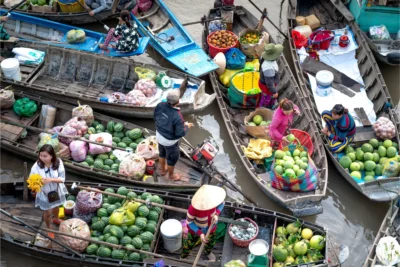
Ho Chi Minh – Cu Chi Tunnels – Mekong Delta 4D3N
Ho Chi Minh - Cu Chi Tunnels - Mekong Delta

Private Tour
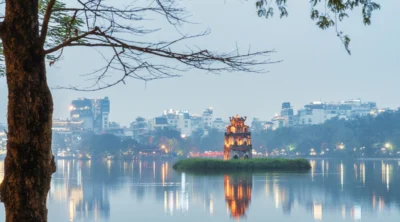
Vietnam Highlights 7 Days 6 Nights Tour
Hanoi Arrival - Hanoi City Tour - Ha Long Bay Day Cruise - Fly to Da Nang - Coconut Village - Hoi An Ancient Town - Ba Na Hills - Golden Bridge - Fly to Ho Chi Minh City - Cu Chi Tunnels - Mekong Delta - Departure


5D4N DELIGHT DANANG TOUR (DANANG – BA NA HILL FRENCH VILLAGE – HOI AN – HUE CITY) (SEAT IN COACH)


Private Tour
Vietnam Panorama Discovery 16D15N
Ho Chi Minh - Cu Chi Tunnels - Mekong Delta Tour - Can Tho - Da Lat - Nha Trang - Hoi An - Da Nang - Hue - Hanoi - Halong Bay Overnight On Cruise