
Phu Quoc beaches at a glance
The island is large enough that beach choice affects transfer time. The west coast is the easiest fit for Duong Dong and Long Beach hotels; Ong Lang sits farther north on the west coast; Sao and Khem are better paired with a south-island route; Rạch Vẹm and Ganh Dau make more sense on a north-focused day.For a short stay, we would not try to collect beaches from every coast. A traveller based around Long Beach may use one south-beach day; a south-based resort guest may be better off keeping most beach time nearby; a north-based family trip can leave the south for another day or skip it entirely.The practical aim of this guide is to compare beach character, route fit and seasonal exposure so you can choose one or two beaches that suit the day instead of spending the day crossing the island.Beach conditions by season: keep the coast flexible
Season matters, but a monthly label is not enough to tell you what swimming or a boat day will be like. Wind direction, rain and sea state can make one coast more comfortable than another on the same trip.Roughly November to March is often the easier period for west-coast beach time and island-hopping. During the wetter southwest-monsoon period, western beaches such as Long Beach and Ong Lang can see more wind and swell, while some eastern or southern stretches may be more sheltered. This is a planning pattern, not a guarantee: check the actual forecast, flags and local operator advice for your dates.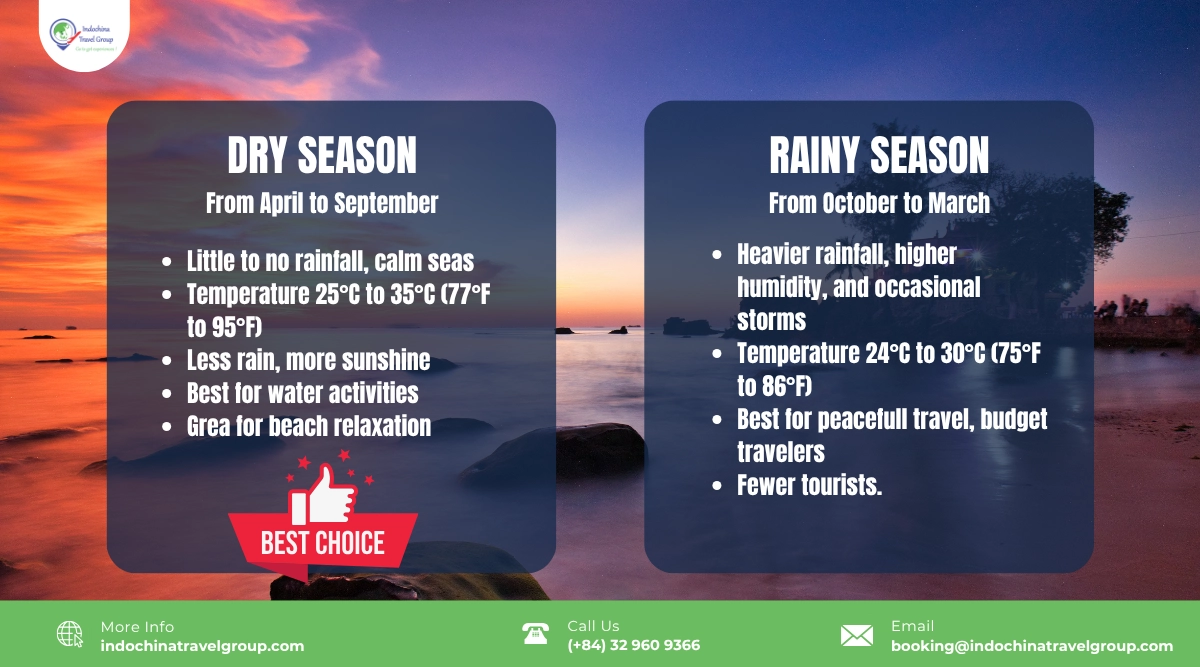 For snorkelling or speedboat days, visibility and route choice should be treated as day-specific operating conditions rather than a fixed seasonal promise. If the sea is rough on the coast you planned, changing beach or keeping a land-based day is usually better than forcing the original schedule.
How to get around the beaches?
Beach-hopping only works when the transport matches the route. A nearby west-coast beach can be a simple taxi ride; a north or south circuit needs more transfer time and should be planned as a proper half-day or full-day route.Taxis and app-based cars are simpler for many families and short stays. Self-drive can give more flexibility, but only when your licence, insurance and riding experience are appropriate for Vietnam and you are comfortable with local traffic and weather. Southern-island snorkelling trips normally depart by boat from the An Thoi area and should be treated separately from a main-island beach day.When we compare transport for a beach day, we look at the hotel base, return time and whether the day includes swimming, a boat departure or an evening plan. A taxi may cost more than a scooter but can remove parking, heat and riding concerns; a private car becomes more useful when several stops are spread across one side of the island. For boat trips, use the operator’s confirmed route and weather decision rather than assuming a fixed list of islands.Main Phu Quoc beaches and what each one is useful for
The beaches below solve different trip needs. We would choose between them based on coast, hotel base, current sea conditions and how much transfer time the day can absorb—not because every traveller needs to visit all four.Here is the practical difference between the main choices:Sao Beach (Bãi Sao) — south-east beach day
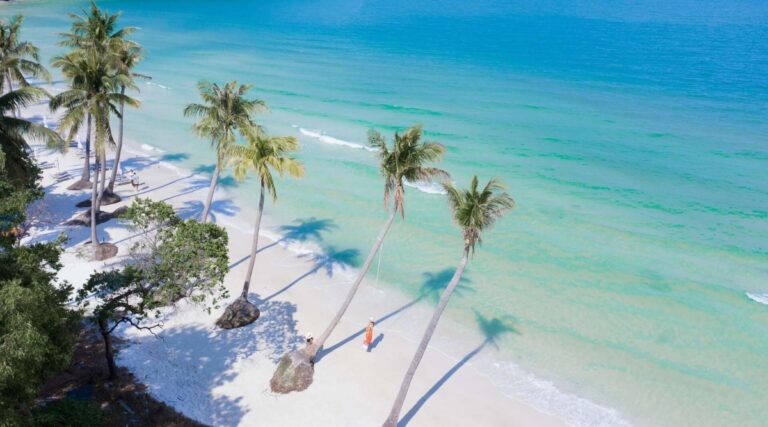 Sao Beach sits on the south-east coast and is usually visited as part of a south-island day rather than from a far-north base. The sand and water can look very different with weather, tide and crowd levels, so we would not promise a fixed postcard condition. Earlier visits can be quieter, but check the day’s sea conditions before planning swimming around a set time.
Long Beach / Bãi Trường — convenience and west-coast sunsets
Long Beach is the easiest beach to use when you stay around Bãi Trường or the southern side of Duong Dong. Its main advantage is convenience: hotels, restaurants, airport access and sunset-facing shoreline can all fit without a long day transfer. The trade-off is a more developed setting, and west-coast swimming conditions can become rougher during wetter, windier periods.Khem Beach / Bãi Khem — south-coast resort beach
Khem Beach sits in the south and is closely tied to the resort zone there. It works naturally for travellers staying south or combining beach time with An Thoi and nearby attractions. Access and usable public areas can depend on the specific property or access point, so check how your hotel or day route reaches the beach before building the day around it.Ong Lang Beach — quieter west-coast base
Ong Lang is useful when the stay is meant to be quieter than Long Beach without moving all the way to the north-island resort zone. Its shoreline is more broken up, with rocky sections and smaller beach stretches. It suits slower beach time well, but it is less convenient when the itinerary repeatedly sends you to the far south.READ MORE: Best Beaches in Vietnam: Top Beaches Vietnam Guide
Northern beaches: quieter routes with fewer conveniences
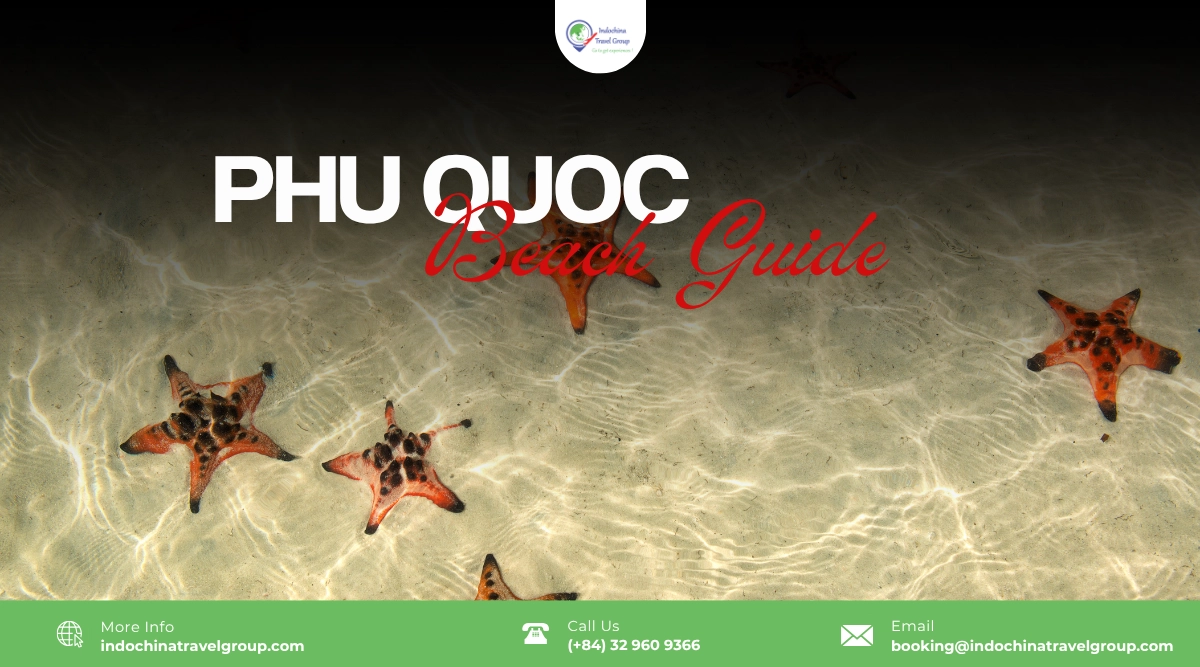
The north can feel quieter than the main west-coast strip, but it should not be treated as one continuous empty beach zone. Roads, access, facilities and shoreline character vary, and some stops make more sense as part of a north-island route than as a full beach day.Cua Can, Rạch Vẹm and Ganh Dau are useful examples of that difference. Expect fewer services than Long Beach and more route planning. Rạch Vẹm is primarily known for the shallow-water starfish experience; it should not be assumed to be the island’s best swimming beach.Cua Can can be paired with river or kayak activities where they are operating. At Rạch Vẹm, starfish sightings vary with conditions; if they are present, observe them in the water and do not lift or reposition them for photographs. Ganh Dau works better as a north-route stop than as something added to a south-island day. Check road and access conditions before committing to several northern stops in one outing.Beach‑type comparison table
 Use the table as a route filter rather than a ranking. First identify which coast fits your hotel and day plan, then check the current sea conditions before deciding whether that beach still makes sense.
| Beach Name | Region | Beach character | Planning fit |
| Sao Beach | Southeast | White-sand / popular day stop | South-island route; swimming only when conditions are suitable |
| Long Beach | West | Developed resort and hotel coast | Convenient for west-coast stays, dining and sunsets |
| Khem Beach | South-east | Resort-focused | South-based stays, resort beach time, nearby south-island routing |
| Ong Lang | Central-West | Lower-density west-coast stay | Quieter hotel base with dining and sunset access |
| Cua Can | Northwest | Lower-service coastal area | Nature-led stops and kayaking where operating |
| Rạch Vẹm | North | Shallow-water / fishing-village stop | North-island route, starfish observation when conditions allow |
| Ganh Dau | North-tip | North-coast route stop | Views of Cambodia, Secluded coves, Photography |
How to choose the right Phu Quoc beach for you?
For most short stays, changing hotels simply to sample another beach creates more packing and transfer time than value. A better approach is to choose one base that fits most of the trip, then use one or two beach days to explore another coast when the route and sea conditions make sense.Beach choice is mainly a geography decision. Long Beach is convenient from a central-west base; Ong Lang suits a quieter west-coast stay; Sao and Khem fit naturally into a south-island day; Rạch Vẹm and Ganh Dau belong to a north-focused route. Current weather and sea conditions can still change which option works best on the day.Families should check the actual beach conditions, access and supervision needs rather than relying on a fixed “family beach” ranking. A beach that is calm on one visit may be less suitable after wind or rain, and resort-managed sections can differ from public access areas. For a wider decision on hotel zones and north-versus-south trip planning, return to the broader Phu Quoc destination guide.Sample 3 – 5 day “Phu Quoc beach guide” itineraries
The sample structures below are route examples rather than checklists. Keep beaches on the same side of the island together where possible, and leave room to change the water day if sea conditions are poor.A practical 3-day beach structure
- Day 1: Arrive and settle into Long Beach. Spend the afternoon swimming and enjoy a sunset cocktail at a beach bar.
- Day 2: Use a south-island day for Sao or Khem Beach, or combine beach time with An Thoi-area activities if current conditions suit the plan.
- Day 3: Morning at Ong Lang Beach for a social lunch and some light snorkeling around the rocks before your late afternoon departure.
A slower 5-day beach structure
- Days 1–2: Follow the 3-day highlights above.
- Day 3: Use an An Thoi boat day for the southern islets. Exact stops, including islands such as May Rut when operating, depend on the operator, weather and sea state.
- Day 4: Use a north-island day for Cua Can, Rạch Vẹm or Ganh Dau where access and conditions are suitable. Taxi or private car is simpler for many travellers; self-drive only makes sense with appropriate licence, insurance and riding experience.
- Day 5: Keep the morning close to your hotel or chosen beach and leave enough time for the airport transfer.
Practical tips for visiting Phu Quoc beaches
Before a beach day, check transport, sea conditions, beach flags and how far the return trip is from your hotel. Keep electronics protected from water, avoid handling marine life, and leave enough buffer if the same day includes a boat departure or airport transfer.A few practical checks matter more than a fixed beach ranking:- Starfish etiquette: If starfish are present at Rạch Vẹm, observe them in the water and avoid lifting or repositioning them for photographs.
- Heat and sun: Carry drinking water and suitable sun protection, especially on exposed boat and beach days.
- Money: Card acceptance varies outside larger hotels and businesses, so carry some Vietnamese dong for smaller vendors and confirm prices before ordering or using a service.
- Water safety: Follow beach flags, lifeguard instructions and local operator advice. Wind, swell and currents can change quickly, especially during wetter and windier periods.
Conclusion
Phu Quoc beach planning works better when the coast, hotel base and current sea conditions are considered together. Use this page for beach-level choices; the broader destination guide should carry the stay-area, attraction and full-itinerary decisions.If Phu Quoc is one stop in a longer southern trip, use our South Vietnam route guide to compare the island with Ho Chi Minh City and the Mekong Delta.
Recommended Tours

4 Days 3 Nights from


5 Days 4 Nights from


Group Tour
Hanoi – Sapa – DaNang 8 Days 7 Nights
HotelCruiseFlightsTour
Hanoi - City Tour - Sapa- Cat Cat Village - Moana Cafe - Fansipan - Muong Hoa Train - Ninh Binh - Tam Coc - Halong Bay - Da Nang - Hoi An Ancient Town - Bana Hills - Golden Bridge
8 Days 7 Nights from


Group Tour
Vietnam – Joining Group Tour 12 Days
HotelCruiseFlightsTour
Ha Noi City Tour - Ninh Binh - Halong Bay Overnight On Cruise - Hue - Hoi An Eco Tour - Ho Chi Minh City - Cu Chi Tunnels - Mekong Delta
12 Days 11 Nights from

5D4N DISCOVER HANOI – HALONG (DAY CRUISE) – TAM COC (SEAT IN COACH)
HotelCruiseFlightsTour
from

Group Tour
Hanoi – Ho Chi Minh – Siem Reap 8D7N
HotelCruiseFlightsTour
Hanoi - Ninh Binh - Halong Bay Overnight On Cruise - Ho Chi Minh - Cu Chi Tunnels - Siem Reap - Angkor Wat Full Day
8 Days 7 Nights from