Da Nang Travel Guide: Beaches, Where to Stay & Central Vietnam Trips
Da Nang works in two different ways: as a beach-and-city stay in its own right, or as the practical transport base for Hoi An, Hue, Ba Na Hills and the Hai Van Pass. Decide which role matters first because it changes the hotel area, number of nights and how many side trips are realistic without turning the stay into repeated transfers.Da Nang works as both a beach city and a practical Central Vietnam transport base.
How should you use Da Nang in a Central Vietnam trip?
Trip style
Time
What works well
Planning note
Da Nang city + beach
2–3 nights
My Khe, Son Tra, city food, relaxed beach time
Good when you want fewer hotel changes and easy airport access.
Da Nang + Hoi An
3–5 nights total
Beach/city base plus Ancient Town evenings
Stay in one place if convenience matters; split nights only when the atmosphere of both bases matters to you.
Hue deserves its own sightseeing time; avoid making it a rushed photo-stop day.
Da Nang as a transfer hub
1 night
Late arrival / early departure
Useful when the flight schedule does not line up cleanly with Hoi An or Hue.
Da Nang at a glance: beach city and Central Vietnam base
Da Nang combines an international airport, a long urban coastline and short road links to several major Central Vietnam sights. From an itinerary point of view, that makes it useful even for travellers who do not want a long city stay.For a two- or three-night stay, decide first whether the beach or the city centre should be the base. Families and slower trips often prefer the coast; travellers focused on food, transport convenience or short urban stays may prefer the city side. If Hoi An or Hue is also included, the route should reduce backtracking rather than treating each place as a separate hotel stop.
Best time to visit Da Nang: beach weather, heat and rainy-season trade-offs
Da Nang works year-round, but the weather changes what makes sense on a given day. For beach time, outdoor sightseeing and Son Tra, we care more about the actual forecast than a single “best month” label.February to April is often comfortable for city sightseeing and outdoor time. May to August is hotter and more humid, which can suit beach-focused trips if you are comfortable planning around midday heat.The late-year rainy season needs more flexibility because heavy rain or storms can affect outdoor attractions, mountain excursions and river activities. We therefore keep weather-sensitive stops adjustable rather than building the whole stay around one fixed day.
Where to stay in Da Nang: choosing a practical base
Where you stay should follow the part of Da Nang you want to use most. Three practical bases cover most short stays: the beach side, the Son Tra side and the city centre.
My Khe Beach / My An: Practical when you want easy beach access, a wide hotel choice and plenty of restaurants within a short ride or walk.
Son Tra side: Better when a quieter setting or resort stay matters more than being close to every city restaurant and evening activity.
City centre / Hai Chau: Useful for the Han River, markets, local food and shorter airport transfers. Choose it when urban access matters more than waking up beside the beach.
Main Da Nang sights and which ones fit your trip
Not every Da Nang attraction belongs in the same itinerary. A beach-focused stay may need only Son Tra and the city; a first Central Vietnam trip may prioritise Marble Mountains because it sits naturally on the road toward Hoi An; Ba Na Hills is a full excursion and should be given enough time rather than squeezed between other stops.The sections below explain what each major sight adds so you can decide whether it belongs in your route.
Beaches and coastal life
My Khe is the easiest beach to combine with a city stay because hotels, food and transport are close by. Early morning and late afternoon are usually more comfortable for walking or swimming than the hottest part of the day. To the south, Non Nuoc works better for travellers who prefer a more resort-focused base near the Marble Mountains. For a fuller comparison of the coast, use our Da Nang beaches guide.
Dragon Bridge and the Han River at night
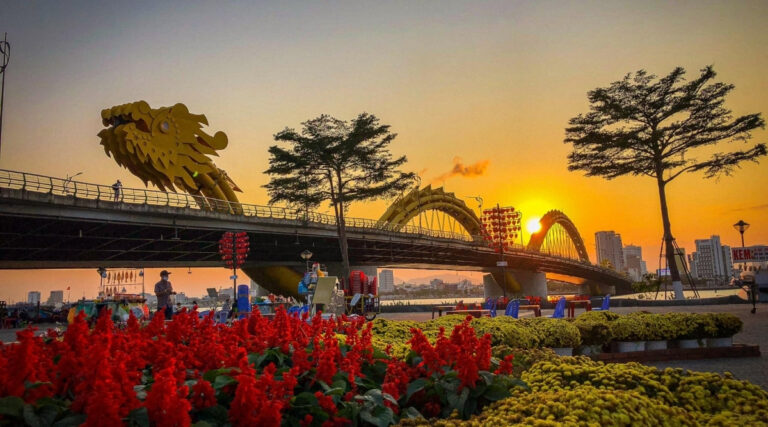
Dragon Bridge and the riverfront are easiest to include as part of an evening already spent in central Da Nang. Fire-and-water shows operate on selected evenings, so check the current schedule before building dinner or transport around them. The Han River Bridge and nearby riverfront areas can be combined with the same evening when weather and hotel location make the detour worthwhile.
Son Tra Peninsula (Monkey Mountain)
Son Tra PeninsulaSon Tra combines coastal viewpoints, forest and Linh Ung Pagoda in the same part of the city. Access rules matter here: some roads have vehicle restrictions, and unauthorized trekking or wildlife tours inside the special-use forest should be avoided. Check the current permitted route before planning a sunrise drive, viewpoint stop or nature visit.
Ba Na Hills and Golden Bridge
Golden Bridge at Ba Na Hills near Da Nang
Ba Na Hills is a high-elevation resort complex west of Da Nang, best known internationally for the Golden Bridge and its cable-car access. The visit uses a substantial part of the day once road transfer, cable-car queues and time inside the complex are included, so we treat it as a dedicated excursion rather than a quick add-on between city stops.
Marble Mountains
The Marble Mountains (Ngu Hanh Son) are a group of limestone and marble hills with caves, pagodas, stairways and viewpoints. The site involves more walking and climbing than a quick roadside stop, so match the route to mobility, heat and available time. Am Phu Cave adds a religious and symbolic layer, while the upper paths provide elevated views when weather and visibility are suitable.
Cham Museum and regional history
The Museum of Cham Sculpture adds historical context to a Da Nang stay through sculpture and artefacts associated with Cham culture in Central Vietnam. It fits well with a city-centre block or a heritage-focused day, especially when you want context before visiting My Son or other Cham sites in the region.
Extra Da Nang experiences: choose by pace and weather
Once the main sights are covered, we choose extra activities by pace and current operating conditions rather than treating them as a checklist.Dragon Bridge
Son Tra viewpoints: Use only currently permitted roads and access points. Vehicle restrictions apply on parts of the peninsula, and spontaneous trekking inside the special-use forest should not be treated as a normal tourist activity.
Evening Han River cruise: A short river cruise can add a different view of the bridges and skyline when it fits the evening schedule. Check the current departure time rather than building dinner plans around a fixed duration.
Surfing at My Khe: Surf conditions vary by day and season. Beginner lessons may be available when conditions suit them, so choose a reputable operator and check the actual sea state rather than assuming the beach is always beginner-friendly.
Marble Mountains: Use the stairs or elevator according to mobility, heat and available time. Smaller caves and pagoda areas can add depth to the visit, but follow marked access routes and do not assume quieter sections will always be uncrowded.
Food and drink in Da Nang
Da Nang’s food reflects both the central coast and Quang-region cooking. Instead of travelling for one famous address, build meals around the dishes that fit the neighbourhood and time of day:
Mi Quang: Wide rice noodles with a small amount of concentrated broth, herbs, peanuts and rice cracker. Toppings and seasoning vary by shop, so compare styles rather than treating one restaurant as the default.
Seafood: Beachside and city restaurants offer fish and shellfish in many preparation styles. When items are priced by weight, confirm the unit, price and cooking method before ordering, and choose dishes around dietary preferences rather than one fixed “must-try” preparation.
Banh Xeo (Central Style): Unlike the large, yellow pancakes of the South, Da Nang’s Banh Xeo are smaller and crispier, wrapped in rice paper with pork skewers (Nem Lui) and a thick peanut dipping sauce.
Day trips from Da Nang: Hoi An, Hue or a mountain excursion?
The useful decision is whether you want heritage, a scenic transfer or a dedicated mountain excursion. Hoi An fits naturally with Marble Mountains and an evening in the Ancient Town; Hue deserves enough time for its imperial sites and works better as a separate day or overnight stop; Ba Na Hills uses most of a day by itself. Choose by the role each place plays in the wider Central Vietnam route rather than by headline driving time alone.Am Phu Cave
Marble Mountains + Hoi An: Combine the Marble Mountains with an afternoon and evening in Hoi An when you want one southbound heritage day without returning to central Da Nang between stops.
Hai Van Pass transfer: Use the pass when scenery and daylight are worth the extra road time between Da Nang and Hue. A private car is the simplest option for most travellers; a motorbike route only suits properly licensed, experienced riders when weather and road conditions are appropriate.
My Son Sanctuary: For history buffs, the 4th-century Hindu ruins of the Champa Kingdom are about 1.5 hours away, offering a stark, beautiful contrast to the city’s modernity.
Practical tips for visiting Da Nang
Da Nang is relatively easy to move around, but beach, city-centre and mountain days use different transport patterns. Plan airport transfers from the actual hotel location, use app-based or licensed taxi services when they suit the route, and pack for heat, sun and sudden weather changes. Ba Na Hills sits at much higher elevation than the city, so check the forecast for the mountain rather than assuming coastal conditions will be the same.To ensure a smooth trip, keep these practical points in mind:
Connectivity: Arrange a SIM or eSIM that suits your device and trip before relying on mobile data for ride-hailing or maps. Coverage can vary by operator and terrain, especially outside the urban area.
Money: Carry some Vietnamese dong for smaller vendors and markets, and keep a card as a second payment option. Acceptance varies by business, so do not assume every restaurant or attraction will take an international card.
Walking and riding: The beach and riverfront are pleasant for shorter walks, but many cross-city journeys are better handled by taxi or app-based transport. Choose the mode by distance, heat, traffic and pickup convenience rather than assuming one option is always cheapest.
Transport choice: App-based taxis and local taxi services are widely used in the city. Choose the option that gives you a clear pickup point and fare rather than building the day around one specific transport brand.
How to spend 2–3 days in Da Nang
With two days, keep one day for the city and coast, then choose one substantial excursion such as Ba Na Hills or a Hoi An connection. With three days, add Marble Mountains, Son Tra or another Central Vietnam stop according to the onward route. The useful sequence depends on weather, hotel base and whether Da Nang itself or the surrounding region is the main reason for the stay.French Village Bana HillsHere is a more detailed breakdown:
Day 1: Beach and city evening: Arrive, settle into the chosen base and keep the afternoon light around My Khe or the riverfront. If the Dragon Bridge show matters, check the current schedule before building dinner or transport around it.
Day 2: Ba Na Hills or another full-day excursion: Give Ba Na Hills most of the day if it is a priority; otherwise use the day for a different substantial excursion rather than stacking several distant stops.
Day 3: Marble Mountains, city history or Son Tra: Combine stops that fit the hotel base, weather and onward route. An early Marble Mountains visit can work well in hotter weather, while the Cham Museum and Son Tra belong to different city blocks and do not both need to be forced into the same day.
Choose Da Nang by the role it plays in your Central Vietnam route
Da Nang can work as a beach-and-city stay, an airport base for Hoi An, or the starting point for a wider route toward Hue. The right number of nights depends on which of those roles matters most; adding more excursions is not automatically better if it turns the stay into repeated transfers.Da Nang is most useful when it simplifies the Central Vietnam route rather than adding another compulsory hotel stop. If Hoi An is the next stop, decide whether to stay there or continue using Da Nang as the base before adding another full-day excursion.If Hue is also in the itinerary, decide the overnight split before adding Ba Na Hills or another full-day excursion; otherwise the region becomes a sequence of transfers rather than a stay.Use our Central Vietnam route guide to compare Da Nang with Hoi An, Hue and the longer coast-and-highland extensions before deciding how many hotel bases the region needs.For wider route choices across the country, compare our Vietnam Tour Packages.