Whether you’re dreaming of the emerald waters of Ha Long Bay or the electric energy of Ho Chi Minh City, planning a trip to Vietnam is an exercise in choosing your own adventure. Whether you are a solo backpacker, a digital nomad, or a luxury seeker, this Vietnam Travel Guide: Everything You Need to Know Before You Go is designed to be your definitive resource, grounded in real-time expertise and local secrets. For those looking for a seamless experience curated by experts, ITG invites you to explore our curated Vietnam Tour Packages, designed to take you deeper into the heart of our culture.
The soul of the S-shaped land
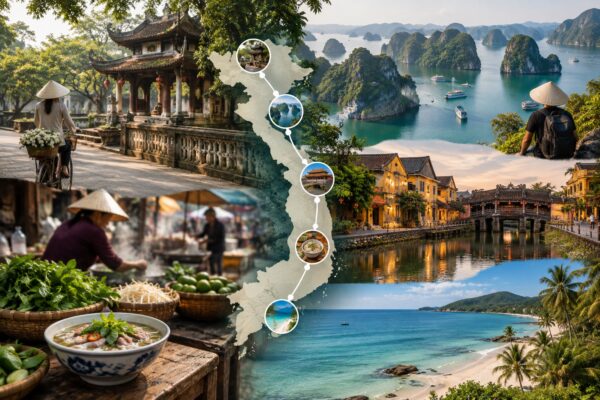
Vietnam is not just a country, it is a 1,650 km sensory explosion. To understand Vietnam is to embrace its contrasts – the way a 1,000-year-old temple sits peacefully next to a gleaming skyscraper, or how the silence of a misty Sapa morning is balanced by the chaotic, rhythmic symphony of eight million motorbikes in Ho Chi Minh City.

The allure of Vietnam lies in its “S” shape, which creates three distinct climatic and cultural zones. In the North, you find the rugged, karst peaks and the ancestral home of Vietnamese culture. The Center offers white-sand beaches and the imperial echoes of the Nguyen Dynasty. The South is the engine of the country—modern, tropical, and endlessly energetic.
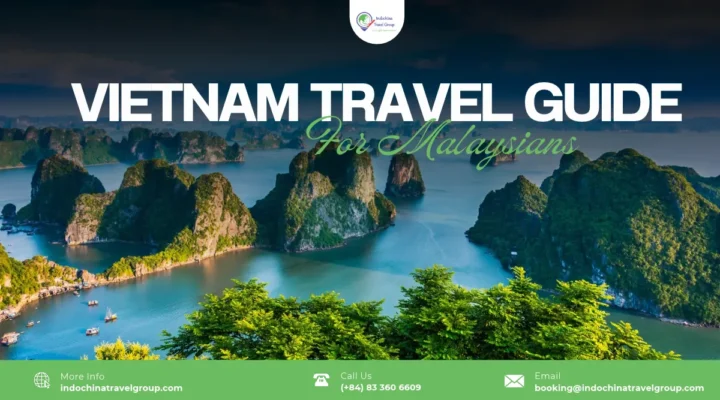
At Indochina Travel Group, we advocate for the “Indochina Edge.” This means moving beyond the “cookie-cutter” tourist trail. While others stop at Ha Long Bay, we take you to Lan Ha Bay; while others see the Sapa town center, we guide you through the untamed Ha Giang Loop. For a first-time visitor, 10 to 15 days is the ideal duration to cover the “Big Three” regions without feeling like you are simply checking boxes.
Strategic planning and Vietnam itinerary: Routes for every traveler
Planning a trip to Vietnam can be overwhelming because of its length. Unlike smaller countries, you cannot “wing it” in a week and expect to see everything. Strategic planning is the difference between a stressful commute and a transformative journey.

Popular routes by duration
When we design tours, we look at the logistics of “regional hopping.” Vietnam’s infrastructure has improved significantly, but distance remains a factor.
- 1 week: This is for the time-crunched traveler. Focus on the Hanoi – Ha Long Bay – Hoi An – Ho Chi Minh City (HCMC) axis. It’s a “tasting menu” of Vietnam.
- 10 – 20 days: This is our most popular request. It allows for the 1-week highlights plus a trekking excursion in Sapa, a historical stop in the Imperial City of Hue, and a boat trip through the Mekong Delta.
- 3+ weeks: For those with time, we recommend the rugged Ha Giang Loop in the North, the world-class Phong Nha caves in the Center, and ending with total relaxation on the beaches of Phu Quoc or the pristine Con Dao islands.
Specialized focus: Tailoring the experience
If you prefer to stay in one region to avoid domestic flights, consider these focused paths:
- North focus: Best for nature lovers. Prioritize the Sapa rice terraces (stunning in September) and Ninh Binh, often called “Ha Long Bay on Land.”
- Central Heritage: Best for history and food. Focus on the Citadel in Hue, the lantern-lit streets of Hoi An, and the modern architectural marvel of the Golden Bridge in Da Nang.
- Southern escape: Best for a tropical vibe. Combine the bustle of HCMC with the Cu Chi Tunnels and the vibrant, river-based life of the floating markets.
Best time to visit Vietnam

One of the most common mistakes travelers make is assuming Vietnam has one uniform climate. In reality, it has three. You could be sunbathing in the South while shivering in a down jacket in the North on the same day in January. The “Golden Window” to visit Vietnam nationwide is from October to April. This is generally the dry season across the country. However, regional nuances are critical:
- The North: Expect chilly, misty winters (as low as 10∘C) from December to February. Summers (June – August) are hot and rainy.
- The Center: This region is unique. It is driest from February to May. ITG strongly advises avoiding October and November, as this is peak typhoon season, and flooding in Hoi An is common.
- The South: It’s tropical year-round (25 – 35∘C). The dry season is November to April, while the rainy season brings short, intense afternoon bursts that are actually quite refreshing.
The “Shoulder Season” Secret: If you want luxury for less, visit in May or late September. The weather is transitional, but the crowds at major sites like Ha Long Bay drop by 40%, and high-end resorts often offer “soft opening” or seasonal rates that can save you hundreds of dollars.
Entry requirements and logistics
Vietnam has become more accessible than ever, but the paperwork still requires precision. A small error on an e-visa can result in being denied boarding at your departure airport.
Visa mastery
Now, the 90-day e-visa (multi-entry) is the standard for most nationalities. You must apply via the official government portal. Ensure your passport has at least 6 months of validity. At Indochina Travel Group, we always remind our guests to print a physical copy of their e-visa, as digital versions are occasionally questioned at land borders.
Connectivity
Don’t rely on international roaming, it’s expensive and slow. We recommend eSIMs – you can activate them the moment you touch down at Noi Bai or Tan Son Nhat airport. Additionally, using a VPN like NordVPN is essential for consistent access to your banking apps and home streaming services, as some local networks can be restrictive.
Essential apps
- Xanh SM: The absolute must-have for visitors. This is the all-electric taxi and motorbike service. It’s clean, quiet, and ethical.
- Grab: Great for food delivery and alternative rides.
- Shopee Food: Similar to Grab. Wonderful for food delivery, especially in Ho Chi Minh city.
- Agoda, Trip, Booking: Still the king of hotel bookings in Southeast Asia with the best regional rates.
Transportation: The green revolution in Vietnam
The way we move around Vietnam is changing. The days of noisy, polluting buses are being replaced by a commitment to sustainability and modern rail. Vietnam is currently undergoing a Green Revolution. The rise of Xanh SM (electric taxis) has transformed city travel, making it quieter and more eco-friendly. In Hanoi, the expanded urban railway system is finally a viable way to bypass the legendary traffic.
For regional hopping, domestic flights via Vietnam Airlines or VietJet remain the most efficient (averaging 30 – 100 USD). However, for a “Slow Travel” experience, the Reunification Express (the overnight train) offers a nostalgic and scenic journey, especially the stretch between Hue and Da Nang over the Hai Van Pass.
Many tourists want to rent a scooter the moment they land. Our expert advice? Don’t. In cities like HCMC and Hanoi, the traffic rules are “organized chaos” that takes years to master. If you want the two-wheel experience, opt for an “Easy Rider” tour where a professional local driver handles the bike while you enjoy the view.
Budgeting for journey
Vietnam remains one of the best value-for-money destinations in the world. Whether you are living on $30 a day or $300, the quality of the experience remains high.
| Travel style | Daily cost (USD) | Accommodation | Dining and transport |
| Backpacker | $30 – $50 | Hostels/Dorms | Street food, local buses, free walking tours |
| Flashpacker | $70 – $100 | Boutique Homestays | Mix of trendy cafes, street food, Grab bikes |
| Mid-Range | $100 – $200 | 3-4 Star Hotels | Domestic flights, private day tours, nice dinners |
| Luxury | $300+ | 5-Star/Private Villas | Private drivers, fine dining, luxury cruises |
“Mid-Range” is the sweet spot. For roughly $150 a day, you can stay in stunning colonial-style hotels, eat incredibly well, and have a private guide for your excursions.
Culinary and culturalimmersion
Vietnamese culture is defined by “Phúc” (Happiness/Fortune) and “Gia Đình” (Family). This is most evident at the dinner table. If you only eat Pho, you are missing 90% of the story.
Beyond Pho
To eat like a local, seek out Bun Bo Hue (a spicy beef noodle soup from the Center), Banh Mi (specifically the Hoi An style with extra pate), and the legendary Egg Coffee in Hanoi. The food culture is about balance – sweet, sour, salty, and spicy.
Cultural etiquette
- The “shoes-off” rule: Always remove your shoes when entering a home or certain smaller boutiques.
- Dress code: When visiting temples or the Ho Chi Minh Mausoleum, shoulders and knees must be covered. Carrying a light sarong in your bag is a pro tip.
The festival calendar
Timing your visit for the Hoi An Lantern Festival (held on the 14th day of every lunar month) is magical. However, be cautious about Tet (Lunar New Year). While beautiful, most shops and restaurants close for 5 – 7 days, and transport is fully booked months in advance.
Safety, health and responsible travel in Vietnam
Vietnam is consistently ranked as one of the safest destinations for solo and female travelers. However, being an informed traveler is the best way to ensure your trip stays on track.

Solo safety
Violent crime is extremely rare. The biggest nuisance is “phone snatching” on motorbikes in HCMC. Keep your phone away from the curb and use a wrist strap. For health, ensure you have vaccinations for Hepatitis A/B and Typhoid, and adhere to the “bottled or filtered water only” rule – even for brushing your teeth in rural areas.
Eco-tourism
At Indochina Travel Group, we are committed to preserving our home. We encourage you to:
- Select “reef-safe” sunscreen before visiting islands like Nha Trang.
- Choose Lan Ha Bay cruises: These routes are less crowded and have stricter waste-management protocols than the main Ha Long routes.
- Support ethnic minority homestays: In Ha Giang and Sapa, your money goes directly to the families preserving their ancestral traditions.
Digital nomads and hidden gems
As we look toward the future of travel, Vietnam is evolving into a hub for “slow travelers” and those seeking total seclusion. Da Nang has officially become a global hub for remote workers. With high-speed fiber internet, affordable beachfront apartments, and a thriving community of “work-from-homers,” it offers a lifestyle balance that is hard to beat.
Most tourists go to Phu Quoc. But those in the know go to Con Dao. Once a colonial prison island, it is now a pristine national park with some of the best diving in Southeast Asia. It remains untouched by mass tourism, offering a raw, quiet beauty that reminds me of what Vietnam was like 30 years ago.
Packing for a tropical micro-climate
Packing for Vietnam is an exercise in versatility. You need to prepare for a humid jungle, a breezy beach, and a cold mountain peak all in one suitcase.
- The North: Bring light layers for the heat, but a high-quality down jacket or heavy fleece is mandatory for Sapa or Ha Giang between November and March.
- The South: Focus on breathable linen and moisture-wicking fabrics. High-quality rain gear (a reusable poncho) is better than an umbrella for afternoon monsoons.
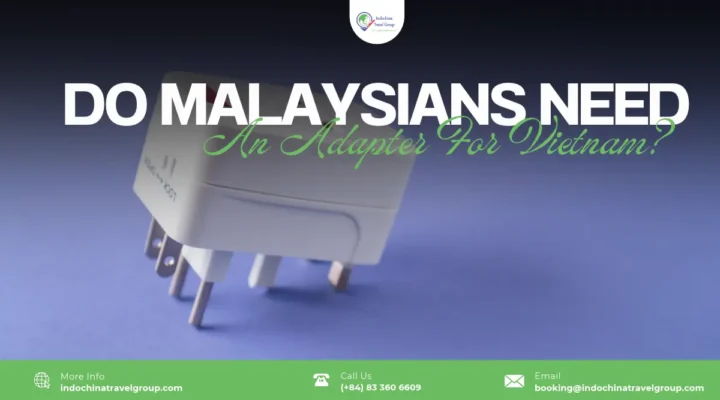
- Tech: Bring a universal power adapter (though many places use Type A, C, and G) and a high-capacity power bank for those long trekking days where “wall juice” is hard to find.
Expert tip: To experience the “Local Soul,” skip your hotel breakfast at least once. Walk two blocks away, find a street corner filled with tiny blue plastic stools, and sit down. If it’s crowded with locals shouting “Em ơi!” (Hey, waiter!), the food is guaranteed to be the best in the city.
Vietnam is waiting for you. It is a land that rewards the curious and the brave. Whether you book a journey through our specialized tour packages or forge your own path, we promise you this: you will leave Vietnam a different person than when you arrived.