
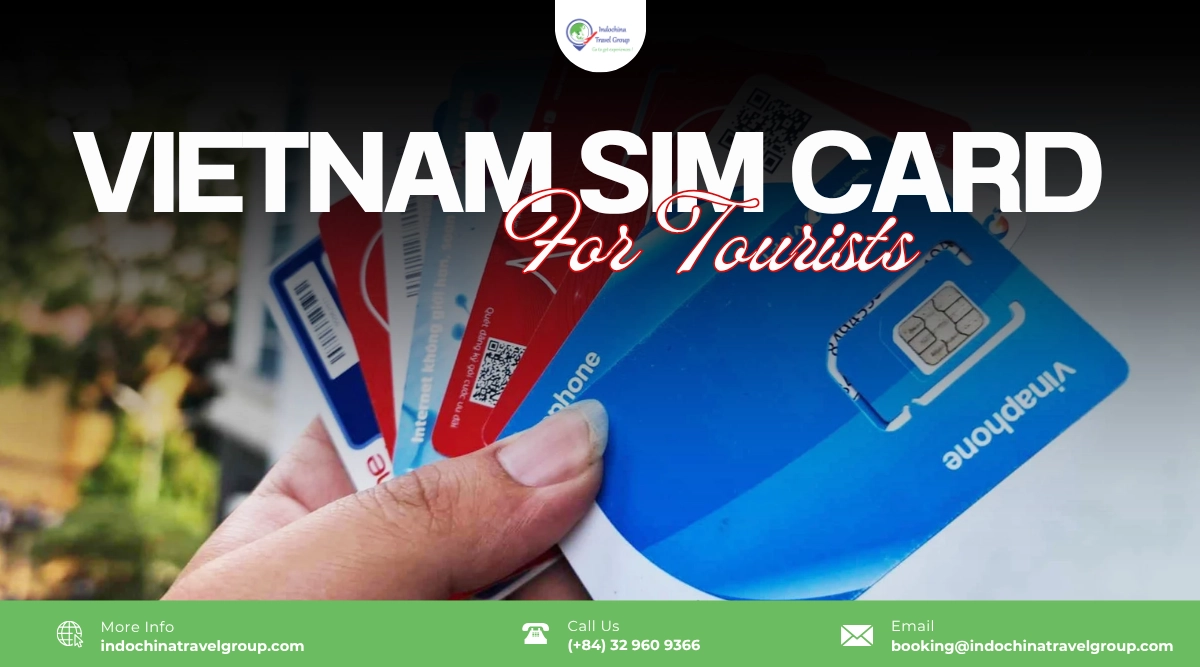
Choose a Vietnam SIM or eSIM from three things first: your phone, your route and whether you need a local number. An eSIM is convenient when you want data ready around arrival and your phone supports it. A physical local SIM can be useful when you want staff setup, a local number or direct access to a carrier’s prepaid plans. Roaming can be enough for a very short trip when the cost from your home carrier is acceptable.
Before buying anything, confirm that the phone is unlocked. For eSIM, also confirm that the exact device model supports eSIM and that you can keep your home line active if you still need SMS or banking codes.
Vietnam SIM, eSIM or roaming: quick decision
Use an eSIM for fast setup, a local physical SIM when you want a Vietnamese number or in-person activation, and roaming when simplicity matters more than local data pricing. For mountain, rural or multi-region travel, check the network used by the plan rather than choosing only by the SIM format.
eSIM
Best when your unlocked phone supports eSIM and you want to prepare the data line before or around arrival.
Local physical SIM
Useful when you want in-person setup, a local phone number or a carrier plan registered directly to you.
Home-carrier roaming
Worth comparing for a short stay when keeping one number and avoiding SIM setup is more important than the lowest data cost.
Why tourists need reliable internet in Vietnam
Reliable internet in Vietnam helps tourists move around, communicate, translate, pay, check bookings and contact support during the trip. It is not just for social media. A working SIM or eSIM can make the first hour after landing much smoother.
Mobile data is especially useful when you need to:
- Book a Grab car or Xanh SM taxi after arrival.
- Open Google Maps to find your hotel, restaurant or meeting point.
- Send WhatsApp or Zalo messages to your guide, driver or hotel.
- Translate menus, signs and simple conversations.
- Check flight, train, cruise or bus updates.
- Download e-tickets, hotel confirmations and travel documents.
- Receive route changes during rain, storms or traffic delays.
Practical note: Mobile data is especially useful on arrival for airport pickup, hotel contact, maps and any last-minute transfer changes. Save the essential addresses and contact details offline as well, so the first transfer does not depend on the SIM activating immediately.
If you are preparing for your first visit, you can also read ITG’s Vietnam travel tips for first-time visitors to understand practical travel basics before arrival.
SIM vs eSIM in Vietnam: which should tourists choose?
A physical SIM is usually better if you want in-person setup, a Vietnamese phone number or direct access to a local carrier plan. An eSIM is better if you want to prepare mobile data before arrival without swapping the physical SIM. Neither option is best for everyone, so choose based on your device, route and whether you need a local number.
| Criteria | Physical SIM card | eSIM |
|---|---|---|
| Setup | Insert a SIM card into your phone. | Scan a QR code or activate through an app. |
| Best for | Longer stays, local calls, airport setup and lower local pricing. | Short trips, late arrivals and travelers who want data before landing. |
| Phone requirement | Unlocked phone with a physical SIM slot. | Unlocked phone that supports eSIM. |
| Local phone number | Often available, depending on the package. | Many travel eSIMs are data-only. Always check before buying. |
| Where to buy | Airport counters, official carrier stores and selected mobile shops. | Online before arrival, eSIM apps or selected local providers. |
| Main risk | Unclear package details or unregistered SIM from unofficial sellers. | Phone incompatibility, QR setup issues or no local phone number. |
Choose a physical SIM if you:
- Want staff to install and test the SIM for you.
- Need a Vietnamese phone number for calls or SMS and the chosen plan includes one.
- Have an unlocked phone with a physical SIM slot but no eSIM support.
- Prefer buying directly from a local carrier or authorised sales channel after arrival.
Choose an eSIM if you:
- Have an unlocked eSIM-compatible phone.
- Want to prepare a data line before or around arrival.
- Want to keep the physical home SIM in the phone for SMS or account verification.
- Have checked whether the plan is data-only, includes a local number, and allows hotspot use if you need it.
Which Vietnam mobile network should tourists use?
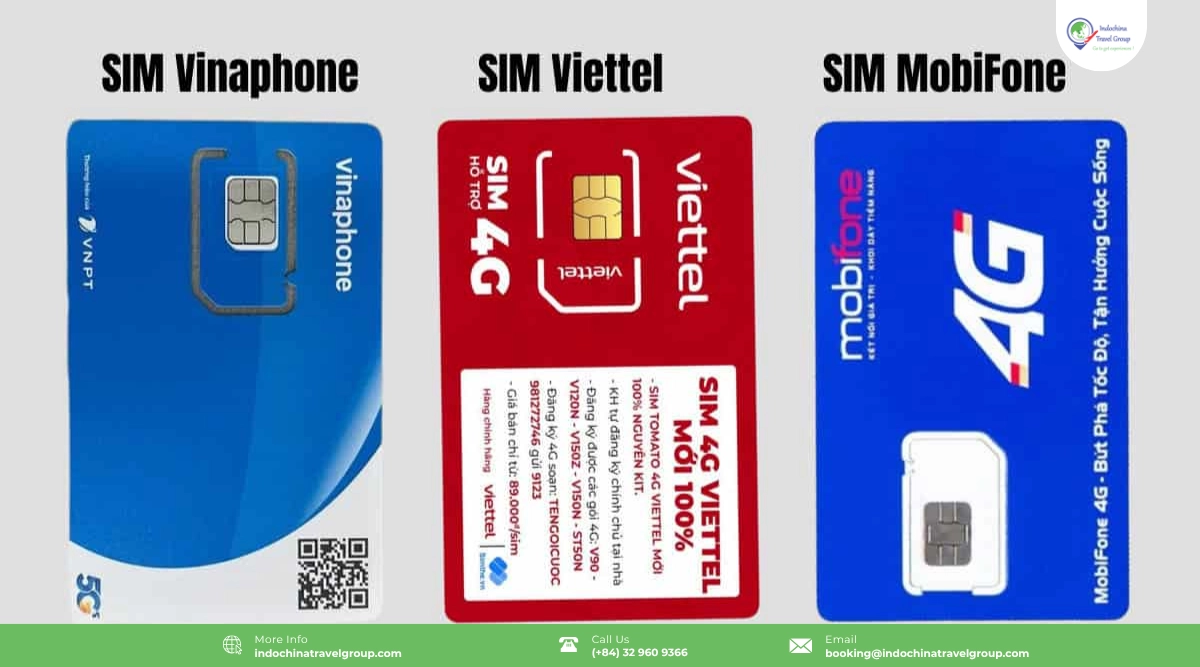
Viettel, VinaPhone and MobiFone are the main networks tourists are likely to encounter. In large cities, network choice is often less important than the package itself. On mountain roads, rural routes or long multi-region trips, the underlying network matters more.
| Before choosing a network | What to check |
|---|---|
| Route | Look at the places where you actually need data, especially mountain, rural and offshore sections rather than only Hanoi or Ho Chi Minh City. |
| Plan type | Check whether the package is data-only or includes a Vietnamese number, calls or SMS. |
| High-speed allowance | Confirm the full-speed data allowance and what happens after it is used. |
| Hotspot | If you plan to tether a laptop or another phone, make sure the plan permits hotspot use. |
| Top-up and support | Know how to add data or contact support if the plan stops working during the trip. |
Do not choose a carrier only because one article labels it “best.” Coverage and package terms change, and signal can vary within the same province because of terrain. If the route includes remote travel, keep offline maps and key booking details available even when you have a local SIM.
For broader route planning, ITG’s getting around Vietnam guide explains how domestic flights, trains, private cars, cruises and intercity transfers connect the country.
How much does a Vietnam SIM or eSIM cost?
There is no useful single tourist-SIM price to carry from one trip to another. The amount changes with the carrier or eSIM provider, data allowance, validity, voice/SMS inclusion, sales channel and any current promotion. Compare the package you can actually buy on your travel date rather than relying on an old airport or online price.
| Cost driver | Why it changes the price |
|---|---|
| Data allowance | Small fixed-data plans and high-volume or daily-data plans are priced differently. |
| Validity | A short-stay plan and a 30-day plan should not be compared only by headline price. |
| Local number / calls | Data-only travel eSIMs can differ from local carrier plans that include a Vietnamese number or voice minutes. |
| Sales channel | Airport, official store, carrier website/app and third-party eSIM sellers may offer different packages or promotions. |
| Hotspot and speed policy | A cheap “unlimited” plan may have a high-speed threshold, fair-use rule or tethering restriction. |
Check the package, not just the word “unlimited”
Confirm the full-speed data allowance, validity, local-number or call inclusion, hotspot policy and what happens after the high-speed allowance is used.
Mobile data is only one small part of your overall budget. To estimate accommodation, domestic transport, meals, activities and guide costs, read ITG’s Vietnam travel budget guide.
Where to buy a Vietnam SIM or eSIM
Choose a sales channel that can clearly explain the network, package and registration. Airport counters can be convenient when you need a local line immediately, official carrier stores are useful when you want direct carrier support, and an eSIM can be prepared before arrival when your phone supports it. The best channel depends on arrival time and how soon you need data.
| Where to buy | Pros | Cons | Best for |
|---|---|---|---|
| Airport counter | Convenient when you need a local line immediately and want setup tested before leaving the terminal. | Package selection and pricing can differ by counter, so confirm the carrier and inclusions. | Arrivals who need data or a local number straight away. |
| Official carrier store | Direct carrier support for registration, package details and later account help. | You need enough connectivity to reach the store after arrival. | Travellers who prefer to choose the local plan after reaching the city. |
| Online eSIM provider | Can be prepared before the trip without changing the physical SIM. | Requires an unlocked eSIM-compatible phone; many plans are data-only. | Travellers who want to prepare connectivity before arrival. |
| Authorised retailer | Can be convenient outside an airport or carrier store. | Confirm that identity registration is completed correctly and that the package terms are clear. | Travellers using a verified local sales point. |
Before leaving the SIM counter, do this
- Confirm the carrier name.
- Confirm the data allowance and validity.
- Ask whether the SIM includes calls or only data.
- Make sure passport registration is complete if required.
- Open Google Maps to test data.
- Send a test WhatsApp or Zalo message.
- Ask how to check balance or remaining data.
Buying at Hanoi, Ho Chi Minh City or Da Nang airport
At major international airports such as Noi Bai in Hanoi, Tan Son Nhat in Ho Chi Minh City and Da Nang International Airport, mobile counters are usually available after customs. Look for clearly branded Viettel, VinaPhone or MobiFone counters rather than unclear third-party desks.
Buying at an official carrier store
If you do not need data immediately at the airport, an official store in Hanoi, Da Nang or Ho Chi Minh City can be a good choice. Search for “Viettel Store,” “VinaPhone Store” or “MobiFone Store” on Google Maps and bring your passport.
Buying an eSIM before arrival
An eSIM is useful if you want to land with data already available. Choose a provider with clear Vietnam coverage, validity, refund policy and setup instructions. Save the QR code offline and make sure you have Wi-Fi during activation.
Connectivity is only one part of arrival planning. Passport, visa and entry documents also matter, so check ITG’s Vietnam visa and entry requirements guide before departure.
How to activate and register a Vietnam SIM or eSIM
If you register a local Vietnamese mobile number, expect identity verification rather than an anonymous “pre-activated” SIM. Current subscriber-verification rules specifically cover foreign nationals who register with a passport. Use an official carrier or authorised registration channel and make sure the line is registered to the correct identity before you leave the seller.
For a physical SIM, you also need an unlocked phone with a compatible SIM slot. For eSIM, confirm that the device is unlocked and supports eSIM, then follow the carrier or provider’s QR/app activation flow. A third-party travel eSIM can have a different registration process from a local carrier number, so follow the terms of the exact product you buy.
Vietnam SIM activation checklist
- Unlocked phone.
- Passport for registration.
- eSIM-compatible device if using eSIM.
- Wi-Fi access for eSIM activation.
- Hotel address saved offline.
- Guide, driver or travel consultant contact saved offline.
- Original home SIM stored safely.
Physical SIM setup
- Choose the carrier and package.
- Give your passport for registration.
- Let staff insert and configure the SIM.
- Test Google Maps or messaging.
- Ask how to check remaining data.
eSIM setup
- Confirm your phone supports eSIM.
- Buy the Vietnam eSIM plan.
- Connect to Wi-Fi.
- Scan the QR code or use the app.
- Select the eSIM for mobile data.
If your SIM does not work: restart your phone, check mobile data settings, confirm the correct SIM or eSIM is selected for data, ask the counter to check APN settings, and test again before leaving. For eSIMs, check whether data roaming must be enabled.
Keep your home number for OTP and important SMS
If your phone supports dual SIM or SIM + eSIM, you may be able to keep the home line active for incoming banking codes and account verification while using the Vietnam line for mobile data. The exact setup depends on the phone and home carrier.
- Set the Vietnam SIM/eSIM as the mobile-data line.
- Keep the home line enabled only if you still need calls or SMS.
- Turn off data roaming on the home line unless your roaming plan specifically requires it.
- Check whether receiving SMS abroad has a charge with your home carrier.
- Do not remove or delete an eSIM profile until you know whether the provider allows reinstallation.
Before departure, test which line receives bank or account-verification messages. Do not discover this for the first time while trying to approve a payment in Vietnam.
Set up the phone before you depend on mobile data
Install or sign in to the tools you already expect to use while you still have reliable Wi-Fi. The SIM page does not need a fixed list of “essential” apps because availability changes; the useful preparation is making sure navigation, messaging, translation and transport access work before a transfer day.
- Navigation: download offline maps for remote or unfamiliar areas.
- Messaging: keep at least one channel that your hotel, guide or driver can use.
- Transport: sign in to any ride or booking service you intend to use before leaving the airport Wi-Fi.
- Documents: save hotel addresses, tickets and booking confirmations offline.
- Money: keep a currency-conversion tool if useful, but use the Vietnam currency guide for cash, cards and payment planning.
For the transport layer itself, use the Vietnam transportation guide rather than choosing a SIM plan around one ride-hailing or booking app.
SIM advice by Vietnam itinerary type
The best SIM card for Vietnam depends on your route, not just the brand name. A city-only itinerary, mountain adventure, Halong cruise or multi-country trip can require different connectivity planning.
City break
Best setup: eSIM or major local SIM.
Why: Hanoi, Ho Chi Minh City and Da Nang usually have strong urban coverage.
North Vietnam mountains
Best setup: A major local-network SIM/eSIM plus offline maps and saved booking details.
Why: Signal can vary by valley, road and terrain, so check the underlying network for the specific route instead of relying only on urban coverage.
Halong Bay cruise
Best setup: Strong local SIM plus offline documents.
Why: Signal may weaken offshore, so confirm pickup and check-in details before boarding.
Central Vietnam
Best setup: eSIM or major local SIM.
Why: Coverage is usually practical in Hue, Da Nang and Hoi An, but weather apps are helpful in rainy periods.
Mekong Delta
Best setup: Major local SIM and saved local contacts.
Why: Rural transfers and homestays are easier when hotel and guide contacts are available offline.
Vietnam, Cambodia and Laos
Best setup: Regional eSIM or separate local SIMs.
Why: A Vietnam-only SIM may not work smoothly across borders.
If your travel route is still flexible, start from ITG’s Vietnam tour packages page to compare durations, regions and travel styles. Connectivity planning is easier once your arrival city, overnight stops and remote travel days are clear.
Internet coverage and 5G in Vietnam: what to expect
Mobile internet is generally strong in Vietnam’s major cities and tourist centers, but signal can still drop in mountains, offshore cruise areas, caves, valleys and remote roads. 5G is expanding, but tourists should not assume high-speed 5G is available everywhere.
In Hanoi, Ho Chi Minh City, Da Nang, Nha Trang and many urban areas, mobile data is usually reliable enough for maps, messaging, ride-hailing and social media. In remote areas such as parts of Ha Giang, Sapa, Pu Luong, Phong Nha, the Central Highlands or offshore sections of Halong Bay, coverage depends on exact location, carrier and terrain.
Offline backup before remote travel
- Download offline maps.
- Save your hotel address.
- Screenshot tour vouchers and e-tickets.
- Keep your guide or driver phone number offline.
- Download visa, passport and insurance documents.
- Tell your guide or hotel before taking a remote transfer alone.
Weather can also affect travel logistics, especially for cruises, mountain roads and Central Vietnam. ITG’s Vietnam weather by month guide can help you prepare for seasonal conditions before choosing your route.
Common Vietnam SIM card mistakes tourists should avoid
Most SIM problems happen because travelers buy too quickly, skip registration checks or do not test the data before leaving the counter. These mistakes are easy to avoid.
Avoid these mistakes
- Buying from an unclear kiosk without asking which carrier and package you are getting.
- Leaving the airport counter before testing mobile data.
- Forgetting that some eSIMs are data-only and do not include a Vietnamese phone number.
- Assuming “unlimited data” always means unlimited high-speed data.
- Using a locked phone that cannot accept a local SIM or eSIM.
- Losing your original home SIM card after swapping it out.
- Not saving hotel, guide or emergency contacts offline.
- Assuming a Vietnam SIM will work across Cambodia, Laos or Thailand.
- Waiting until a remote area to download maps, tickets or route details.
For broader pre-trip preparation, ITG’s Vietnam packing list covers chargers, adapters, travel documents, medicine, weather gear and essentials for different regions.
Staying connected for safety and support
A working SIM or eSIM gives tourists a safety buffer in Vietnam. It helps you contact your hotel, guide, driver, airline, bank or travel insurer quickly if your plan changes.
Mobile data helps with navigation, translation, hotel contact and last-minute transport changes. It is useful whether the trip is independent or pre-arranged, but key booking details and emergency contacts should still be saved offline in case coverage drops.
Travelers who are concerned about medical issues, lost luggage, delays or unexpected route changes should also review ITG’s travel insurance for Vietnam guide and Vietnam safety tips for tourists.
If your trip includes pre-arranged transfers or guides
If ITG or another operator is coordinating airport pickup, hotels or guides, save the supplied operational contact details offline before arrival. Mobile data is useful for pickup changes and day-to-day communication, but the important booking information should still be accessible if the signal drops or the SIM has not activated yet.
FAQ about Vietnam SIM cards for tourists
Can foreigners buy SIM cards in Vietnam?
Yes. Foreign tourists can buy prepaid SIM cards in Vietnam, especially at airports and official carrier stores. Bring your passport because registration may be required at the point of sale.
Do I need my passport to register a local Vietnam SIM?
For a local Vietnamese mobile number registered to a foreign visitor, expect passport-based identity verification under the current subscriber-registration rules. Use an official carrier or authorised registration channel. A third-party travel eSIM may use a different verification process because the product may be data-only and issued outside the normal local-number flow.
Which mobile network should tourists choose in Vietnam?
Choose from the network used by the plan and the places on your route. Viettel, VinaPhone and MobiFone are the main networks visitors are likely to encounter. City coverage may be similar enough for many short trips, while mountain and rural travel deserves a route-specific coverage check and an offline backup.
Should I buy a SIM card at the airport in Vietnam?
Buying at the airport is convenient if you need data immediately for Grab, maps or hotel contact. It may cost more than a city store, so ask for the carrier name, data allowance, validity and whether calls are included.
Is eSIM available in Vietnam?
Yes. Many travel eSIM providers offer Vietnam data plans, and some local carriers also support eSIM options. Before buying, check that your phone is unlocked and eSIM-compatible.
Is a physical SIM or eSIM better for Vietnam?
A physical SIM is useful if you want a local number, in-person setup or a plan bought directly from a local carrier. An eSIM is useful if you want to prepare mobile data before arrival and do not want to swap the physical SIM.
Can I use Grab in Vietnam without a local phone number?
You can often use Grab with your existing account and internet connection, but a local number can make driver communication easier. If your eSIM is data-only, use in-app messaging and keep your hotel address saved in Vietnamese.
Does a Vietnam SIM card work in Cambodia or Laos?
Not always. Some plans may offer roaming, but many Vietnam tourist SIMs are designed for domestic use. For Vietnam, Cambodia and Laos itineraries, consider a regional eSIM or separate local SIMs.
How much data do I need for 10 to 14 days in Vietnam?
Choose by usage rather than trip length alone. Maps, messaging and occasional ride-hailing use much less data than video, cloud backups, hotspot use or remote work. Check your phone’s recent mobile-data usage before the trip, then buy a plan with enough high-speed allowance and a clear top-up option instead of relying on one fixed GB recommendation.
Is Wi-Fi enough for tourists in Vietnam?
Wi-Fi is common in hotels, cafés and restaurants, but it is not enough for smooth travel. A SIM or eSIM is useful for ride-hailing, walking directions, translation, guide contact and emergencies when you are away from Wi-Fi.
Choose your Vietnam SIM based on your route, not only on price. A short city break can work well with an eSIM, while a longer itinerary through Northern mountains, Halong Bay or rural regions is safer with a strong local network and offline backups. For ITG travellers, staying connected also makes airport pickup, guide coordination and access to the supplied operational contact channels smoother throughout the journey.

Recommended Tours

Group Tour
Hanoi – Sapa – Danang – Ho Chi Minh 10D9N
Hanoi - Sapa - Fansipan Peak - Ninh Binh - Halong Bay Overnight On Cruise - Danang - Hoi An Ancient Town - Bana Hills - Golden Bridge - Ho Chi Minh - Cu Chi Tunnels - Mekong Delta



Private Tour
Ho Chi Minh – Cu Chi Tunnels – Mekong Delta 4D3N
Ho Chi Minh - Cu Chi Tunnels - Mekong Delta


Private Tour
Vietnam Highlights 7 Days 6 Nights Tour
Hanoi Arrival - Hanoi City Tour - Ha Long Bay Day Cruise - Fly to Da Nang - Coconut Village - Hoi An Ancient Town - Ba Na Hills - Golden Bridge - Fly to Ho Chi Minh City - Cu Chi Tunnels - Mekong Delta - Departure


5D4N DELIGHT DANANG TOUR (DANANG – BA NA HILL FRENCH VILLAGE – HOI AN – HUE CITY) (SEAT IN COACH)


Private Tour
Vietnam Panorama Discovery 16D15N
Ho Chi Minh - Cu Chi Tunnels - Mekong Delta Tour - Can Tho - Da Lat - Nha Trang - Hoi An - Da Nang - Hue - Hanoi - Halong Bay Overnight On Cruise