
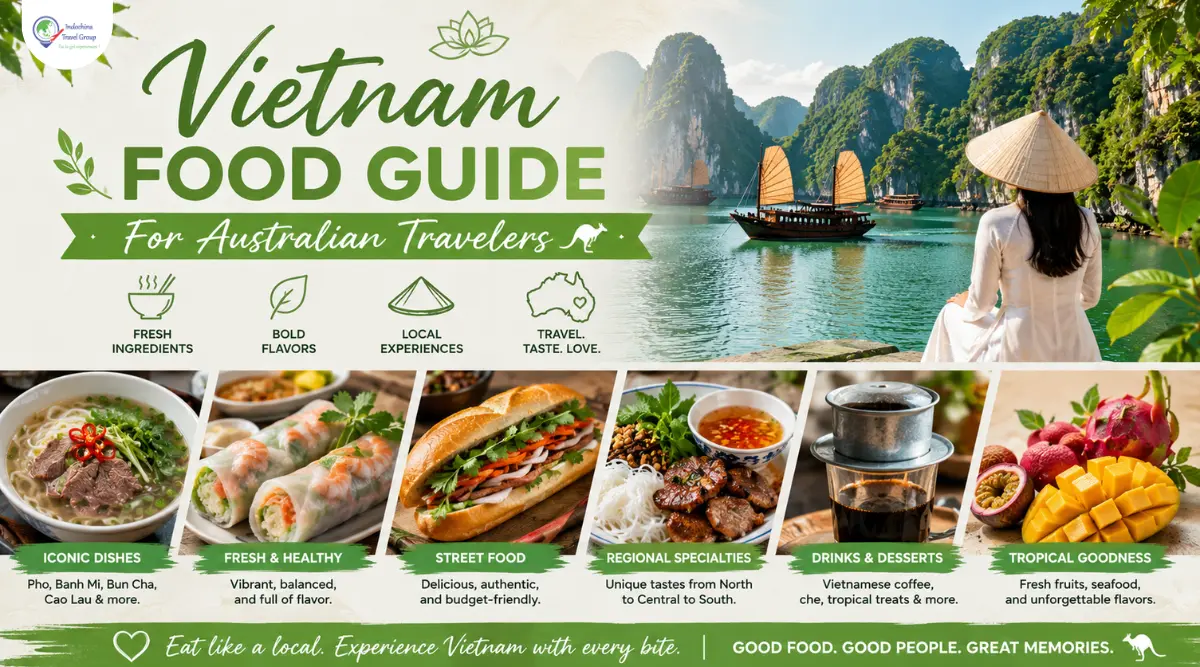
Let the route decide what to eat. Hanoi, Hue–Hoi An and Ho Chi Minh City give you different food contexts, so a traveller from Australia does not need a national “must-eat” checklist before departure. Pick one or two regional dishes or food experiences in each base, keep ordinary meals flexible, and plan more carefully only when allergies, dietary restrictions or a booked food activity make that necessary.
This page owns the Australia-specific food decision. Street-food technique, coffee culture, cooking classes, money and wider health risks stay with their specialist guides.
- Start with the base: Hanoi, Central Vietnam or Ho Chi Minh City/Mekong.
- Choose one food anchor: a regional dish, market/food walk or cooking class that is worth protecting time for.
- Apply the practical filter: current health advice, dietary communication, opening time and whether the stop fits the day’s route.
Start With a Few Dishes, Then Follow the Route
Start with dishes that are easy to compare across regions, then add local specialties as the route changes. There is no need to spend the first days collecting a fixed checklist of famous foods; one or two meals in context usually teaches more than rushing between recommended addresses.- Pho (beef or chicken): Northern and Southern styles can differ in broth, herbs and condiments. Try the version that fits the city you are already visiting rather than treating one regional style as the “correct” starting point.
- Bánh mì: A Vietnamese baguette sandwich shaped by French colonial history and local adaptation. Fillings vary widely by region and vendor, including pâté, pork, pickled vegetables, herbs, eggs or vegetarian options.
- Bun cha / bun rieu: Bun cha combines grilled pork, noodles, herbs and dipping sauce; bun rieu is a tomato-based noodle soup with regional variations. Both can broaden the meal beyond pho without requiring a separate food-tour day.
Let the Food Change as You Move Through Vietnam
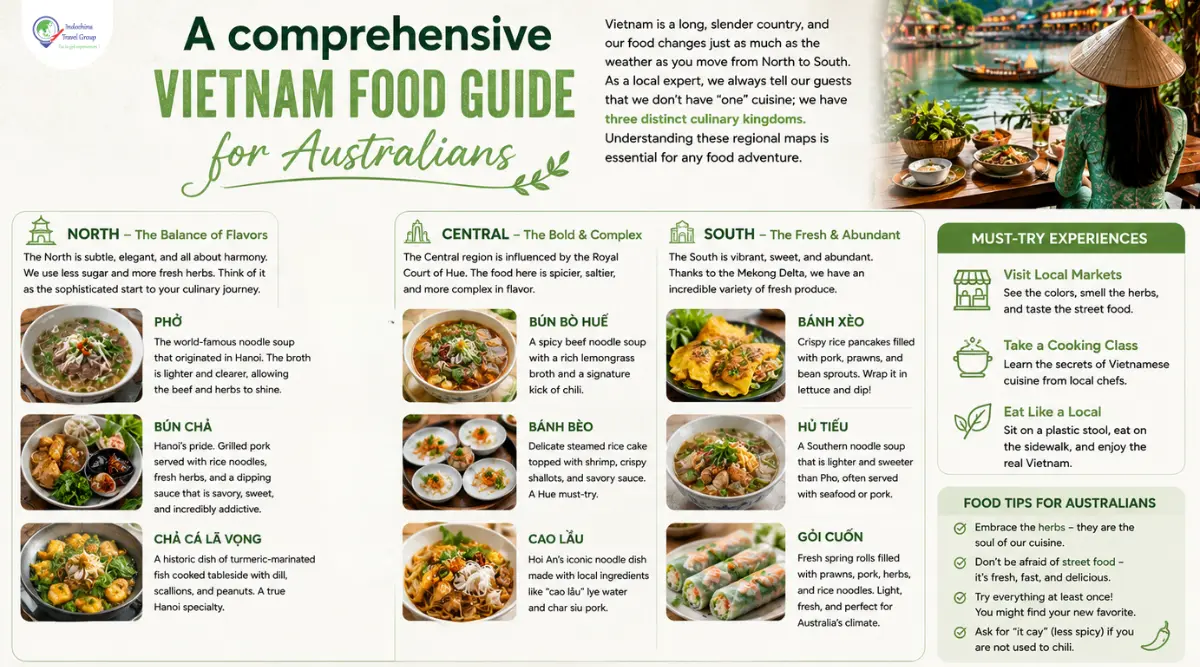 Vietnamese food changes with region, climate, local produce and historical influence. Vietnam Tourism’s regional food guide also separates northern, Central and southern traditions rather than treating Vietnamese cuisine as one flavour profile. A practical food plan follows the itinerary: compare those regional differences as you move through the country instead of trying to define the cuisine from a short dish list.
The North (Hanoi, Sapa, Ninh Binh)
Northern Vietnam includes lighter broths, grilled dishes and mountain food traditions, but there is no single northern flavour profile. In Hanoi, cha ca can be a useful regional dish to try; in Sapa, local meals vary by host, market and community, so avoid turning one minority dish into a cultural checklist item.The Center (Hue, Da Nang, Hoi An)
Central Vietnam has strong regional differences of its own. Bun bo Hue can show the use of chilli, lemongrass and fermented flavours around Hue, while cao lau is closely associated with Hoi An. The well-water origin story is part of local food lore, but recipes and preparation vary by producer, so treat the dish as a regional tradition rather than a technical authenticity test.The South (Ho Chi Minh City, Mekong Delta, Phu Quoc)
Southern Vietnam includes distinctive city, delta and island food traditions rather than one uniform flavour profile. Mekong dishes can use fermented fish, freshwater produce, coconut and herbs in different combinations, while Ho Chi Minh City brings together regional Vietnamese cooking and contemporary restaurants. Choose examples from the places already on your route instead of reducing the South to one sweetness rule or one “signature” dish.Street food, restaurants and markets: how should travellers choose?
The choice between street food, markets and restaurants should come down to health requirements, dietary communication, comfort and the type of meal you want. Street food can be excellent, but “busy with locals” is not a food-safety guarantee. For the deeper stall-versus-shop decision, move to our Vietnamese street food guide rather than duplicating it here.- Street stalls: High turnover can be one useful signal, but a busy stall is not a guarantee of food safety. Look at how food is stored, handled and cooked, choose food served hot when appropriate, and skip a place when the setup does not look clean or ingredients appear to have been sitting out.
- Markets: Markets such as Dong Xuan in Hanoi or Han Market in Da Nang can be useful for seeing several food options in one place. Choose a small number of snacks that look freshly prepared rather than trying to sample a fixed quantity. Cafés and bakeries can also provide an easy break between meals or sightseeing.
Use Australian Travel-Health Advice as the Safety Baseline
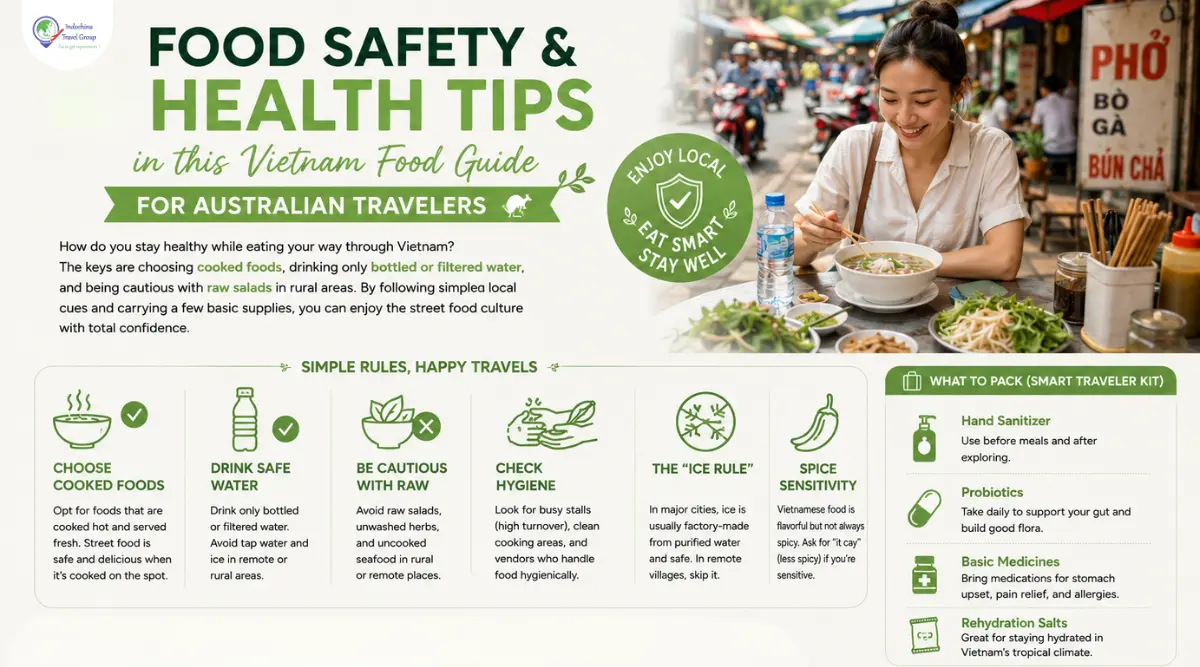
Do not replace official health advice with a “busy stall” rule. Smartraveller currently advises travellers in Vietnam to drink boiled water or bottled water with sealed lids, avoid ice cubes, and avoid raw or undercooked food such as salads. It also advises urgent medical attention if you develop fever or diarrhoea or suspect food poisoning.
Those precautions are the health baseline; venue choice is a separate judgement. Turnover, visible handling and food served hot can help you compare options, but none of them guarantees safety. If you have a medical condition or severe allergy, use individual medical advice rather than a general food-guide rule. For the broader health and travel-risk layer, continue with our Vietnam safety guide for Australians.
When Dietary Requirements Need More Planning
Dietary requirements need more than a general claim that Vietnam is “easy” or “difficult”. Vegetarian food is widely available in many places, while gluten, seafood, nut and other allergy risks depend on ingredients, sauces, preparation surfaces and how clearly the requirement is understood.- Spiciness: If you aren’t a fan of the heat, say “Không cay” (no spicy).
- Vegetarian/Vegan: “Quán chay” can help identify vegetarian-focused venues, but confirm whether the food is vegan if that distinction matters. Ingredients, mock meats, tofu dishes and sauces vary by restaurant.
- Seafood and severe allergies: Fish sauce, shrimp paste, shellfish and shared preparation surfaces can appear in dishes that are not obviously seafood-based. A translated allergy card can help communication, but it cannot guarantee that cross-contact will be avoided. When the allergy is severe, choose venues that can explain ingredients and preparation clearly and follow advice from your medical professional.
How to budget for food without relying on fixed AUD prices
Food costs vary by city, venue, dish and exchange rate. Use the current AUD–VND rate and the menu in front of you rather than relying on a fixed conversion from an older guide.| Street stall or simple local shop | Usually the lower-cost end; check the displayed price and portion before ordering. |
| Café or casual full-service restaurant | Price varies by city, location and menu; tourist districts and specialist venues can cost more. |
| Hotel, fine dining or specialist experience | Budget from the current menu or confirmed quotation rather than an old AUD conversion. |
Use Cafés as Part of the City Day, Not a Separate Checklist
Vietnamese coffee can be part of the neighbourhood you are already exploring. Hanoi is a natural place to try egg coffee; iced milk coffee and modern cafés are common across major cities. Unless coffee is a main trip interest, there is little reason to cross a city for a named café. For brewing styles, coffee history and the deeper café decision, use our Vietnamese coffee culture guide.
Use Markets and Snacks Only When They Fit the Day
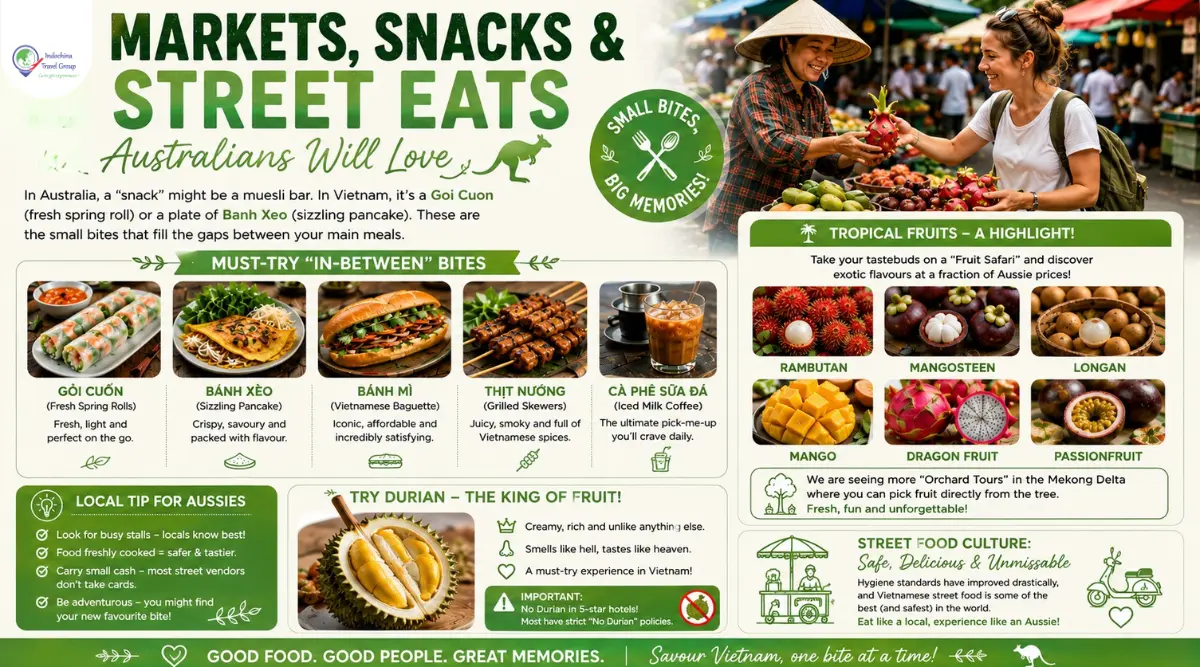
Markets and small food stops work best when they are already near the neighbourhood, attraction or countryside route you are visiting. Choose what is fresh and appropriate to your health requirements on the day; do not create a separate transfer just to collect another snack from a list.
Add a Cooking Class Only When It Earns the Half-Day
A cooking class or guided market visit is most useful when hands-on food context is one of the trip priorities and the activity fits a city you are already staying in. Compare the actual provider, group size, dietary handling, market component and duration before giving up a flexible half-day. For provider-format and class-selection details, continue with our Vietnam cooking classes guide.
Let the Existing Route Create the Food Journey
A food-focused trip does not need a separate day-by-day “Australian palate” itinerary. Use the regions already on the journey to add different food contexts without turning every meal into a scheduled activity.If food is a major trip priority
Add a guided market visit, cooking class or focused food walk where local context matters most, then keep enough unstructured meals to follow recommendations and appetite on the day.If food supports a broader Vietnam trip
Choose regional specialties near the attractions and neighbourhoods you are already visiting rather than adding long transfers for one restaurant or dish. For the route itself, use our Vietnam itinerary from Australia.Practical Food-Day Planning
A few practical details make food days easier: know whether a venue accepts cards, save the hotel address, keep some VND for smaller vendors, and leave flexibility when a market or street-food stop depends on weather or opening hours.- Language: A few food words can help with ordering, but dietary restrictions and allergies should be communicated clearly rather than relying on a casual phrase alone.
- Apps: Ride-hailing and food-delivery apps can be useful in larger cities, but availability, delivery range and payment method vary by location.
- Payment: Payment methods vary by vendor. Keep some smaller-denomination VND for places that do not accept international cards, and do not assume a local QR code will work with an overseas bank or wallet. For the broader cash/card/ATM setup, use our Vietnam currency guide for Australians.
Use the Route to Decide What to Eat Next
Recommended Tours

Private Tour
Vietnam Panorama Discovery 16D15N Private Tour: South to North
Ho Chi Minh - Cu Chi Tunnels - Mekong Delta Tour - Can Tho - Da Lat - Nha Trang - Hoi An - Da Nang - Hue - Hanoi - Halong Bay Overnight On Cruise
Group Tour
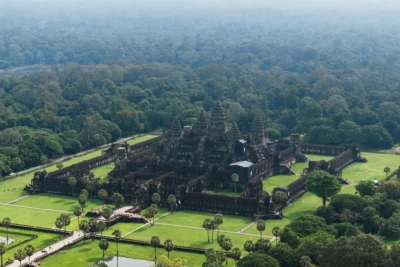
Hanoi – Da Nang – Ho Chi Minh City – Siem Reap 11D10N Group Tour
Hanoi - Ninh Binh - Halong Bay Overnight On Cruise - Danang - Hoi An Ancient Town - Bana Hills - Golden Bridge - Ho Chi Minh - Cu Chi Tunnels - Siem Reap - Angkor Wat
Private Tour
Vietnam Premium Discovery 21D20N Private Tour: Ha Giang to the South
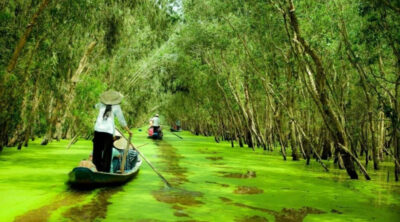
Hanoi - Ha Giang (The Far North) - Pu Luong - Ninh Binh - Halong Bay - Phong Nha Caves - Hue - Ba Na Hills - Hoi An - Ho Chi Minh City - Mekong Delta
Private Tour
Hanoi – Sapa – Ninh Binh – Ha Long Bay 6D5N Tour
Hanoi - Ninh Binh - Halong - Sapa
Private Tour
Vietnam & Cambodia Heritage 16D15N Private Tour
Hanoi - Halong Bay - Hue - Hoi An - Ho Chi Minh City - Mekong Delta - Chau Doc - Phnom Penh - Siem Reap

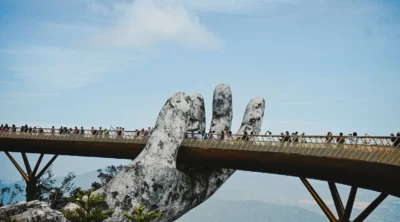
Da Nang – Ba Na Hills – Hoi An 4D3N Seat-in-Coach Tour