

The short answer on safety for Australians
Use the generic safety guide for everyday risks
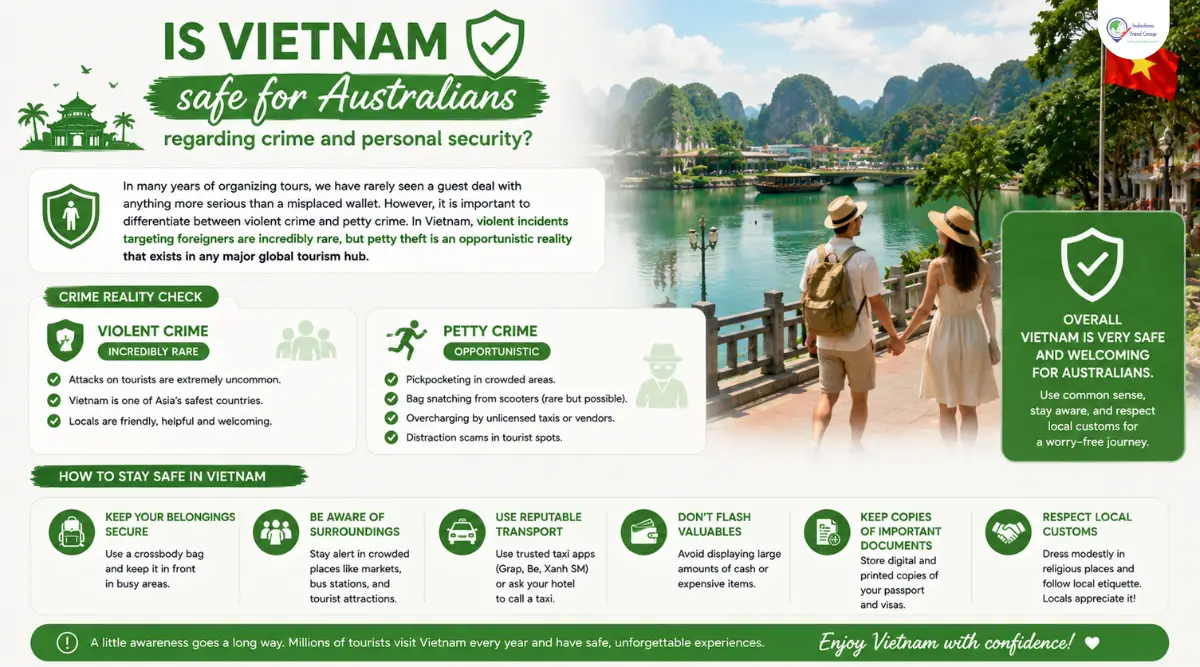
Petty theft, scams, nightlife precautions, weather and city traffic are not uniquely Australian issues. The Vietnam safety guide for tourists owns those country-wide risks.
This Australia page focuses on the checks that change because you are travelling on Australian documents or relying on Australian government advice: Smartraveller, driving-licence validity, insurance implications, restricted items and the Australia-specific entry checklist.
Transport safety
Road traffic deserves more attention than dramatic crime scenarios. Traffic behaviour, crossing patterns and motorcycle density can feel unfamiliar, and self-driving also brings licensing and insurance questions. Treat transport as a practical safety decision: use clearly identifiable, pre-booked or app-booked transport where appropriate, and do not assume driving rules or road behaviour will match Australia.Weather disruption and severe conditions
Health and medical issues
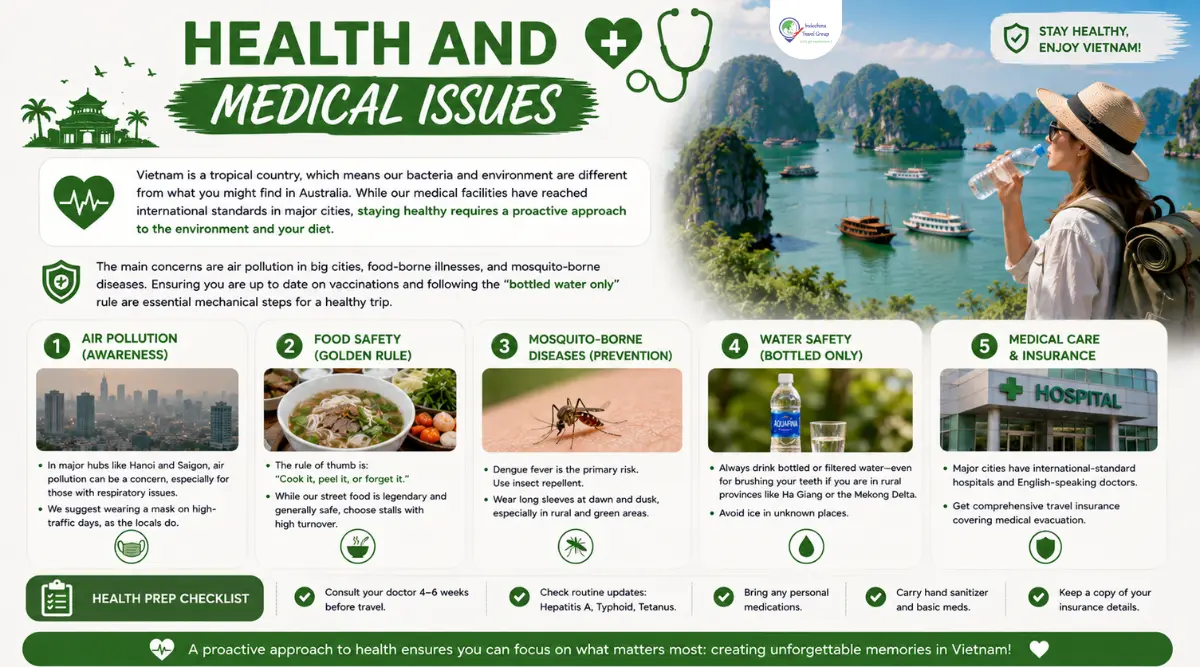 Health preparation matters because Vietnam has different climate, pollution and infectious-disease risks from Australia. Medical care is more accessible in major cities than in remote areas, so the practical approach is to keep routine vaccinations current, manage mosquito and food-and-water risks, carry the medicines you need and make sure insurance matches the route you plan to travel.
Local Laws That Can Catch Travellers Out
Some Vietnamese laws and restrictions differ significantly from those in Australia. Before departure, check current official advice on prohibited drugs, vaping products, prescription medicines and other restricted items rather than assuming that something legal or commonly used in Australia is also permitted in Vietnam.Drug laws: severe penalties
Vietnam has severe penalties for drug offences, including life imprisonment and the death penalty for some offences. Do not use or carry illegal drugs, including marijuana, and never carry parcels or luggage for another person if you do not know exactly what is inside.Vaping and e-cigarettes
Electronic cigarettes, vaping devices and vaping liquids are illegal to purchase, use, possess, sell or bring into Vietnam. Leave them at home and check Smartraveller before departure if you are unsure whether a product is covered by the restriction.Respecting local procedures
Keep secure backup copies of your passport and visa details separate from the originals. Hotels normally handle guest registration as part of check-in, while private or non-commercial accommodation may require the host to complete local registration. Follow current local rules and official instructions during the stay.Let the route change the checklist, not the safety owner
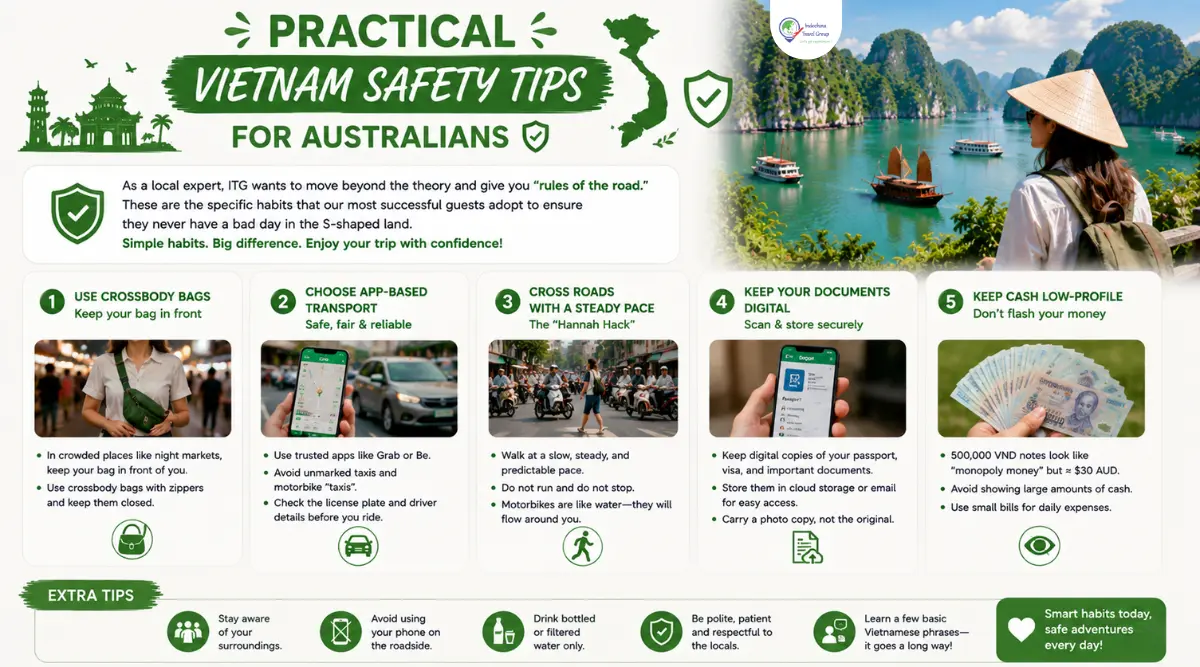
A mountain or island itinerary may need more attention to weather, medical access and transport disruption than a city break, but those are still general Vietnam travel-safety questions. Use the generic safety guide for route-specific everyday precautions, then return here for the Australian documentation, licence, insurance and consular checks.
Safety checklist before departure
Before departure, check the few items that are difficult to fix once the trip has started: entry documents, insurance, current travel advice, payment access and offline copies of key bookings.Pre-departure checklist:- Visa check: Review the current Vietnam visa requirements for Australians, then make sure the details on any granted visa match your passport and travel dates.
- Smartraveller: Read the current Vietnam advice and subscribe to destination updates before departure; routine pre-trip registration is no longer used.
- Insurance: Check medical and evacuation cover against the actual route, especially when the itinerary includes remote or mountain areas. If you need a broader checklist, see our Vietnam travel insurance guide.
- Payment backup: Keep a second payment method separate from the primary wallet. For AUD-to-VND, card and ATM planning, use our Vietnam currency guide for Australians.
- Transport apps: Install the ride-hailing app you plan to use before arrival and add a card only if your issuer and the app support it; keep another payment method available.
- Offline maps: Download the maps for Hanoi and Saigon on Google Maps so you can navigate even without a signal.
Common mistakes to avoid
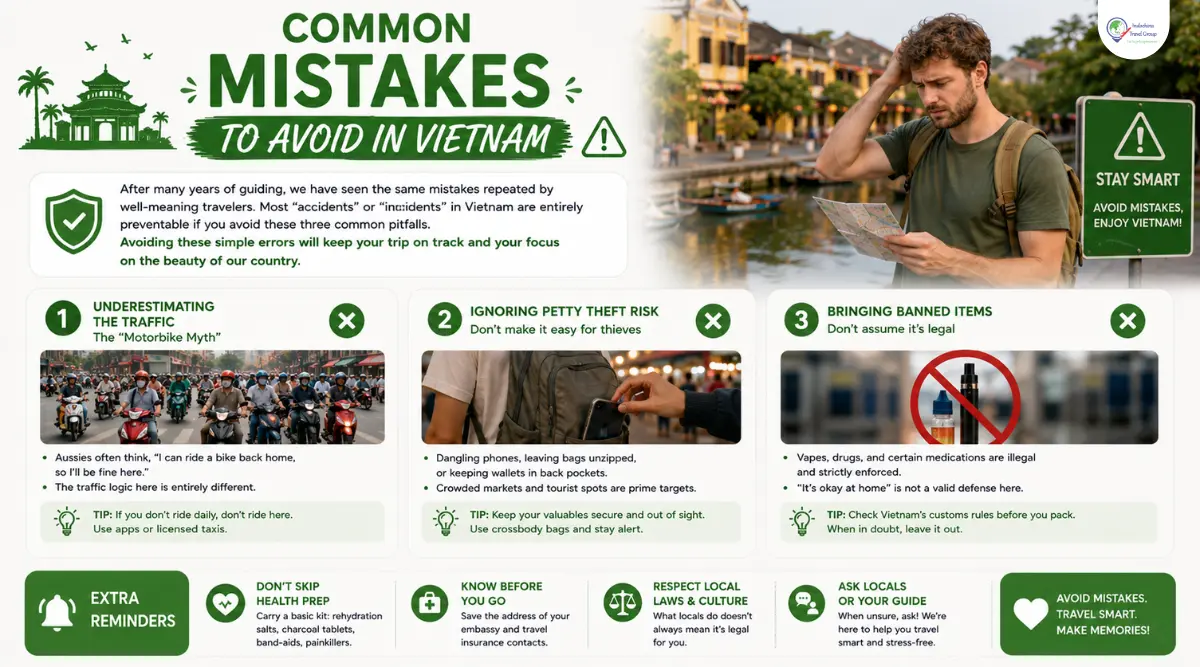 The avoidable problems we plan around most are traffic decisions, unsecured valuables and bringing an item that is restricted or illegal. These risks are easier to manage when they are checked before the trip rather than treated as general warnings.
Quick safety decisions before you travel
Use this table as a practical reminder, then confirm any legal, health or entry requirement against current official advice before departure.| Risk Area | Main Concern | Practical response |
| Crime | Petty theft and bag snatching | Use cross-body bags; keep phones away from road edge. |
| Traffic | Unsafe road conditions/Licensing | Use identifiable, pre-booked or app-booked transport where practical; self-drive only if the legal and insurance requirements are fully met. |
| Health | Pollution and water safety | Follow current health guidance, use safe drinking water, manage mosquito exposure and adjust outdoor activity when air pollution is high. |
| Legal | Strict drug and vaping laws | Do not carry illegal drugs or prohibited vaping products; check current local-law guidance before packing restricted items. |
| Entry | Visa and health declaration rules | Check visa and entry details against official sources when planning and again close to departure; review any newly announced health or arrival requirements. |
When Conditions Change, Change the Plan
Most safety problems can be reduced with simple preparation: secure your phone and wallet, use reputable transport, check weather warnings, carry appropriate insurance and understand the local rules that differ from Australia.
Recommended Tours

Group Tour
Hanoi – Sapa – Danang – Ho Chi Minh 10D9N
Hanoi - Sapa - Fansipan Peak - Ninh Binh - Halong Bay Overnight On Cruise - Danang - Hoi An Ancient Town - Bana Hills - Golden Bridge - Ho Chi Minh - Cu Chi Tunnels - Mekong Delta



Private Tour
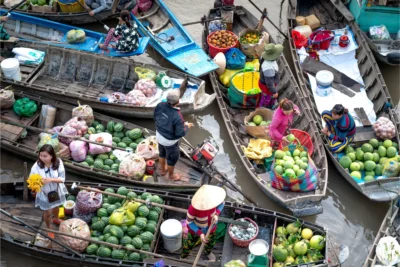
Ho Chi Minh – Cu Chi Tunnels – Mekong Delta 4D3N
Ho Chi Minh - Cu Chi Tunnels - Mekong Delta
Private Tour
Vietnam Highlights 7 Days 6 Nights Tour
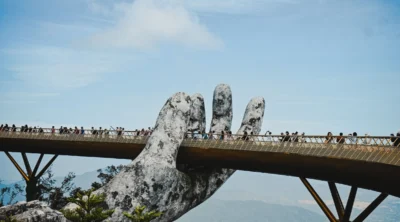
Hanoi Arrival - Hanoi City Tour - Ha Long Bay Day Cruise - Fly to Da Nang - Coconut Village - Hoi An Ancient Town - Ba Na Hills - Golden Bridge - Fly to Ho Chi Minh City - Cu Chi Tunnels - Mekong Delta - Departure


5D4N DELIGHT DANANG TOUR (DANANG – BA NA HILL FRENCH VILLAGE – HOI AN – HUE CITY) (SEAT IN COACH)


Private Tour
Vietnam Panorama Discovery 16D15N
Ho Chi Minh - Cu Chi Tunnels - Mekong Delta Tour - Can Tho - Da Lat - Nha Trang - Hoi An - Da Nang - Hue - Hanoi - Halong Bay Overnight On Cruise