

Start by identifying the kind of sacred site
English travel writing often uses “temple” as a broad label, but Vietnamese names can point to different functions. A chùa is generally a Buddhist pagoda or monastery. A đền commonly honours a deity, historical figure or local cult. A miếu is often a smaller shrine, while văn miếu refers to a Confucian temple or scholarly complex such as Hanoi’s Temple of Literature.
These labels are useful starting points, not a complete map of Vietnamese religious practice. Individual sites can contain several altars, traditions or historical layers, and regional usage is not always identical. Read the site’s own signs or interpretation rather than assuming every building follows one national formula.

Remember that these are active places
Many pagodas and temples combine worship, community activity, historical preservation and tourism. The atmosphere can therefore change by time of day, lunar date, festival period and the ceremonies taking place. A visitor should treat worship activity as the site’s primary function when it is happening, even when the same place is also a major attraction.
Architecture varies more than one template suggests
Courtyards, gates, towers, halls, carved timber, ceramic decoration and landscape settings appear in many combinations across Vietnam. Northern village pagodas, Hue’s religious architecture, Chinese-Vietnamese temples in the south and newer Buddhist complexes should not be collapsed into one “Vietnamese pagoda style”. Use the specific site and region to understand what you are seeing.
Choose representative sites that already fit the route
You do not need a national “must-visit pagoda” list. One or two well-chosen sites usually add more context than collecting similar stops across several cities. Start with the route, then choose a sacred site that represents a different historical, architectural or religious layer.
Hanoi and the North

- Trấn Quốc Pagoda: useful when a West Lake route already fits the day and you want a long-established Buddhist site within Hanoi.
- One Pillar Pagoda: a compact historic monument that fits more naturally when you are already visiting the Ba Dinh area; it does not need its own long transfer.
- Perfume Pagoda: a separate full-day route decision outside central Hanoi, combining pilgrimage sites with boat and mountain access. Treat it as an excursion rather than another city stop.
Ho Chi Minh City
- Vĩnh Nghiêm Pagoda: useful when you want to see a large modern-era Buddhist complex without leaving the city.
- Giác Lâm Pagoda: offers a different historical setting and works better when the wider city route already reaches its district rather than forcing a cross-city detour.
Other route-specific examples
- Thiên Mụ Pagoda, Hue: fits naturally into a Hue heritage day because it belongs to the city’s wider imperial and Perfume River context.
- Long Sơn Pagoda, Nha Trang: can sit inside a city sightseeing block when the group is already exploring beyond the beachfront.
- Tam Chúc, Hà Nam: requires a separate road decision and should be added for the complex itself, not simply because it appears on a national list.
The destination guide for each city should carry the detailed route and transport decision. This page only helps decide why a sacred site may deserve a place in the itinerary.
Expect the atmosphere to change with worship and festival activity
A sacred site can feel very different on an ordinary weekday, a lunar observance day or during a major festival. Worship practices also vary by family, Buddhist tradition, local community and site, so visitors should avoid turning one observed ritual into a rule for all of Vietnam.

Ordinary visits
On a normal day, you may see people praying, lighting incense, making offerings, meeting monastics or simply sitting quietly. Give worshippers space and follow the site’s posted rules rather than copying a ritual when you do not understand its meaning.
Festival and lunar-calendar periods
Tết, Vu Lan and local temple festivals can bring larger crowds, ceremonies and different access patterns. If a festival is the reason for the visit, check the specific date and programme with the site or a reliable local source. For the wider event decision, use our Vietnamese festivals guide rather than treating every pagoda visit as a festival experience.
Let the site’s own rules guide your visit
Etiquette is easier when you treat each temple or pagoda as an active place with its own rules rather than memorising one national ritual. Signs, staff, guides and the behaviour of worshippers at that site are better references than a generic checklist.

- Clothing: wear clothing suitable for a religious setting and follow any posted dress requirement. Requirements can vary by site and by the part of the complex you enter.
- Footwear: remove shoes where the site asks visitors to do so. Do not assume the same rule applies to every courtyard or hall.
- Worship: avoid blocking altars, walking between a worshipper and the altar, touching sacred objects or interrupting a ceremony.
- Incense and offerings: participate only when you understand what the site permits. There is no need to copy a ritual to be a respectful visitor.
- Photography: check signs or ask before photographing inside worship spaces or photographing people at prayer. Follow any restrictions on flash, video or tripods.
- Donations: use the site’s official donation box or process if you choose to contribute; a donation is optional and the appropriate amount is not fixed by a travel guide.
Build sacred-site visits from the route, not a fixed quota

There is no useful rule such as “one temple per day” or one national best time to visit. Choose a site when it adds a historical, religious or architectural layer that the route does not already cover, then place it beside nearby activities so the visit does not create unnecessary transfers.
Pair Trấn Quốc with West Lake or One Pillar Pagoda with the Ba Dinh area. If the visit is mainly about Hanoi’s broader cultural context, compare it with museums, the Old Quarter and a water-puppet performance instead of forcing every sacred site into one day.
Thiên Mụ belongs naturally with the Perfume River and imperial-history layer. Give the site more time when religious history matters; otherwise keep it as one element of the wider Hue heritage day.
Choose a pagoda or temple that fits the districts already in the city route. Avoid crossing the city simply to collect another landmark with a similar role.
Treat this as a separate excursion with road, boat and mountain access. Check the current transport, cable-car operation and festival conditions before fixing the day.
If sacred sites are only one of several experience types competing for limited days, return to the Things to Do in Vietnam hub and decide how much cultural depth the overall route actually needs.
Visit with context, then follow the site in front of you
Vietnam’s temples and pagodas are most useful to a traveller when they are understood as specific living places with their own history, worship practices and visitor rules. Identify the kind of site, learn why it matters in that city or community, and then follow the guidance you find there.
That approach is more reliable—and more respectful—than treating sacred places as a national checklist or trying to reproduce rituals from a travel article.
Recommended Tours
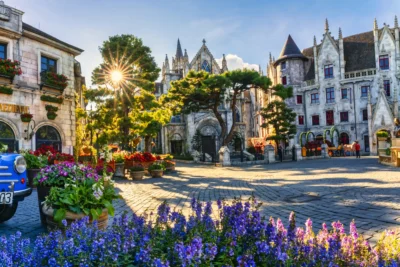
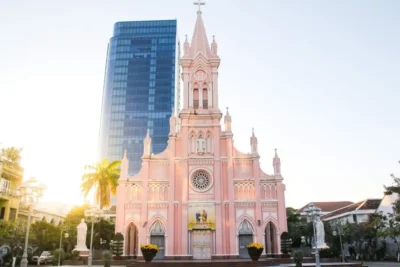
5D4N DELIGHT DANANG TOUR (DANANG – BA NA HILL FRENCH VILLAGE – HOI AN – HUE CITY) (SEAT IN COACH)

Group Tour
Phu Quoc Island 4 Days 3 Nights Group Tour
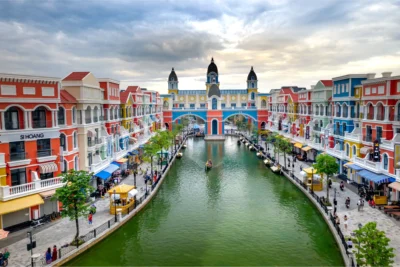
Phu Quoc Arrival - Grand World Tour - VinWonders Phu Quoc - Duong Dong Night Market - Sun World Hon Thom - Kiss Bridge - Phu Quoc Departure
Private
Phu Quoc 5D4N With Grand World
Phu Quoc - Grand World - Hon Thom Cable Car - 4 Island Tour - Aquatopia Water Park - Vin Wonders Theme Park - Vin Safari - Kiss Of The Sea Show
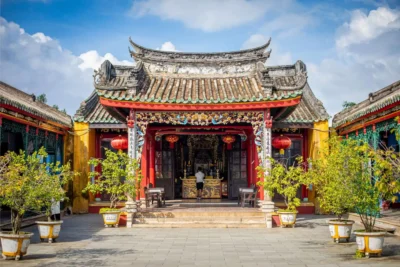
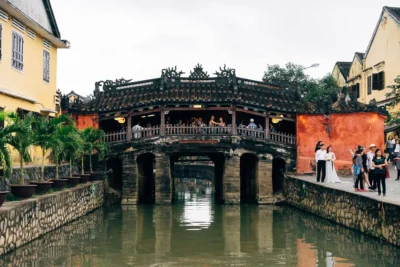
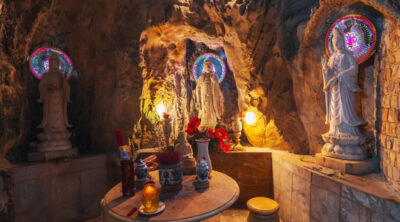
4D3N HIGHLIGHT OF MIDDLE OF VIETNAM (SEAT IN COACH)
Private Tour
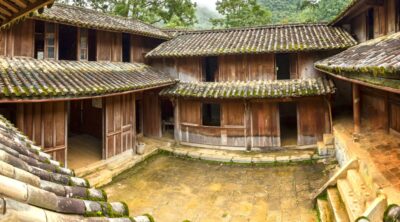
Vietnam And Cambodia Discovery 18D17N
Hanoi - Ha Giang (The Far North) - Halong Bay - Hoi An - Hue - Ho Chi Minh City - Mekong Delta - Siem Reap (Angkor)