

Decide What Role the Beach Should Play in the Trip
Vietnam works well for a beach-focused trip because several coastal destinations can be combined with culture, food and city stays without requiring a separate country. The right beach depends on the month: Central and Southern Vietnam do not share the same weather pattern, so choose the coast after you choose the travel window.Choosing the right beach destination
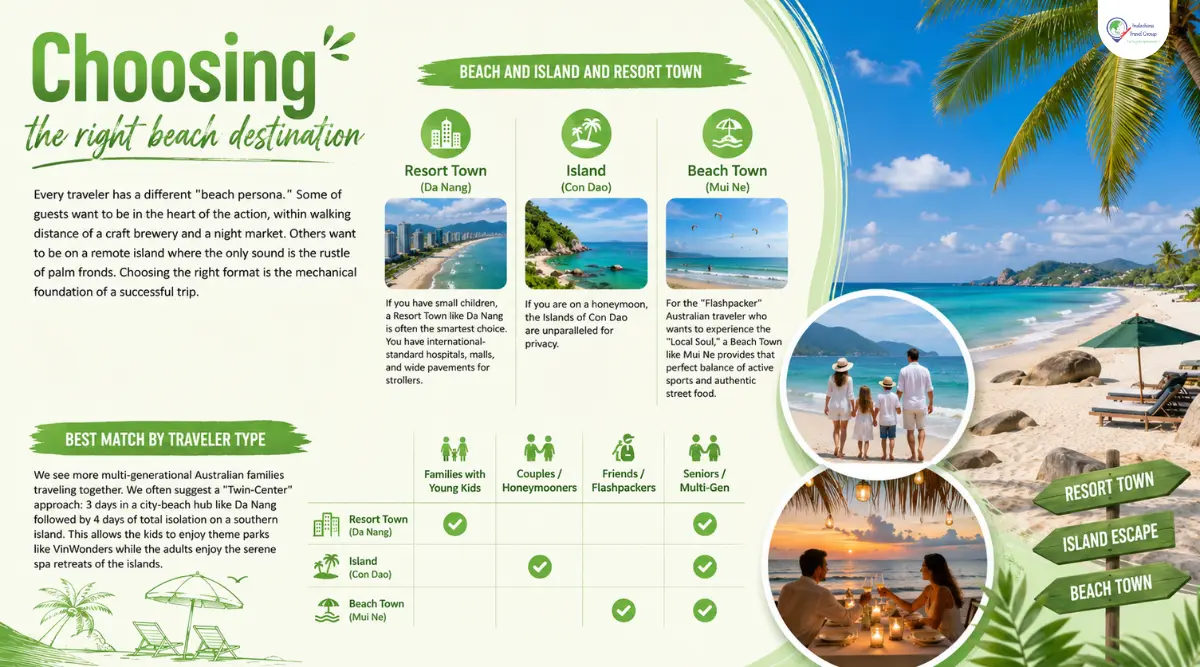 Choose the beach format by the experience and logistics you want: a city beach with restaurants and easier transport, a resort-led island stay, or a quieter coastal stop that needs more road or ferry planning. This decision is more useful than assigning a generic “beach persona”.
City beach, mainland resort or island stay?
A city-beach base such as Da Nang can be practical when you want a broad hotel choice, restaurants and straightforward road access to nearby attractions. Con Dao creates a quieter island trip, while Mui Ne combines a coastal stay with road-based excursions. Compare them by transfer time, hotel setup, medical or family requirements and the activities you actually want rather than assuming one is automatically the smartest option.When does a two-base beach trip make sense?
A two-base beach trip can work when each stop serves a different purpose—for example, a city-beach base for food and nearby sightseeing followed by an island or resort stay for lower-movement days. Check whether the extra flight, ferry or long transfer earns enough usable holiday time before adding the second base.Compare Mainland Beach Bases by Trip Role
 When comparing the best Vietnam beaches, look beyond the photo. Sea conditions, season, transfer time, resort style and nearby activities matter more to the trip than a generic “best beach” ranking. Vietnam’s mainland beaches range from highly developed Nha Trang and Da Nang to quieter coastal areas around Quy Nhon and Doc Let.
My Khe Beach, Da Nang
My Khe is a major urban beach close to Da Nang’s hotels, restaurants and city services, which makes it easy to combine with a wider Central Vietnam stay. Swimming conditions vary by weather, season and section of beach, so do not treat a shallow-looking shoreline as a safety guarantee for children or adults; follow current local warnings and lifeguard guidance where available.An Bang Beach, Hoi An
An Bang can be reached from the Hoi An area by road or bicycle when the weather and traveller make cycling suitable. It can work well for a slower beach afternoon after time in the Ancient Town, especially when you want cafés and restaurants close to the sand. Development and individual venues change, so choose the beach for its role in the Hoi An stay rather than a fixed village image.Mui Ne Beach, Phan Thiet
Mui Ne is associated with wind sports and combines a coastal stay with road trips to dunes and other local sights. Wind, surf and rainfall vary by season and day, so check current conditions before choosing a water-sports or dune excursion. Treat the side trips as optional additions rather than part of a fixed beach itinerary.The “quiet” crescents: Doc Let, Dai Lanh, and Ky Co
If you want a quieter south-central coastal section, Quy Nhon gives you a different trip shape from Da Nang or Nha Trang. Ky Co and Eo Gio sit on the peninsula side, while the city and Cham sites add enough variety that the stop does not need to be planned as beach time only.When an Island Stay Is Worth the Extra Transfer
 An island stay adds another logistics layer to a Vietnam trip. Compare the flight or ferry connection, transfer to the hotel, seasonal sea conditions and whether the island is the main holiday goal or simply a beach finish after another region. Entry rules should be checked separately from the beach decision because they depend on the exact route and current regulations.
Phu Quoc
Phu Quoc supports a resort-led island trip with a wide range of hotel areas and activities, but the right choice depends on where you stay and how much movement you want after arrival. Phu Quoc can have different entry conditions from a mainland Vietnam itinerary, so verify the current official rules for your exact flight and onward route rather than building the trip around a remembered visa exemption.Con Dao Islands
Con Dao combines beaches, national-park landscapes and important historical sites in a quieter island setting. Hotel choice, transport and activity inventory are narrower than in larger resort centres, so check what is actually available for your dates. Seasonal turtle-nesting activity is sensitive wildlife viewing; use current national-park or authorised-operator guidance and do not treat sightings as guaranteed.Cat Ba and the Northern karst islets
Cat Ba and Lan Ha Bay belong more to a northern island-and-karst route than to a conventional resort-beach holiday. They can fit travellers who want boat, kayak or hiking activities alongside the coast, but access, weather and activity conditions should be checked for the actual programme rather than treated as a substitute for a Central or Southern beach stay.How Each Coast Fits the Wider Route
Once the travel dates are fixed, compare each coast by the route it creates. Central Vietnam can combine a beach base with heritage stops by road, while southern islands usually add a flight or ferry and work better when the island itself earns several nights. Keep the detailed month-by-month weather decision with the Best Time guide rather than choosing a coast from a national beach ranking.Central Vietnam: coast plus heritage
The coast from Da Nang south toward Quy Nhon can be combined with heritage cities and smaller coastal stops, but it is a long corridor rather than one beach zone. Use Da Nang or Hoi An when heritage and easier road connections matter; add Quy Nhon or another south-central stop only when the extra transfer gives the trip something distinct.Southern Vietnam: island and resort options
Southern islands create a different route decision from the mainland coast because they usually add a flight or ferry plus another hotel transfer. They work best when resort time, island activities or a lower-movement finish are important enough to justify that extra travel sector. Check short-range sea and operator conditions close to travel rather than treating the island label as a weather guarantee.Best activities for beach and island trips
 Beach time does not need to mean only swimming or sunbathing. Depending on the coast and current conditions, a trip may include diving, snorkelling, wind sports, boat excursions, mud baths or coastal sightseeing. Check the operator, equipment, weather and activity requirements for the specific date rather than assuming a destination guarantees a particular experience.
Use the Travel Month to Eliminate the Wrong Coast
Vietnam’s long coastline crosses different weather patterns, so the same month can suit one coast better than another. This page only needs that rule to make the beach decision; the detailed regional seasonality belongs in our Best Time to Visit Vietnam from Australia guide.Visa and entry planning for Australian travellers
Entry rules should be checked separately from beach planning. Australian passport holders need appropriate entry permission before travel, and the rules for Phu Quoc-only visits can differ from a trip that continues to mainland Vietnam.Where does each destination fit best?
Use this comparison as a route-planning shortcut rather than a ranking. Match the destination to the role you want the coast to play—city beach, resort-led island, quieter coast, heritage-and-beach combination or activity-focused stay—then check season and transfer time separately.| Destination | Trip Role | What to Check |
| Phu Quoc | Resort-led or island-first stay | Check hotel area, island transfer, seasonal sea conditions and current entry rules for the exact route. |
| Con Dao | Quieter island, nature and history | Check flight access, hotel inventory, activity conditions and authorised wildlife-viewing guidance. |
| Da Nang | City-beach base with nearby heritage | Check sea conditions, hotel location and how much time you want to spend on Hoi An, Hue or other road trips. |
| Hoi An | Heritage stay with nearby beach time | Check the transfer from Da Nang, beach conditions and whether you want to stay in the Ancient Town area or closer to the coast. |
| Nha Trang | City-resort stay with organised activities | Check hotel area, current boat or island-trip conditions and whether the city-resort format fits the wider itinerary. |
| Mui Ne | Coast plus wind sports or dune excursions | Check current wind, surf and weather conditions plus the road time from the rest of your route. |
| Quy Nhon | Quieter coastal route | City base, peninsula coast and Cham heritage with more road planning than Da Nang or Nha Trang. |
Practical travel tips for Australian beach trips
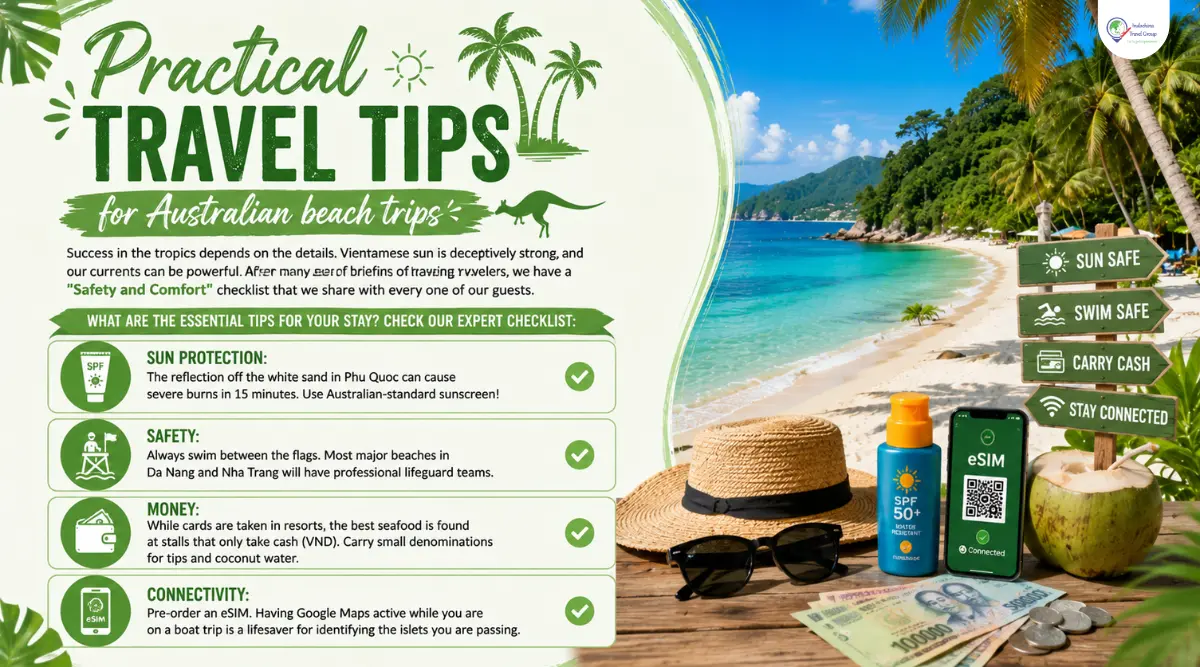 Beach conditions vary by coast, season and day, so practical planning matters more than a fixed safety script. Check local warnings, sea state and the facilities available at the beach you are actually using.A few checks are useful before each beach or island day:
- Sun protection: Use suitable sunscreen, shade and protective clothing, especially for long boat or beach days.
- Swimming: Follow local warning signs and lifeguard instructions where present, and avoid entering the water when conditions are rough or the beach is unsupervised.
- Money: Card acceptance varies outside larger hotels and resorts, so carrying some Vietnamese dong is useful for smaller vendors and transport.
- Connectivity: A local SIM or eSIM is useful for maps and operator contact, but save important booking details offline before boat trips or remote coastal drives.
Conclusion
The best beach choice depends on the season and the role the beach plays in the wider itinerary. A four-night beach finish after a busy cultural route has different requirements from a one-week resort holiday.
Recommended Tours

Group Tour
Hanoi – Sapa – Danang – Ho Chi Minh 10D9N
Hanoi - Sapa - Fansipan Peak - Ninh Binh - Halong Bay Overnight On Cruise - Danang - Hoi An Ancient Town - Bana Hills - Golden Bridge - Ho Chi Minh - Cu Chi Tunnels - Mekong Delta



Private Tour
Ho Chi Minh – Cu Chi Tunnels – Mekong Delta 4D3N
Ho Chi Minh - Cu Chi Tunnels - Mekong Delta


Private Tour
Vietnam Highlights 7 Days 6 Nights Tour
Hanoi Arrival - Hanoi City Tour - Ha Long Bay Day Cruise - Fly to Da Nang - Coconut Village - Hoi An Ancient Town - Ba Na Hills - Golden Bridge - Fly to Ho Chi Minh City - Cu Chi Tunnels - Mekong Delta - Departure


5D4N DELIGHT DANANG TOUR (DANANG – BA NA HILL FRENCH VILLAGE – HOI AN – HUE CITY) (SEAT IN COACH)


Private Tour
Vietnam Panorama Discovery 16D15N
Ho Chi Minh - Cu Chi Tunnels - Mekong Delta Tour - Can Tho - Da Lat - Nha Trang - Hoi An - Da Nang - Hue - Hanoi - Halong Bay Overnight On Cruise