

The best time to visit Ninh Binh is from March to April and October to November, when temperatures are generally comfortable for sightseeing, boat rides and countryside exploration. If golden rice fields are your main priority, late May to early June is the most rewarding period to visit Tam Coc. Located in Northern Vietnam, Ninh Binh is famous for its limestone mountains, winding rivers, ancient temples and picturesque rice fields. However, its landscapes change considerably throughout the year. At Indochina Travel Group, we recommend choosing your travel dates according to the experiences you value most, rather than simply looking for the driest month.
Ninh Binh weather at a glance
| Travel period | Typical weather | Best for |
| March – April | Mild to warm, occasional drizzle | Sightseeing and cycling |
| Late May – early June | Hot, increasing rainfall | Golden rice fields |
| June – August | Hot, humid and rainy | Green landscapes and lotus flowers |
| September – November | Gradually cooler, decreasing rainfall | Nature and cultural exploration |
| December – February | Cool, sometimes misty | Temples and peaceful countryside |
April and November are particularly attractive for comfortable outdoor activities, while late May offers distinctive agricultural scenery.
When is the best time to visit Ninh Binh?
Spring and autumn are generally the best seasons to explore Ninh Binh.
March and April offer increasingly warm weather and green countryside, although spring drizzle and humidity are possible. October and November usually provide more comfortable temperatures as the summer monsoon weakens, making them suitable for countryside walks and boat excursions.
Late May and early June are ideal for seeing Tam Coc’s golden rice fields. However, travelers should prepare for higher temperatures and occasional heavy showers. If your itinerary includes other destinations, our best time to visit Vietnam guide explains how seasonal conditions differ across the country.
Understanding Ninh Binh’s climate
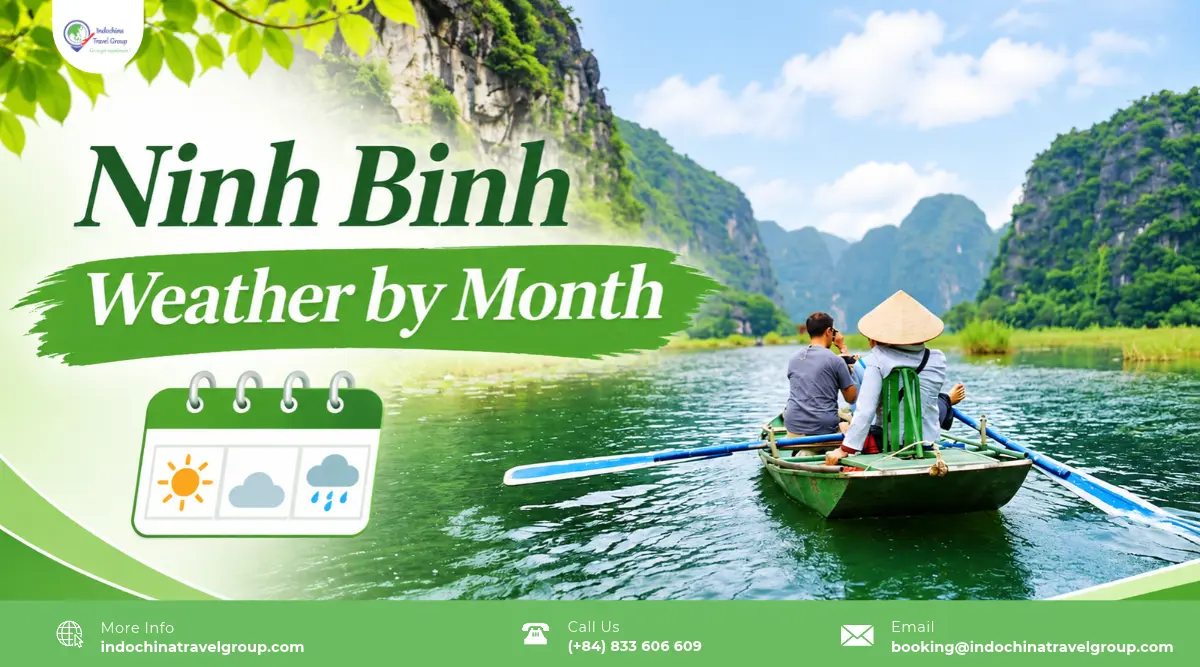
Ninh Binh has a tropical monsoon climate with four recognizable seasons.
Summer is generally hot and humid, with increased rainfall from approximately May to September. Winter brings cooler temperatures and considerably less rainfall, although cloudy skies, mist and occasional drizzle remain possible. Spring represents the transition toward warmer conditions, while autumn gradually becomes cooler and drier.
Weather also affects visibility around limestone mountains, water levels along boat routes and walking conditions at viewpoints. Seasonal patterns are useful for choosing travel dates, but daily forecasts remain important when planning outdoor activities.
Ninh Binh weather by month
| Month | Typical conditions | Travel recommendation |
| January | Cool, sometimes cold and misty | Temples and peaceful sightseeing |
| February | Cool, humid, occasional drizzle | Cultural visits and festivals |
| March | Mild, increasingly green | Cycling and boat tours |
| April | Warm, increasing sunshine | Excellent for outdoor exploration |
| May | Hot, increasing showers | Golden rice toward late May |
| June | Hot, humid and rainy | Early harvest scenery and lotus ponds |
| July | Hot, frequent showers | Flexible outdoor activities |
| August | Humid, heavy rain possible | Countryside stays with backup plans |
| September | Warm, lingering storm risk | Green landscapes and flexible sightseeing |
| October | Gradually cooler and drier | Boat trips and outdoor exploration |
| November | Pleasant, relatively dry | Comfortable sightseeing |
| December | Cool, sometimes cloudy | Cultural attractions and quiet holidays |
These are typical seasonal conditions rather than guaranteed forecasts. Rice-field colors, rainfall and attraction operations can vary each year.
Spring and autumn: Best seasons for sightseeing
March and April are excellent months for discovering Ninh Binh’s countryside. Young rice plants gradually transform the fields, while warmer temperatures make outdoor exploration more enjoyable. Spring also brings traditional festivals, particularly at religious and historical sites such as Bai Dinh Pagoda and Hoa Lu Ancient Capital. Expect additional visitors around the Lunar New Year and festival periods.
October and November offer another favorable window. Lower humidity and cooler temperatures generally make walking, cycling and boat trips more comfortable. October can still experience heavy rainfall, so travelers should remain flexible during unsettled weather.
For attraction combinations and suggested sightseeing routes, explore our Ninh Binh travel guide.
Best time to see Golden Rice Fields in Tam Coc
Late May to early June is generally the best time to see golden rice fields along the Ngo Dong River in Tam Coc. As the rice ripens, the landscape changes from green to gold, creating a beautiful contrast with the surrounding limestone mountains and waterways.
This colorful period is relatively short. Harvest dates depend on weather, planting schedules and local farming activities. We recommend checking recent photographs or local harvest updates shortly before traveling if golden rice is the main reason for your visit. Do not assume that an autumn harvest elsewhere in Ninh Binh guarantees golden fields along the Tam Coc boat route.
Ninh Binh rainy season: May to September
Ninh Binh’s rainy season generally develops in May and continues through September, with particularly challenging conditions possible during July and August. Summer rainfall can arrive as afternoon thunderstorms or longer periods of heavy rain. Tropical weather systems may also affect the region in late summer and early autumn. Despite the rain, summer offers lush vegetation and beautiful lotus ponds.
However, heavy rainfall can affect boat operations, countryside roads and exposed viewpoints. Keep your itinerary flexible, follow local weather warnings and avoid climbing or cycling when conditions become unsafe.
Ninh Binh weather in December and January

Ninh Binh weather in December
December is a good option for travelers who prefer cooler temperatures and a quieter countryside atmosphere. Rainfall is generally lower than during summer, but cloudy skies and cool winds can make outdoor activities feel colder than expected.
Trang An boat tours, Hoa Lu Ancient Capital and Bich Dong Pagoda remain appealing when weather conditions permit. Rice fields are often bare or between cultivation cycles, so December is not ideal for traditional golden rice scenery. Bring warm layers, especially for early morning boat trips.
Ninh Binh weather in January
January is typically among the coldest months in Ninh Binh. Misty mornings, overcast skies and occasional cold spells are common. Nevertheless, cultural sightseeing and countryside stays can still be enjoyable.
If visiting Hang Mua, check visibility and walking conditions before deciding whether to include the viewpoint. Travelers visiting around Tet should also consider changing opening hours, transport demand and festival crowds.
Best time for Ninh Binh’s main experiences
| Experience | Recommended period |
| Trang An boat tour | March – April, October – November |
| Tam Coc golden rice | Late May – early June |
| Hang Mua viewpoint | March – April, October – November |
| Countryside cycling | March – April, November |
| Lotus flowers | Approximately May – July |
| Bai Dinh and Hoa Lu | Year-round, weather permitting |
For a first visit, Trang An offers caves, waterways and heritage attractions, while Tam Coc is especially appealing when its surrounding rice fields are colorful. If you only have one day, choosing one main boat experience leaves more time for other attractions.
Planning Ninh Binh within a Northern Vietnam itinerary
Ninh Binh combines naturally with Hanoi and Ha Long Bay thanks to its relatively convenient road connections. A day trip from Hanoi is possible, but staying overnight offers more flexibility for countryside exploration and changing weather conditions.
Our Northern Vietnam travel guide provides further advice on connecting these destinations without rushing. For a shorter regional holiday, our Hanoi, Ha Long Bay and Ninh Binh tour combines historical attractions, limestone landscapes and a Trang An boat experience.
FAQs

What is the best month to visit Ninh Binh?
April and November are excellent choices for comfortable sightseeing. Late May is preferable if golden rice fields are your priority.
Is December a good time to visit Ninh Binh?
Yes. December offers cooler temperatures and generally lower rainfall, although mist, clouds and limited rice-field colors should be expected.
Is Ninh Binh worth visiting in January?
Yes. January is suitable for cultural attractions and peaceful countryside experiences, provided travelers prepare for cold weather.
When are the rice fields golden in Ninh Binh?
Tam Coc’s most dependable golden rice season usually occurs between late May and early June, depending on the annual harvest schedule.
Conclusion
The best time to visit Ninh Binh ultimately depends on your preferred experience. Choose spring or autumn for comfortable sightseeing, late May for golden rice fields, or winter for a quieter cultural holiday. Explore our Vietnam tour packages to find itineraries that connect Ninh Binh with other remarkable destinations across Vietnam.

Recommended Tours


Ho Chi Minh City, Cu Chi & Can Tho Floating Markets 5D4N Group Tour

Private Tour
Ho Chi Minh – Cu Chi Tunnels – Mekong Delta 4D3N
Ho Chi Minh - Cu Chi Tunnels - Mekong Delta


Hanoi–Lao Cai Sleeper Train, Sapa & Fansipan 5D4N Group Tour

Private Tour
Vietnam Premium Discovery 21D20N Private Tour: Ha Giang to the South
Hanoi - Ha Giang (The Far North) - Pu Luong - Ninh Binh - Halong Bay - Phong Nha Caves - Hue - Ba Na Hills - Hoi An - Ho Chi Minh City - Mekong Delta



Hanoi, Ha Long Overnight Cruise, Sapa Train & Tam Coc 7D6N Group Tour