Ninh Binh Travel Guide: Trang An, Tam Coc & Trip Planning
The first Ninh Binh decision is whether it should be a long day trip from Hanoi or an overnight stop. A day trip works best with one boat experience plus one major land stop. Staying overnight creates quieter early and late hours, more time for cycling and less pressure to rush back to Hanoi. If Ninh Binh is part of a wider northern route, use the Northern Vietnam guide to compare the surrounding stops.Ninh Binh combines limestone scenery, river routes and countryside stops, so day-trip and overnight plans feel very different.
Day trip or overnight in Ninh Binh?
Trip style
What fits well
Planning note
Day trip from Hanoi
One boat ride + one major viewpoint or historic stop
Choose Trang An or Tam Coc, not both. The day is already long once Hanoi transfers are included.
This is the option we prefer when Ninh Binh is more than a quick photo stop.
2 nights
Slower countryside time, additional nature or cultural stops
Useful if you want to avoid the main day-trip rush and keep the route relaxed.
Trang An or Tam Coc? For a first visit, choose by experience rather than trying to “collect” both. Trang An gives a longer cave-and-temple boat route; Tam Coc is closely tied to the rice-field landscape and combines easily with Bich Dong. Season, crowd level and the rest of your day should decide.
Trang An vs Tam Coc: which boat trip fits your day?
Decision point
Trang An
Tam Coc
Experience
Longer route through caves with temple and heritage stops
Shorter river journey through the rice-field landscape
Time on the water
Allow roughly 2–4 hours depending on the operating route
Allow roughly 1.5–2 hours
Choose it when
You want one substantial boat experience and caves are a priority
Rice fields, Bich Dong and a more compact day matter more
What we would not do
For a Hanoi day trip, we normally would not put both boat rides into the same schedule. They overlap enough that the extra time is usually better used at Mua, Hoa Lu, Bich Dong or simply at a slower pace.
Two practical Ninh Binh route shapes
Day trip from Hanoi
Hanoi → Trang An or Tam Coc → Mua Cave or Hoa Lu → Hanoi
One boat experience is enough. The transfer back to Hanoi already makes this a full day.
1-night Ninh Binh stay
Hanoi → boat route → Mua / Bich Dong / cycling → overnight near Tam Coc → onward
This works better when Ninh Binh should feel like a destination rather than a long excursion.
Ninh Binh at a glance
Ninh Binh sits close enough to Hanoi for a day trip, but that convenience is also why it is often rushed. The province combines river-and-cave boat routes, limestone viewpoints and historic sites in a relatively small area, yet each major stop still takes real time once you include boat queues, transfers and walking.When we plan Ninh Binh, we usually think in three parts: one boat experience, one viewpoint or countryside activity, and one historical or religious stop if the day still has room. For a Hanoi day trip, that normally means choosing Trang An or Tam Coc rather than trying to collect both. Staying one night gives the same itinerary much more breathing room.
When to visit Ninh Binh for rice fields and comfortable sightseeing
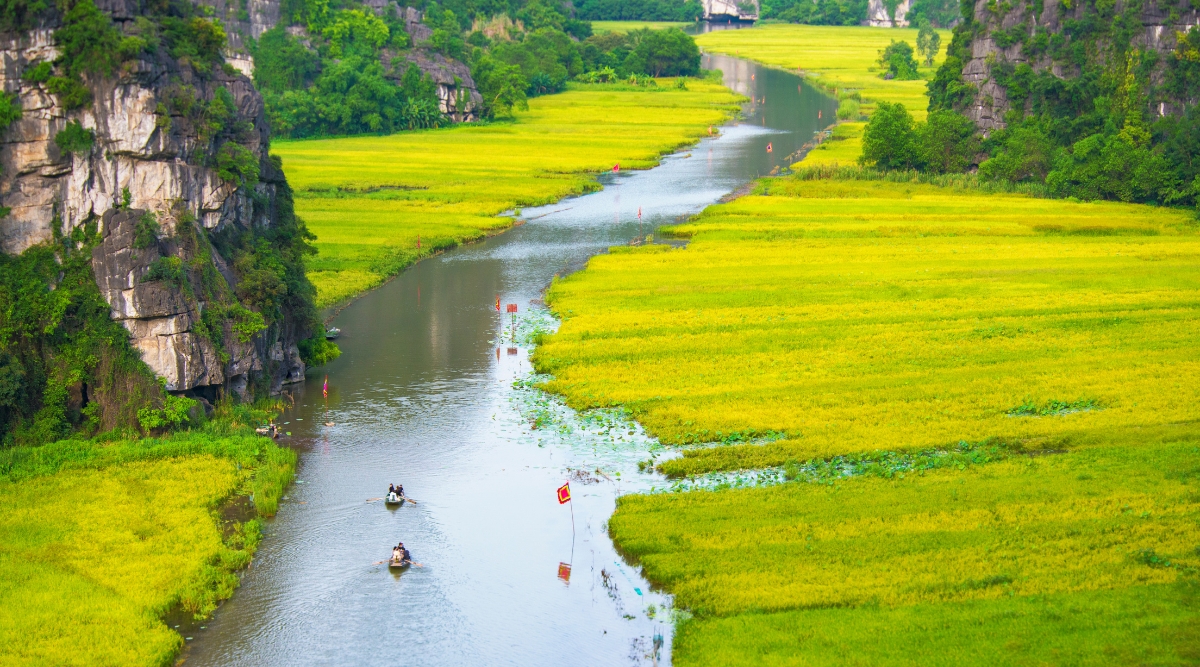
For general sightseeing, spring and autumn often give more comfortable conditions, but the trip changes with the season. If the rice landscape is the reason you are coming, late May to early June is the period many travellers aim for; if cooler walking weather matters more, choose a different window. We plan the day around the conditions you are likely to meet rather than treating one month as the answer for everyone:Tam Coc in golden season
Rice-harvest period (often late May to early June): Tam Coc can take on stronger yellow and gold tones around harvest, but the exact timing varies by field and year. Expect hotter conditions and plan exposed viewpoints or boat rides around the actual weather.
Early summer (June–July): Expect heat, humidity and heavier rain risk. Lotus ponds can add colour to the landscape, but we would plan boat rides and exposed viewpoints around the actual weather rather than around flowers alone.
Spring festival period (January–March): Cooler or mistier days can be comfortable for sightseeing, but the period around and after Tet can also bring heavier domestic visitor traffic to major religious sites such as Bai Dinh. If those sites are in your plan, allow more buffer for access and walking.
Getting to Ninh Binh from Hanoi: day trip or overnight
Hanoi and Ninh Binh are close enough to connect in the same morning, but the useful question is where your transport actually drops you. Ninh Binh railway station, Tam Coc, Trang An and the rural hotels are not the same place, so the final transfer can matter as much as the Hanoi–Ninh Binh leg itself. In normal conditions, road journeys from Hanoi are often around 1.5–2 hours, while rail is useful when its timetable and your accommodation location line up.
Shared limousine / shuttle: Practical for independent travellers when the pickup and drop-off points match your hotel. Confirm the exact stop rather than assuming every service is door-to-door.
Train: Useful if you prefer rail and are comfortable arranging the onward taxi or hotel pickup from Ninh Binh station. It is less convenient when your accommodation is deep around Trang An or Tam Coc.
Organised day tour: Makes sense when you only have one day and want transport, guiding and attraction timing handled together. The trade-off is less flexibility once the group schedule is set.
Where to stay in Ninh Binh: Tam Coc, Trang An or the city
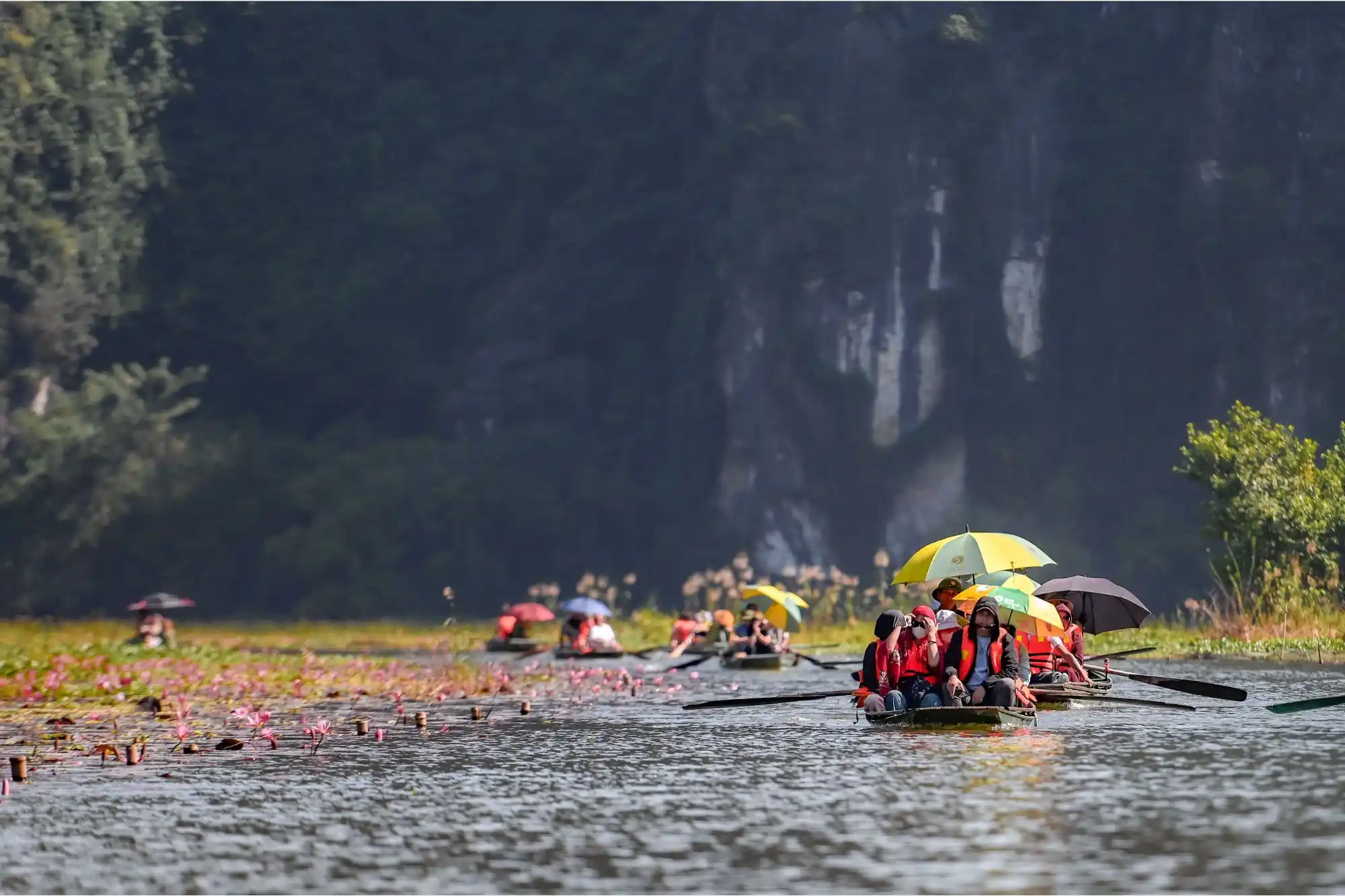
For most leisure trips, we start with Tam Coc or the Trang An / Hoa Lu side rather than choosing a hotel only by star rating. The right base depends on whether you want restaurants and easy evening access, a quieter rural setting, or simple rail logistics.Tourists love to discover Tam Coc by boat tour
Tam Coc: The easiest base when you want restaurants, cafés, bicycle access and a livelier evening without arranging another vehicle for every meal.
Trang An / Hoa Lu: Better when a quieter rural setting matters more than having a dense choice of restaurants outside the hotel.
Ninh Binh city: Useful for train connections and practical services. We would choose it for logistics rather than for the countryside atmosphere most visitors come to Ninh Binh to experience.
Which Ninh Binh sights fit your route?
Ninh Binh packs several very different experiences into a relatively small travel area: the UNESCO-listed Trang An landscape, Tam Coc’s river-and-rice-field scenery, Hoa Lu’s historical sites, the Hang Mua viewpoint and the large Bai Dinh Buddhist complex. They solve different planning goals, so the useful decision is which combination fits your available time rather than how many attractions you can collect in one day:
Trang An Scenic Landscape Complex (UNESCO)
Trang An is the boat experience we most often use when a first-time visitor wants caves, karst scenery and heritage stops in one route. The operating routes vary in length and the management board may adjust them, so we do not build an itinerary around one numbered route months in advance. Allow a substantial block of the day for the boat trip and keep the attraction before or after it relatively simple.
Tam Coc and Bich Dong Pagoda
Tam Coc is a river journey along the Ngo Dong River, with the surrounding rice fields forming a major part of the landscape. Bich Dong Pagoda sits nearby and can be paired with Tam Coc when you want a temple and countryside stop without adding another long transfer. The combination works best when the boat ride remains the main activity rather than one item in an overloaded list.Tam Coc river and limestone scenery
Hoa Lu Ancient Capital
Hoa Lu was the political centre of early independent Vietnam in the 10th and 11th centuries, and today the visit focuses on the surviving temple complex and the surrounding karst setting. We include it when the traveller genuinely wants historical context; on a tight one-day schedule, it is the stop we may trade against Mua Cave depending on whether history or the viewpoint matters more.
Hang Mua viewpoint: when the climb fits your day
Hang Mua is the viewpoint we usually add when guests want one elevated view over the Tam Coc landscape. The climb is steep and involves roughly 500 stone steps, so it is not the right choice for every traveller. If you do include it, an early start is usually more comfortable than climbing in the middle of the day.
Bai Dinh Pagoda
Bai Dinh is a very large Buddhist complex combining older sacred sites with a much newer monumental temple area. It takes more time and walking than many first-time visitors expect, so we treat it as a substantial stop rather than something to squeeze between a boat ride and Mua Cave. It works best for travellers who are genuinely interested in Buddhist architecture, pilgrimage sites or large religious complexes.
What to add after the main boat ride
Once the main boat ride is covered, the extra time is better spent adding a different kind of experience rather than another similar attraction. For guests staying overnight, we often use that time for cycling, a viewpoint, Bich Dong or a quieter nature stop such as Van Long:
Cycling the backroads: Around Tam Coc and the rural lanes, cycling can be a useful way to connect short stops when the weather is comfortable. Check the road surface and traffic before choosing a bicycle for the whole day.
Van Long Nature Reserve: A quieter wetland option for travellers who want another landscape rather than another major temple or viewpoint. Wildlife sightings are possible but should never be treated as guaranteed.
Evening food stop: If you stay overnight, leave some time for a simple local dinner rather than scheduling the entire evening. It gives the day a more relaxed finish after the boat ride and viewpoint.
Food and drink in Ninh Binh
Ninh Binh is known for local dishes built around goat meat and crispy rice, but we would treat the meal as part of the day rather than a checklist of “must-eat” dishes. If you have dietary restrictions, ask how meat, sauces and shared cooking equipment are handled before ordering.
Com chay (crispy rice): A well-known local rice dish, often served with a savoury sauce. The preparation and accompaniments vary by restaurant.
Goat dishes: One of Ninh Binh’s best-known food traditions, with many preparations ranging from fully cooked dishes to versions that may be lightly cooked. Choose a preparation that matches your own food-safety and dietary preferences.
Kim Son rice wine: A regional alcoholic drink you may see with local meals. It is optional rather than something we build the food experience around.
How to plan a Ninh Binh day trip from Hanoi
Ninh Binh from aboveA one-day Ninh Binh trip works best when the schedule has one main boat experience and no more than one or two substantial land stops. Exact timing changes with traffic, weather, boat queues and the pickup point in Hanoi, so we use the sequence below as a planning shape rather than a guaranteed timetable:
Early morning: Leave Hanoi early enough to reach the first Ninh Binh stop before the middle of the day.
Morning: Choose Hoa Lu or Mua depending on whether history or the viewpoint matters more to you.
Late morning: If you include Mua, avoid forcing the climb in poor weather or peak heat; otherwise use this slot for Hoa Lu or Bich Dong.
Lunch: Keep enough buffer before the boat route rather than fixing the meal to a minute-by-minute schedule.
Early afternoon: Take one boat route at Trang An or Tam Coc.
Late afternoon: Return to Hanoi, or check in locally if you are staying overnight.
Evening: Keep the arrival time flexible because traffic and boat queues can shift the day.
Practical tips we use when planning Ninh Binh
The details that most often affect a Ninh Binh day are simple: sun exposure on the boat, slippery steps at Mua, clothing for temples and how much time you leave between attractions. These are the checks we use before finalising the day:
Boat timing: A boat ride can take a large part of the day. Use the current route information at the wharf and do not schedule the next stop too tightly.
Sun and rain: Boat routes are exposed for long periods. Carry drinking water, sun protection and light rain protection according to the forecast.
Mua footwear: The stone climb is steep and can be slippery when wet. Wear shoes with useful grip and skip the climb if heat, rain or mobility makes it a poor choice that day.
Temple clothing: For Hoa Lu, Bich Dong or Bai Dinh, use clothing appropriate for religious and heritage sites rather than planning the entire day as outdoor sightseeing.
This is a long overland move rather than a sightseeing transfer.
Treat the journey as a major travel block and protect the following mountain day from an over-packed schedule.
Where Ninh Binh fits in a Northern Vietnam route
Ninh Binh is one of the easiest places to combine with Hanoi, but that does not mean it has to be rushed. If your trip already includes Ha Long Bay, we usually look at the sequence of the three stops together so you are not returning to central Hanoi unnecessarily between each one.If you only have one day, keep the plan simple. If you can spare a night, use it to slow the boat-and-viewpoint schedule down.