
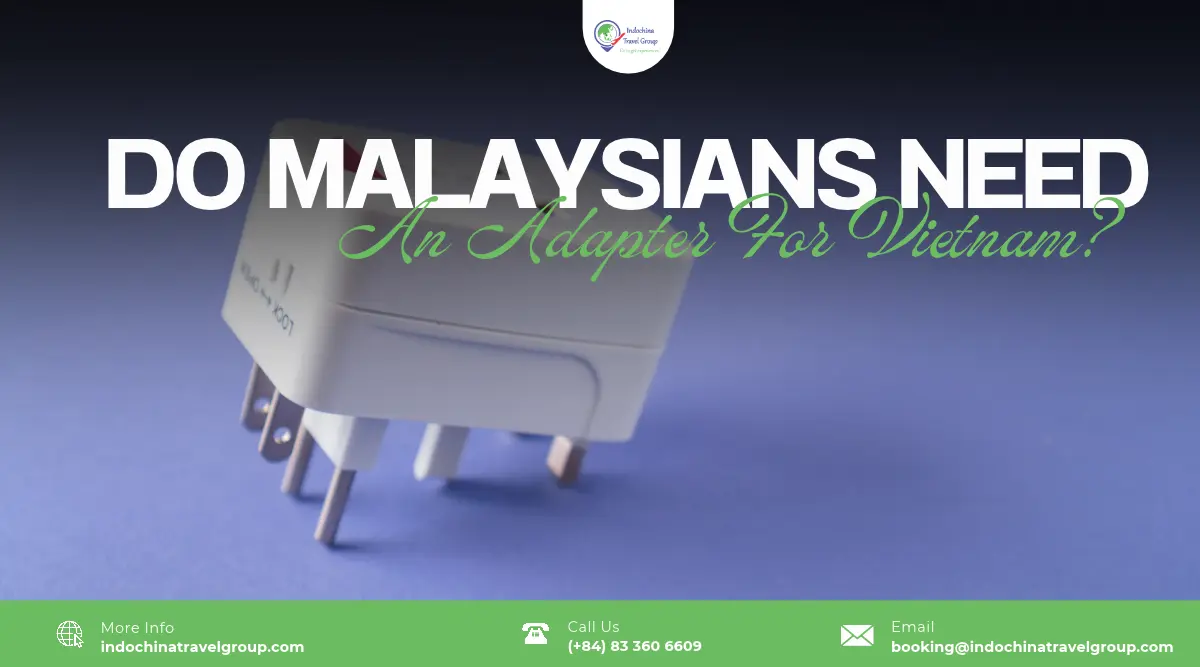
If you are travelling from Malaysia to Vietnam, we recommend bringing a travel adapter. Malaysia mainly uses the Type G plug with three rectangular pins. In Vietnam, you will commonly encounter sockets designed for two-pin plugs, particularly Type A and Type C, although socket configurations can vary between hotels and buildings. The good news is that most Malaysian travelers do not need a voltage converter for modern phones, laptops or camera chargers if the charger is marked INPUT: 100–240V, 50/60Hz. So, for most trips, the simple answer is: Malaysian Type G plug → travel adapter → Vietnam socket. Here is what to check before you pack.
Malaysia vs Vietnam plugs: what changes?
The physical plug is the main difference Malaysian travelers need to prepare for.
| Malaysia | Vietnam | |
| Common plug | Type G | Type A / Type C are common; Type F and hybrid/universal sockets also occur |
| Pin style | Three rectangular pins | Two flat or two round pins |
| Voltage | About 230V | About 220V |
| Frequency | 50Hz | 50Hz |
| Adapter recommended? | — | Yes, for Malaysian Type G plugs |
| Voltage converter? | — | Usually not for 100–240V devices |
Even if your first hotel has a universal socket that accepts a Malaysian Type G plug, do not assume the next one will. Carrying a small travel adapter is easier than finding out after check-in that your charger does not fit.
What plug type is used in Vietnam?
In practice, Malaysian travellers should expect Type A and Type C sockets to be common in Vietnam. Type F and hybrid or universal outlets also occur, especially in newer accommodation, so the exact wall socket can vary from one property to another.
- Type A uses two flat parallel pins.
- Type C uses two round pins.
- Hybrid sockets may accept more than one plug shape, but you should not plan your trip around finding them.
A newer Ho Chi Minh City hotel might have universal sockets and USB charging ports, while a smaller property or cruise cabin may not. That inconsistency is the real reason to pack an adapter: it removes the need to check the socket setup at every stop.
Do Malaysian plugs work in Vietnam?
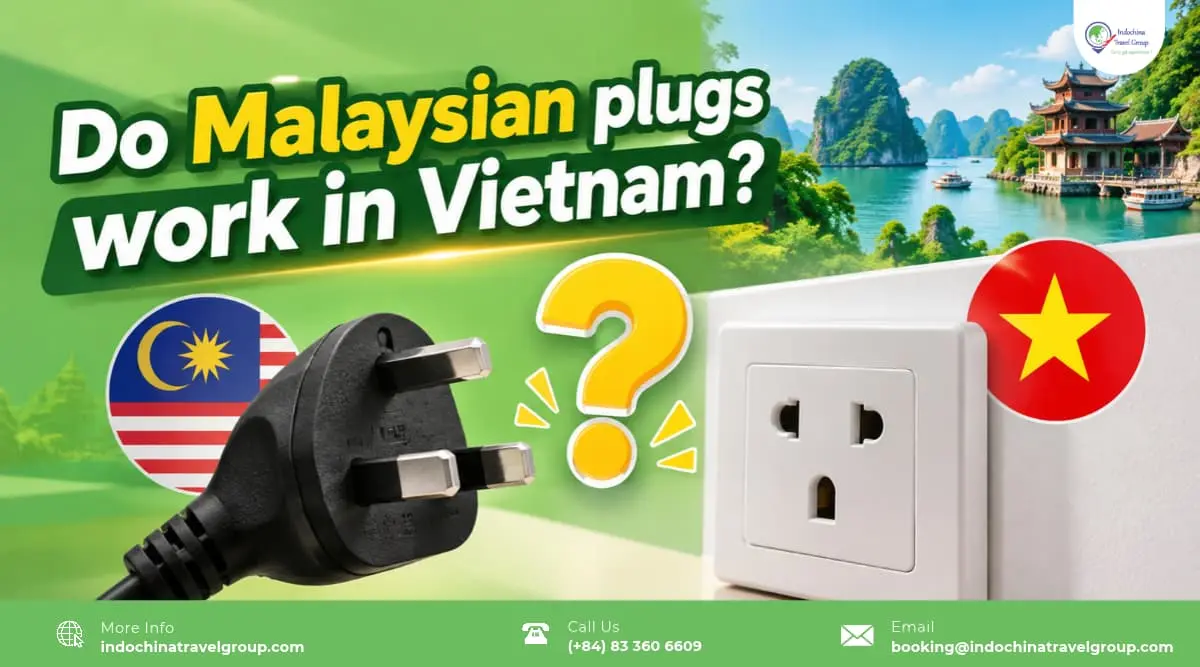
Not reliably. Malaysia primarily uses the British-style Type G plug—the familiar plug with three rectangular pins. This is physically different from the two-pin socket types commonly found in Vietnam. Therefore, if your charger has a standard Malaysian Type G plug, you should pack an adapter.
Some travelers report being able to use Type G plugs directly in universal hotel sockets. That can certainly happen, but it should be treated as a convenience rather than something to depend on. This is particularly important if you change accommodation several times.
A Hanoi hotel, Halong Bay cruise cabin, Da Nang resort and Ho Chi Minh City hotel do not necessarily use the same socket design. On a multi-city trip, carrying your own adapter is simpler than depending on every property to accommodate a Type G plug.
Do you need a voltage converter in Vietnam?
Usually, no—but check your device. This is where travelers often confuse two different products. A plug adapter changes the physical plug connection so your Malaysian plug can fit the local socket. A voltage converter changes electrical voltage.
Vietnam’s mains electricity is generally around 220V at 50Hz, while Malaysia uses approximately 230V at 50Hz. Because these systems are relatively similar, voltage itself is normally not the main issue for Malaysian travelers.
More importantly, many modern electronic chargers are designed for a wide input range. Look at the small print on your charger. If it says something similar to: INPUT: 100–240V ~ 50/60Hz. The charger is designed to work across that voltage range. You generally need only the correct plug adapter. This is common with modern smartphone, laptop, tablet and camera chargers.
How do I check whether my device is safe to use?
Do not guess from the device itself. Check the charger or power supply. Look for the word INPUT followed by a voltage range.
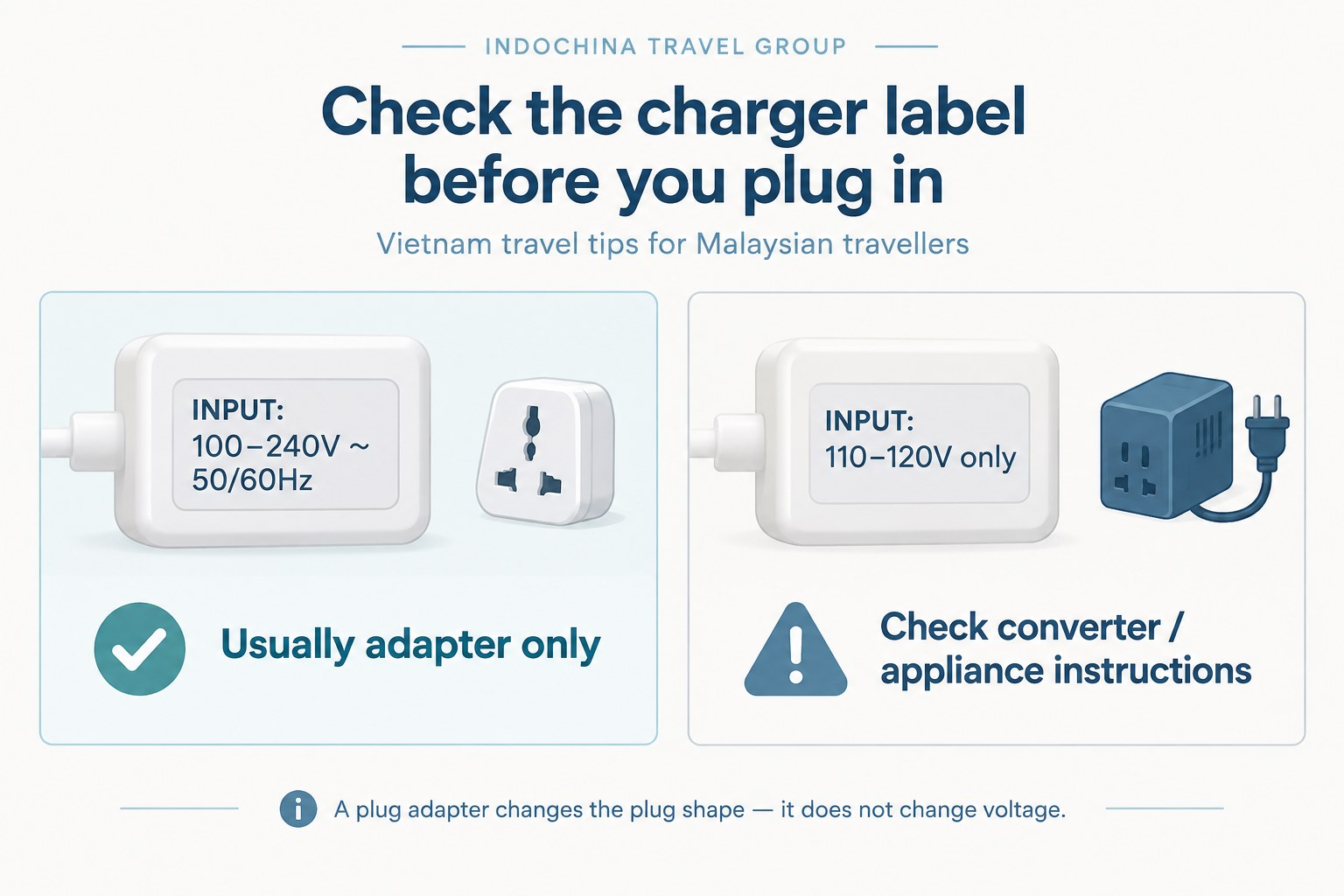
If it says 100–240V, 50/60Hz
This is a dual- or wide-voltage device. For a Malaysian traveler in Vietnam, you normally only need a plug adapter to make the physical connection.
If it lists only one voltage
Check the manufacturer’s instructions before connecting the device in Vietnam. This deserves particular attention with appliances that produce heat or use more power, rather than everyday USB electronics. If you are uncertain about an appliance, do not assume that a travel adapter makes it electrically compatible. An adapter does not convert voltage.
If an appliance uses a three-pin plug because it requires an earth connection, use an adapter that preserves the appropriate grounding rather than forcing it into an ungrounded two-pin setup. For ordinary phone and laptop chargers, follow the charger’s own input and safety markings.
What adapter should Malaysians bring to Vietnam?
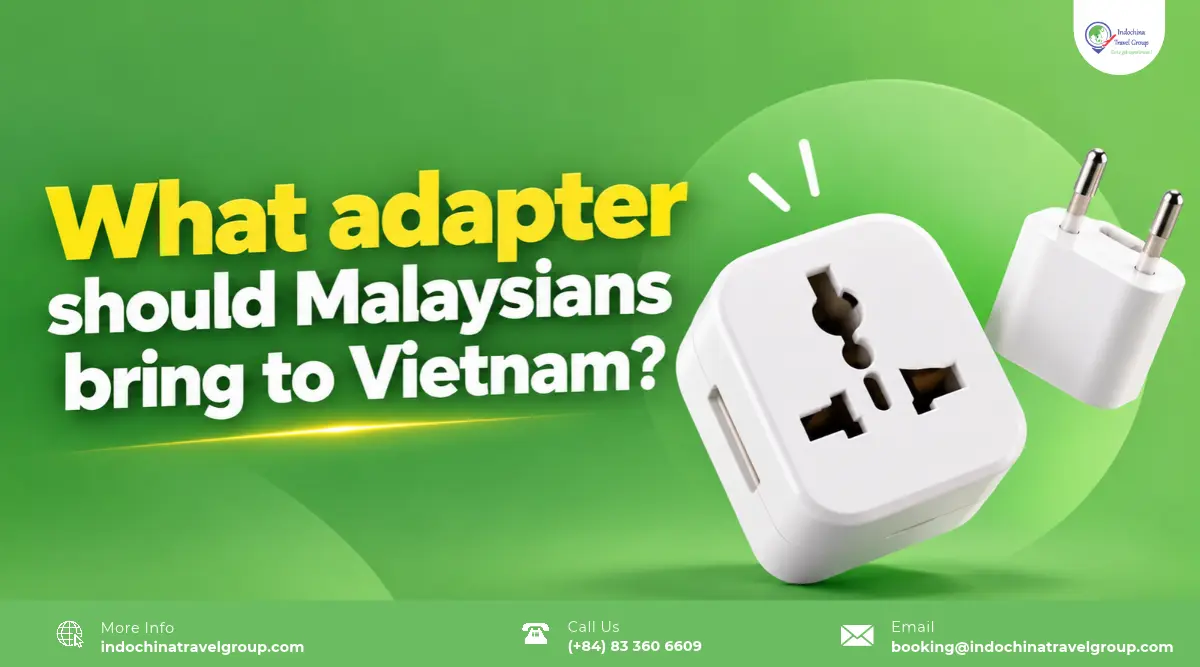
For most travelers, a compact universal travel adapter is the easiest option. Choose one that accepts a Malaysian Type G plug and can connect to the common socket types you expect to encounter in Vietnam.
If you travel internationally regularly, a universal adapter is generally more useful than buying a Vietnam-only adapter. For families, also consider how many devices you charge each evening.
Two adults may arrive at the hotel with two smartphones, a power bank, a smartwatch, wireless earbuds, a camera and a laptop or tablet. One single-port adapter can quickly become a bottleneck.
An adapter with multiple USB or USB-C charging ports can reduce the number of wall sockets you need, provided the product is appropriate for your devices and used according to its specifications.
Do Vietnam hotels have USB or universal sockets?
Some do, but do not assume yours will. Newer and higher-end hotels increasingly provide universal outlets, USB ports or USB-C charging points. Older hotels and smaller properties may have much simpler electrical fittings. There is another practical problem: even if your first hotel has a convenient universal outlet, your next accommodation may not.
This matters most on a multi-stop trip. If you are travelling Hanoi → Halong Bay → Da Nang → Ho Chi Minh City, carrying your own adapter means you do not need to check the socket setup at every accommodation. If you are still deciding how many stops to include, our Vietnam itinerary from Malaysia guide helps you compare route shapes and trip lengths. The adapter itself is a small packing item that removes a repetitive problem.
What about phones, laptops, cameras and power banks?
Modern travel electronics are usually straightforward, but check the charger rather than assuming every device is the same.
| Device | What to check |
| Phone / tablet | Look for 100–240V, 50/60Hz on the charger. If present, you normally need only the plug adapter. |
| Laptop | Check the power brick or USB-C charger input range; many support 100–240V. |
| Camera charger | Check the printed input specification before use rather than assuming it is wide-voltage. |
| Power bank | The wall-side issue is the charger used to recharge it. Airline carriage rules for lithium batteries are a separate question. |
2026 flight note: Vietnam’s Civil Aviation Authority requires power banks to travel in carry-on baggage, with a maximum of two per passenger from 1 July 2026. Lithium-ion power banks up to 100Wh are within the standard limit; those above 100Wh and up to 160Wh require airline approval. The authority also says power banks must not be recharged on board and should be kept accessible rather than left inside cabin baggage. See the current Vietnam aviation guidance, and still check your airline before departure because individual carriers may apply stricter rules.
Should you buy the adapter in Malaysia or Vietnam?
We recommend buying or packing one before departure. You can find electronics and travel accessories in major Vietnamese cities, but searching for an adapter after arrival is unnecessary if you already know you need one.
Keep the adapter somewhere easy to reach in your carry-on. Your phone is often the first device you need after landing for messages, maps, bookings or transport.
Packing checklist before you leave Malaysia
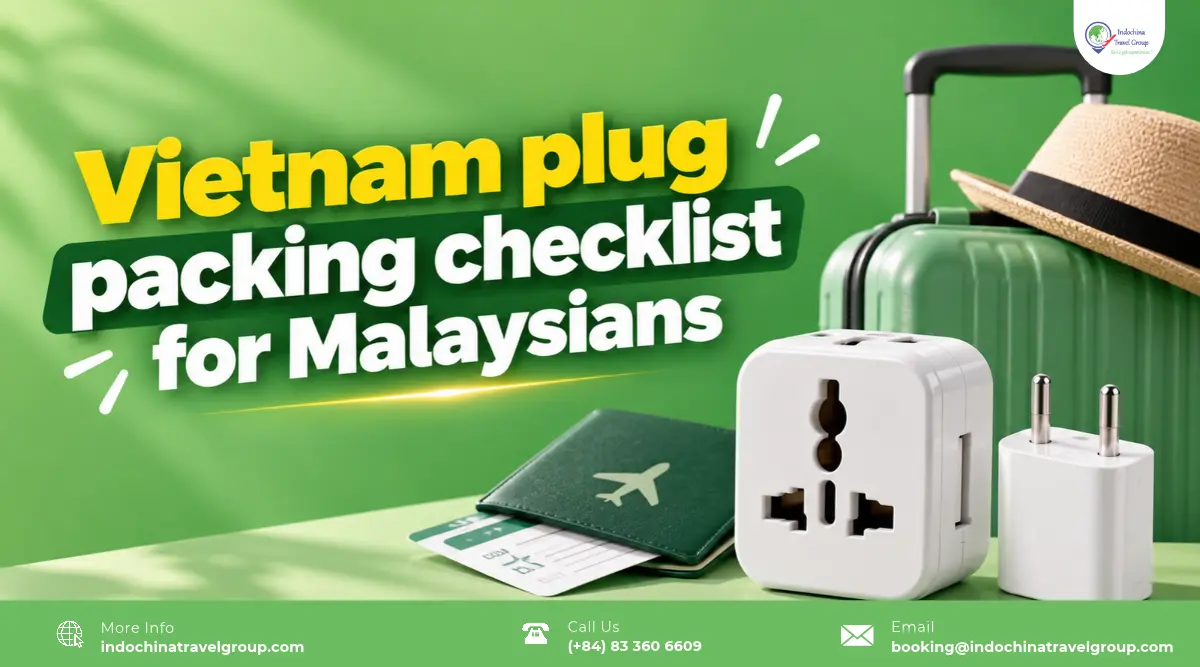
Before leaving Malaysia, check:
- Your main chargers are marked 100–240V;
- You have an adapter suitable for your Type G plugs;
- You have enough USB/USB-C ports for the devices you charge overnight;
- Your laptop and camera chargers are compatible;
- Your power bank meets your airline’s current carriage rules; and
- The adapter is packed somewhere accessible.
For a simple phone-and-power-bank setup, this takes only a few minutes to check before departure. It can save considerably more inconvenience after arrival.
FAQs
Do Malaysians need a plug adapter for Vietnam?
Yes, we recommend bringing one. Malaysia primarily uses Type G plugs, while two-pin Type A and Type C sockets are commonly encountered in Vietnam. Some hotels have universal sockets, but this should not be relied upon.
What voltage does Vietnam use?
Vietnam generally uses about 220V at 50Hz. Check the input specifications printed on your charger or appliance before use.
Can I use my Malaysian phone charger in Vietnam?
Usually yes if the charger is rated for 100–240V, 50/60Hz, but a plug adapter may still be required because the physical plug differs.
Do I need a voltage converter from Malaysia to Vietnam?
For most modern electronics with a 100–240V input range, no. An adapter is normally sufficient. Devices that do not support Vietnam’s voltage require separate consideration.
Can a Malaysian Type G plug fit a Vietnam hotel socket?
Some universal hotel sockets may accept Type G, but many sockets will not. Bring an adapter rather than depending on the hotel.
Can I buy a Vietnam adapter after arriving?
Travel adapters are available in major destinations, but bringing one from Malaysia is more convenient, especially because you may need to charge your phone immediately after arrival.
Conclusion
This is a small thing to sort before leaving Malaysia: bring a travel adapter for your Type G plugs and check that your main chargers are marked for a 100–240V input range. For most phones, laptops, tablets and camera chargers, that is all the electrical preparation you need.
Once that is sorted, move on to the decisions that actually shape the holiday: when to go, where to arrive and how much ground to cover. Our Vietnam Travel Guide for Malaysians is the better place to continue planning. The adapter itself can stay simple: pack it before departure and it becomes one less thing to think about after landing.

Recommended Tours

Group Tour
Phu Quoc Island 4 Days 3 Nights Group Tour
Phu Quoc Arrival - Grand World Tour - VinWonders Phu Quoc - Duong Dong Night Market - Sun World Hon Thom - Kiss Bridge - Phu Quoc Departure


6D5N HANOI + HALONG BAY (OVERNIGHT ON CRUISE) + SAPA VALLEY (SEAT IN COACH)

5D4N HANOI + SAPA VALLEY + SUN WORLD FANSIPAN LEGEND – LIMOUSINE VAN (SEAT IN COACH)



Group Tour
Vietnam – Cambodia Discovery – Joining Group Tour
Hanoi - Ninh Binh - Halong Bay - Hue - Hoi An - Ho Chi Minh City - Mekong Delta - Chau Doc - Phnom Penh - Siem Reap


Private Tour
Grand Tour Of Indochina 22D21N
Ho Chi Minh - Cu Chi Tunnels - Mekong Delta Tour - Hoi An Ancient Town - Hue - Hanoi - Mai Chau - Halong Bay Overnight On Cruise - Luang Prabang - Vang Vieng - Vientiane - Phnom Penh - Siem Reap - Angkor Wat - Tonle Sap Lake