

Is a North-to-South Vietnam route right for your trip?

A north-to-south direction can be practical when international flights allow you to arrive in Hanoi and depart from Ho Chi Minh City, but it is not automatically better than the reverse. The useful question is how many regional bases your trip can support after transfer days are counted.
| Trip length | Practical route shape | What to avoid |
|---|---|---|
| 10 days | Hanoi + one northern side trip, then Hoi An/Da Nang or Hue, then Ho Chi Minh City. Compare the faster pacing in 10 days in Vietnam. | Trying to fit Sapa, Ha Long, Hue, Hoi An, Ho Chi Minh City and the Mekong into the same trip. |
| 14 days | North + Central + South with room for one slower section such as an overnight bay stay, Ninh Binh, Hue or the Mekong. See the 14-day Vietnam itinerary for a fuller two-week pacing example. | Using every extra night to create another hotel change. |
| 21 days | Add one deeper extension: Sapa or Ha Giang in the North, Phong Nha in Central Vietnam, or more time in the Delta/coast. The 21-day Vietnam itinerary shows how to use the extra week without multiplying one-night stops. | Stacking several mountain and beach extensions simply because the calendar allows it. |
An open-jaw ticket can reduce backtracking when the trip starts in Hanoi and finishes in Ho Chi Minh City, but compare the actual international fare, baggage rules and domestic sectors for your dates before choosing the gateways.
READ MORE: Vietnam Itinerary – The Complete Guide
A practical North-to-South route by trip length
The route is easier to evaluate as three broad sections: north, central and south. Use each section as a planning block rather than a fixed phase, and give the bases enough nights to justify the transfer that gets you there. A short trip may use only two blocks; a longer trip can connect all three without changing hotels every night.Northern section: choose one slower extension
Northern Vietnam combines Hanoi with bay, limestone and mountain routes that use very different amounts of transfer time. Choose one slower extension—such as Sapa, Ha Giang or Ninh Binh—according to the number of nights available rather than trying to fit every northern highlight into the same week.
- Hanoi: Use the capital as the northern anchor for neighbourhood time, food and history. The Old Quarter can fill part of a day without extra road travel; add a craft or food-focused village only when it fits the route and the current visitor programme.
- Ha Long or Lan Ha Bay: Choose the sailing area from the actual cruise, embarkation point, cabin and activity programme rather than assuming one bay is universally quieter or better. A one- or two-night cruise can work when the transfer and embarkation window fit the wider route.
- Sapa or Ninh Binh extensions: Sapa adds mountain-road time, village stays and trekking choices; Ninh Binh adds river-karst scenery and countryside time with a much shorter transfer from Hanoi. Choose the extension that fits the route rather than stacking both by default.
Central section: use Hue, Da Nang and Hoi An selectively
Central Vietnam can link Hue, Da Nang and Hoi An efficiently, but each stop should have a clear role. Use Hue for imperial history, Da Nang for transport and beach access, and Hoi An for the heritage-town stay; add Phong Nha only when the route can absorb the separate transfer and cave time.
- Hue: Give the Citadel and selected royal tombs enough time to justify the stop. A Perfume River boat can fit when the schedule, weather and chosen route make sense, but it is optional rather than a required way to see Thien Mu Pagoda.
- Hai Van Pass: Use the pass when scenery and daylight are worth the extra road time between Hue and Da Nang or Hoi An. A private car is the simplest choice for many travellers; other vehicle formats should follow licensing, weather and the operator rather than being treated as the default experience.
- Hoi An: Protect at least one evening for the Ancient Town, then choose one additional layer according to the pace of the trip—tailoring, countryside time, An Bang Beach or a separate My Son heritage visit.
READ MORE: VIETNAM TRAILS 15 DAYS/14 NIGHTS FROM SOUTH TO NORTH
Southern section: decide between city time, the Mekong and the coast
Use Ho Chi Minh City as the main southern base, then decide whether the remaining days belong to the Mekong Delta, an island extension or more city time. The departure flight should determine how ambitious the final section can be.
- Ho Chi Minh City (Saigon): Use the city for museums, neighbourhood food, markets and evening time. A guided night-food or scooter experience is optional; choose it only when the operator, traffic exposure and activity format fit the traveller.
- The Mekong Delta: Choose the Delta depth by available time. Ben Tre can work for a shorter rural-and-river extension, while Can Tho makes more sense when an overnight stay and early-morning river activity justify the extra transfer. Compare the actual programme rather than dismissing one gateway as a tourist trap.
- Island extension: Add Phu Quoc or Con Dao only when the island itself is a trip priority and the extra flight or ferry still fits the departure plan. Keep enough buffer before the international flight instead of assuming every longer itinerary needs a beach finale.
Planning essentials and logistics
Transport choices should follow the route rather than a single preferred app or mode. For each leg, compare the actual journey time, luggage, departure schedule, hotel-to-station or airport transfer and how much of the day remains usable after the move.Which legs should you fly, drive or take by train?
Choose each transport leg by total door-to-door time, not by one preferred mode. Long domestic sectors can justify a flight; shorter regional links may work better by road or rail when airport time would erase the saving.
- City transport: App-booked cars and clearly identified taxis can make pickup points and fares easier to understand, but coverage, vehicle type and payment support vary by city and account. Keep the hotel address saved and confirm the pickup point before the ride.
- Domestic flights: Flights can reduce long overland time between distant regions, but schedules, fares and baggage rules change. Compare the current sector against train or road time and include airport transfers before deciding whether a flight improves the itinerary.
- Rail: The Hue–Da Nang section can add a scenic coastal journey when the timetable fits the day. Compare the current train schedule with the road option before deciding which one works better for your route.

What changes the cost most?
For a cross-country itinerary, the biggest cost differences usually come from hotel category, cruise cabin, domestic flights, private versus shared transfers, guides and how many specialist activities are included. Compare those components instead of relying on one daily-budget label.
| Cost driver | Why it matters on a north-to-south route |
|---|---|
| Hotels | Changing city and resort categories across several regions can move the total quickly. |
| Domestic transport | Flights, private transfers and overnight rail solve different timing problems and carry different baggage or comfort trade-offs. |
| Bay cruise | Cabin category and cruise length can be a larger single cost than several ordinary city days. |
| Guides and private services | They become more valuable when several transfers, accessibility needs or specialist activities need coordination. |
When does coordinated planning become useful?
A north-to-south trip has more moving parts than a single-region stay. Coordination becomes more useful when several domestic sectors, a bay cruise, private transfers, dietary or mobility needs, or a fixed international departure all have to line up.
- Multiple transfer days: check the handoff between airports, stations, cruise ports and hotels before the route is booked.
- Weather-sensitive sections: keep enough flexibility around mountain roads, bay cruises and outdoor activities to adjust the day if conditions change.
- Special requirements: communicate accessibility, dietary or room needs before arrival rather than solving them separately in each city.
For broader preparation beyond the route itself, continue with the Vietnam travel guide.
Use the direction to reduce backtracking, not to add more stops
A north-to-south route works when each regional section earns the transfer that gets you there. With ten days, keep the route selective. With two weeks, all three regions become more comfortable. With three weeks, use the extra time for one or two deeper extensions instead of turning the trip into a long list of one-night stays.
If you want a bookable starting structure after the route is settled, compare our Vietnam Tour Packages and adjust the pacing around your actual flights and priorities.

Recommended Tours


Group Tour
Hanoi – Danang – Ho Chi Minh – Siem Reap 11D10N
Hanoi - Ninh Binh - Halong Bay Overnight On Cruise - Danang - Hoi An Ancient Town - Bana Hills - Golden Bridge - Ho Chi Minh - Cu Chi Tunnels - Siem Reap - Angkor Wat



Group Tour
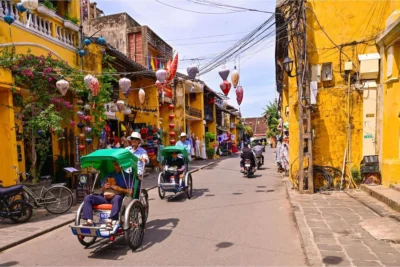
Hanoi, Ha Long Bay, Da Nang & Hoi An 5 Days 4 Nights Tour
Hanoi Arrival - Hanoi City Tour - Ha Long Bay Day Cruise - Fly to Da Nang - Coconut Jungle - Hoi An Ancient Town - Ba Na Hills - Golden Bridge - Departure

Private Tour
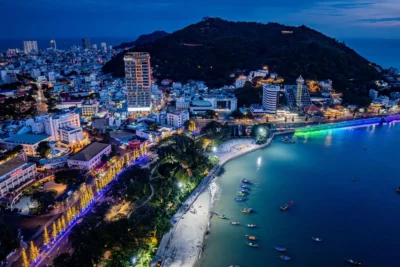
Ho Chi Minh – Cu Chi Tunnels – Vung Tau Beach 4D3N
Ho Chi Minh - Cu Chi Tunnels - Vung Tau


Private Tour
Vietnam And Cambodia Discovery 18D17N
Hanoi - Ha Giang (The Far North) - Halong Bay - Hoi An - Hue - Ho Chi Minh City - Mekong Delta - Siem Reap (Angkor)


Private Tour
Ho Chi Minh City - Mekong Delta - Hoi An - Hue - Hanoi - Sapa - Halong Bay