

How much of Vietnam fits into 10 days?
Vietnam is a long country, so a ten-day trip becomes tiring quickly when every region is treated as compulsory. The first decision is whether you want more depth in two regions or a faster overview across three.
| Route style | What it gives you | Main trade-off |
|---|---|---|
| 2 regions | Longer stays, fewer airport or station days, more room for weather changes and day trips. | You deliberately leave one part of Vietnam for another trip. |
| 3 regions | A first overview of North, Central and South in one journey. | Usually requires two long domestic moves and tighter hotel timing. |
Either north-to-south or south-to-north can work when the international flights and domestic transfers support it:
- North to south: useful when the international ticket arrives in Hanoi and departs from Ho Chi Minh City. This direction can connect a northern base, a Central Vietnam stop and the south without returning to the starting city. For the directional trade-offs beyond a 10-day template, use the Vietnam north-to-south itinerary.
- South to north: equally workable when the flights or wider Asia itinerary make Ho Chi Minh City the easier arrival point. Ending in Hanoi can suit the route when the northern section is the main priority; it is not inherently better for families or cooler at all times of year.
For current inventory, compare the available 10-day Vietnam tours after you have decided which route shape fits the trip.
A practical three-region 10-day route
This sample uses three regional sections, so it is faster than a two-region trip and should only be used when the travellers are comfortable with two domestic moves. Treat the sequence as a comparison framework rather than a fixed template; removing one region creates more usable time in the others.Days 1–4: Northern Vietnam
Use the northern section for Hanoi plus one bay or countryside extension. Four days does not leave enough room for Hanoi, Sapa, Ninh Binh and an overnight cruise at a comfortable pace, so choose the extension that best fits the wider trip.
- Days 1–2: Hanoi. Use the first two days for the Old Quarter, Hoan Kiem area and one or two history or cultural stops. Treat Train Street as conditional because access rules can change; do not build the itinerary around guaranteed trackside entry. A Bat Trang pottery visit can work when craft activity is a real priority and the extra road time fits the day.
- Days 3–4: Ha Long or Lan Ha Bay. Compare the actual cruise, embarkation port, cabin, transfer and activity programme rather than assuming one bay is always quieter or more sustainable. An overnight cruise uses most of two days once the road transfer and fixed embarkation window are counted.
Days 5–7: Central Vietnam
Use the Central section for a compact Da Nang–Hoi An base or a Hue–Da Nang–Hoi An sequence when the domestic flight and hotel changes still leave enough usable time.
- Day 5: Da Nang. If Ba Na Hills is a priority, treat it as a substantial excursion rather than a quick add-on; current opening hours, ticketing and crowd patterns should guide the day. If not, use the time for Da Nang itself, Marble Mountains or a slower transfer into Hoi An.
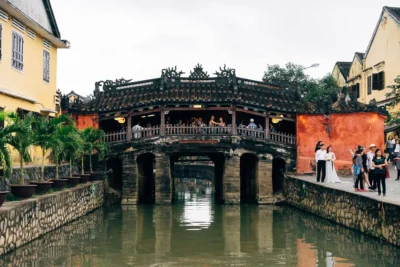
- Days 6–7: Hoi An. Protect one evening for the Ancient Town, then choose one additional layer—tailoring, countryside time around Tra Que or Cam Thanh, An Bang Beach, or a separate My Son visit. Do not stack every activity into the same two days; the value of this stop is having enough time to slow the route down.
Days 8–10: Ho Chi Minh City and the south
Use Ho Chi Minh City as the final base, then decide whether the remaining time belongs to the city itself or one Delta excursion. The international departure time should limit how ambitious Day 10 can be.
- Day 8: Ho Chi Minh City. Keep the first southern day centred on the city: one or two history stops, neighbourhood food and an evening near the hotel or riverfront. A rooftop bar can fit if it suits the group, but it does not need to be a named venue or a fixed part of the itinerary.
- Day 9: Mekong Delta. Choose the Delta depth by the available time. Ben Tre can work for a shorter rural-and-river day from Ho Chi Minh City; Can Tho usually makes more sense when the itinerary can support an overnight stay. Compare the actual boat, road and activity programme rather than treating one gateway as inherently more authentic than another.
- Day 10: departure day. Keep the final plan close to the hotel or airport route and let the international flight time determine whether a food stop, café or short city block is sensible. Avoid committing the last day to a long tour that leaves little disruption buffer.
Weather, transport and cost checks for a 10-day route
A 10-day itinerary has little room for avoidable disruption, so weather-sensitive activities, domestic transport and hotel changes should be checked together rather than treated as separate planning tasks.Regional weather and timing
Vietnam spans several climate zones. The same travel month can produce different conditions in the north, Central Vietnam and the south, so use regional patterns as a planning guide and check the short-range forecast for the places actually on the route.
- Multi-region route: do not assume one month is dry across the whole country. Compare the north, Central coast and south separately.
- Central Vietnam: late-year rain and tropical systems can increase disruption risk, but September–November is not an automatic no-go window. Keep the route flexible and check current forecasts, flood warnings and transport status.
Transport and booking checks
Use a clearly priced taxi, app-booked car or confirmed transfer for city journeys where practical, but availability and payment support vary by city and account. For intercity sectors, compare the actual flight, rail or road schedule against hotel-to-hotel time rather than choosing by transport label alone.Domestic airfares and baggage rules change by travel date and airline. Check the current fare and conditions for the exact sector instead of relying on one booking window or a fixed fare estimate. A slightly cheaper flight can still be poor value if it creates an awkward airport transfer or removes most of a usable sightseeing day.Budgeting
A 10-day budget should be built from the actual route rather than one daily-spend label. Domestic flights, hotel category, private versus shared transport, cruise choice and the number of guided days can change the total more than the trip length alone.
| Cost driver | What changes the total |
| Accommodation | City, location, room type, hotel category and travel dates. |
| Domestic transport | Current airfare or train fare, baggage, airport transfers and long private-road sectors. |
| Guided services | Private versus shared format, number of guided days and specialist activities. |
| Cruise / resort stays | Vessel or property, cabin or room category, meal plan and current availability. |
Use the current quotation, menu or transport fare for the dates you are actually travelling instead of carrying an old USD daily budget into the trip.
When does coordinated planning help on a 10-day trip?
A short multi-region itinerary leaves little room for a badly timed transfer or a hotel that sits far from the next departure point. Coordination becomes more useful when flights, private transfers, a cruise, guides or weather-sensitive activities need to line up across several regions.
If ITG is arranging those services, use the confirmed itinerary and contact details supplied with the booking when a delay or weather change affects the next step.
Planning note: Use the Da Nang–Hue rail section when its timetable and the wider itinerary make the journey worthwhile; otherwise compare the road transfer and Hai Van Pass option. Choose by route fit rather than treating one transport mode as compulsory.
Choose the pace before the destination count
Ten days works best when the route has a clear priority. A three-region itinerary can fit, but it moves quickly; a two-region trip gives more room for slower mornings, weather changes and longer stays in the places that matter most.
Once that pace feels right, compare our Vietnam Tour Packages as starting structures and adjust the inclusions around the route you actually want.

Recommended Tours


5D4N DELIGHT DANANG TOUR (DANANG – BA NA HILL FRENCH VILLAGE – HOI AN – HUE CITY) (SEAT IN COACH)

Group Tour
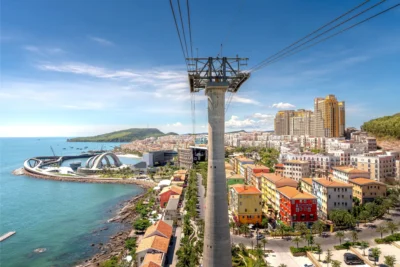
Phu Quoc Island 4 Days 3 Nights Group Tour
Phu Quoc Arrival - Grand World Tour - VinWonders Phu Quoc - Duong Dong Night Market - Sun World Hon Thom - Kiss Bridge - Phu Quoc Departure
Private
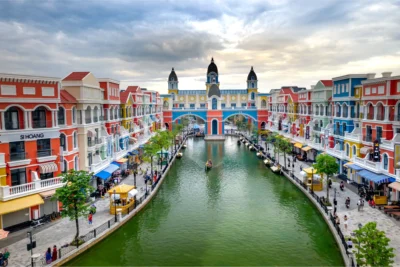
Phu Quoc 5D4N With Grand World
Phu Quoc - Grand World - Hon Thom Cable Car - 4 Island Tour - Aquatopia Water Park - Vin Wonders Theme Park - Vin Safari - Kiss Of The Sea Show

4D3N HIGHLIGHT OF MIDDLE OF VIETNAM (SEAT IN COACH)



Private Tour
Vietnam And Cambodia Discovery 18D17N
Hanoi - Ha Giang (The Far North) - Halong Bay - Hoi An - Hue - Ho Chi Minh City - Mekong Delta - Siem Reap (Angkor)