
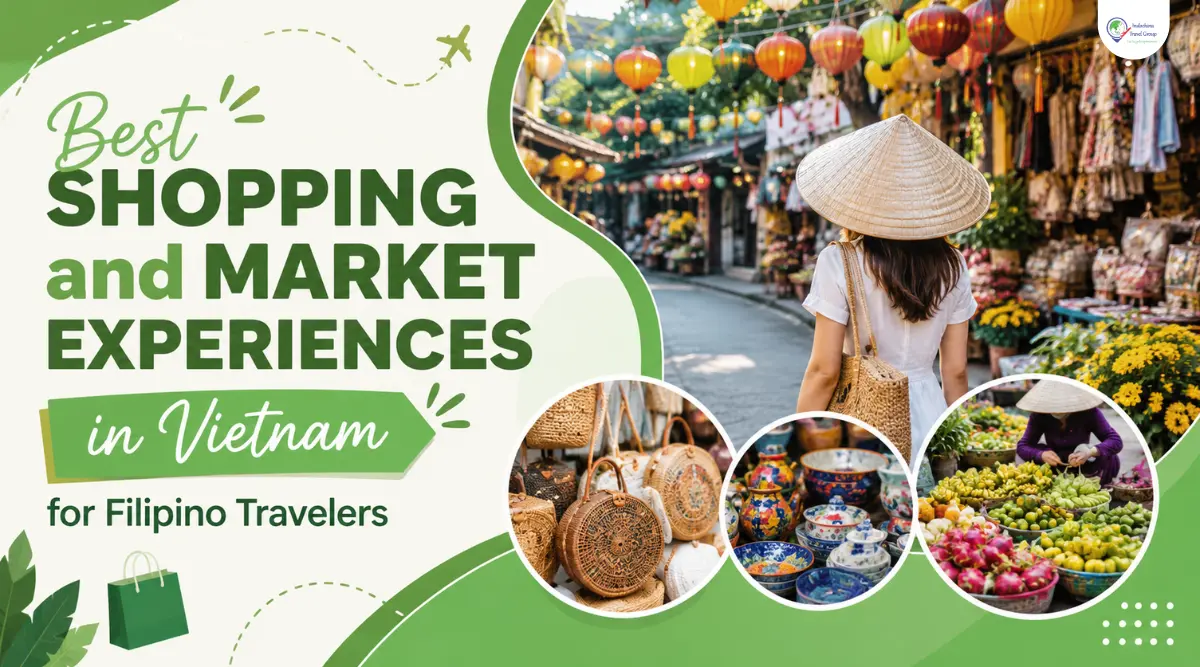
If you are wondering what to buy in Vietnam, start with things that are easy to use, pack and give as pasalubong: Vietnamese coffee and a phin filter, sealed snacks or dried fruit, tea, small lacquerware or ceramics, textiles, lanterns and—if your itinerary allows time for fittings—tailored clothing in Hoi An. Buy food from places with clear labels and dates, and save fragile or higher-value purchases for shops where you can check the quality properly.
What is worth buying in Vietnam?
You do not need a long shopping list. Coffee, food gifts and small crafts are easy to fit into most trips, while tailoring, ceramics or larger decorative pieces need more time and suitcase space. If shopping is only a small part of the holiday, buy close to the neighbourhoods you are already visiting instead of adding extra transfers just for a market.
Vietnam souvenirs and gifts that travel well
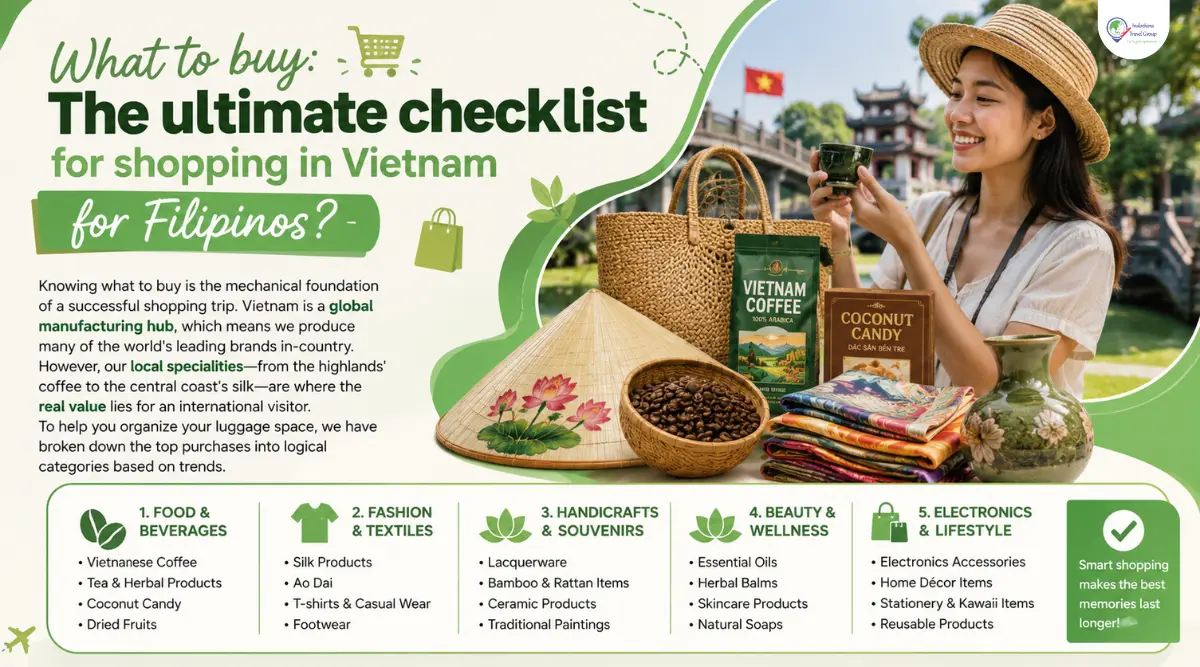
A good souvenir is something you will actually use or give away, that you can check before paying, and that will still fit safely in the suitcase. That is why coffee, sealed snacks, textiles and small crafts are usually easier buys than bulky or fragile pieces.
Coffee, tea and food gifts
Vietnamese coffee is one of the easiest gifts to take home, especially with a small metal phin filter. Sealed tea, dried fruit, chocolate, biscuits and other packaged snacks also work well because you can check the ingredients, weight and expiry date before buying. For food, keep the packaging sealed and check Philippine arrival rules for the specific product.
Textiles and tailored clothing
Scarves, simple textiles and ready-made clothing are easy to compare as you shop. Custom tailoring is different: it is worth considering only if you have time for measurements, a fitting and possible alterations. In Hoi An, leave some room in the itinerary rather than ordering on your last afternoon.
Crafts, ceramics and lanterns
Small lacquerware, ceramics, paper goods, textiles and foldable lanterns can make more personal souvenirs than a generic logo item. Look at the finish and materials, then think about how the piece will survive the journey home—especially with ceramics or anything fragile.
Easy pasalubong ideas to bring home
| Item | Where it is easiest to compare | Main check before buying |
| Coffee or tea | Supermarket, fixed-price shop or specialist roaster | Seal, roast or expiry information, whole bean versus ground, and luggage weight |
| Phin coffee filter | Coffee shop, supermarket or market | Size, material and whether it packs without bending |
| Packaged snacks or dried fruit | Supermarket or fixed-price food store | Ingredients, seal, expiry date and Philippine arrival rules for the specific product |
| Lacquerware, ceramics or textiles | Craft or specialist shop when provenance and workmanship matter | Finish, cracks, fragility, materials and how the item will be packed |
| Hoi An tailoring | Tailor with clear fitting and alteration arrangements | Fabric, construction, number of fittings and enough time before departure |
| Lanterns and small decorative goods | Hoi An or specialist craft shops | Foldability, fragile parts and suitcase space |
If coffee is one of the purchases you care about, the Vietnam coffee and café guide for Filipino travellers helps you choose the drink style first; buying beans or a phin is easier once you know what you actually enjoyed.
Where to shop in Ho Chi Minh City, Hanoi and Hoi An
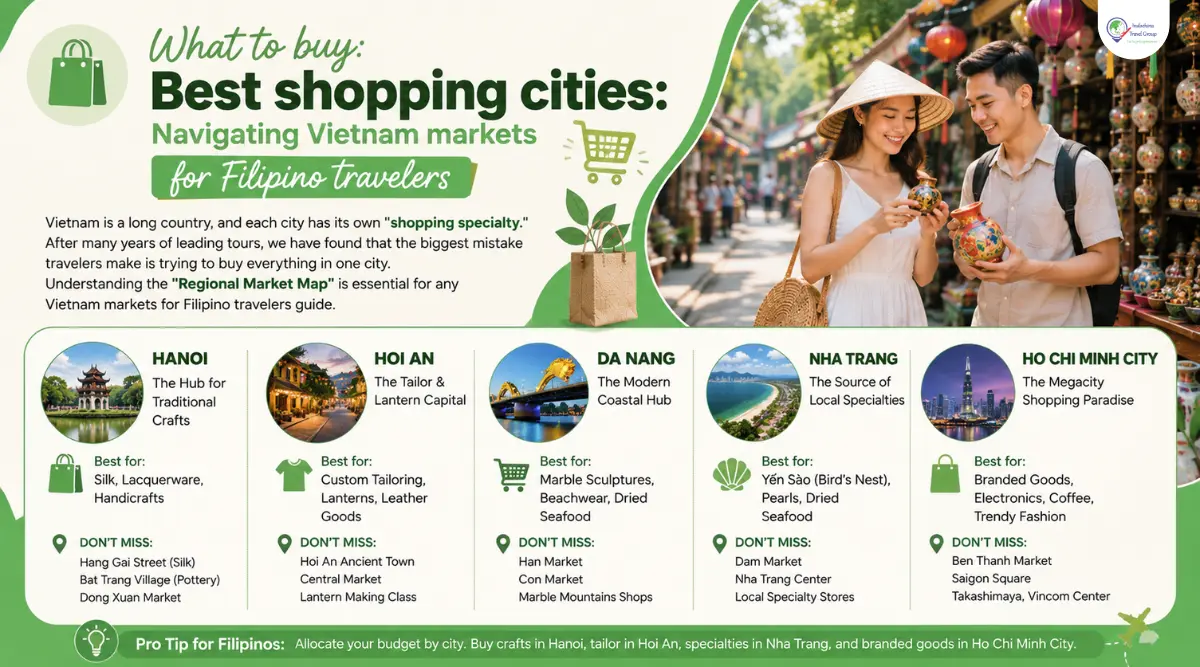
Do not add a city to the route because of one market or shop. Use the destination already on the itinerary, then choose the shopping format that fits it.
Ho Chi Minh City
Ho Chi Minh City offers the broadest mix of central markets, malls, supermarkets, neighbourhood retail and independent shops. It works well when the group wants several shopping formats without adding another destination.
Hanoi
Hanoi combines Old Quarter shopping, markets, crafts, food gifts and modern retail. Use the Hanoi Old Quarter Guide when the street layout itself affects the shopping stop.
Hoi An
Hoi An is most relevant when tailoring, lanterns or small craft purchases already fit a heritage stay. If custom clothing matters, leave enough time for measurements, fitting and possible alterations rather than assuming a same-day result.
Markets, supermarkets or malls: which is easier?
Markets are good for browsing and small souvenirs. Supermarkets are easier for packaged food because prices and labels are clear. For clothing, crafts or anything expensive enough that quality matters, a specialist shop or established retailer gives you more chance to compare materials, receipts and after-sales terms.
Traditional and night markets
Useful for browsing, inexpensive souvenirs, snacks and the market atmosphere. Prices may be fixed at some stalls and negotiable at others, so ask rather than assuming every transaction requires bargaining.
Supermarkets and fixed-price stores
Useful for packaged food, drinks and everyday products when you want labels, expiry dates and a visible price. Packaging still needs to be checked for damage, weight and suitability for the journey home.
Boutiques and specialist shops
Better for items where materials, origin, sizing, warranty or workmanship matter. A higher price is not proof of quality, so compare the actual product and shop terms rather than the setting alone.
Do you need to bargain in Vietnam?
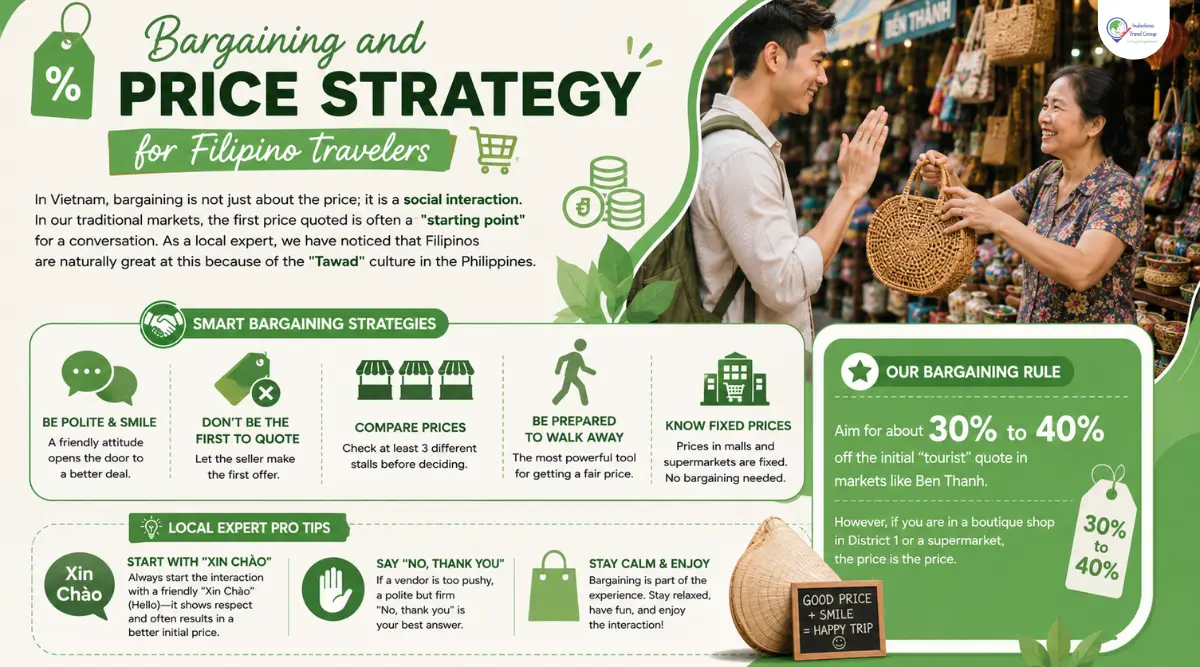
There is no reliable national percentage to subtract from an opening price. Some market stalls expect negotiation, some quote a firm price, and malls, supermarkets or many boutiques use fixed pricing.
There is no fixed bargaining percentage. Ask the price, compare a similar item nearby if you can, and decide what you are comfortable paying. If the price still feels too high, it is fine to say no and move on.
In supermarkets and malls, prices are usually fixed. In markets, some stalls negotiate and others do not. Look at whether prices are displayed and ask before assuming you are expected to bargain.
How much should you budget for shopping?
There is no useful fixed shopping budget for Vietnam because the gap between a bag of coffee and a tailored suit is huge. For snacks and small souvenirs, decide how much you are happy to spend and stop there. For tailoring, art, jewellery or electronics, compare the current price and quality before treating the purchase as a bargain.
If you only want pasalubong, a short list is usually enough: coffee or tea, a few sealed snacks and one or two small souvenirs. It is easier on both the budget and the luggage.
Payment methods also vary. Carry enough Vietnamese dong for small vendors, but check the venue before assuming cash, foreign cards or local QR payments will be accepted. For cash, ATMs, card use and exchange decisions, use the Vietnam currency and money guide and check the current rate close to travel rather than relying on an old conversion.
Check your baggage before buying bulky souvenirs
Do not assume one checked-baggage allowance applies to every Philippines–Vietnam ticket. Airline, fare bundle and itinerary can change the limit, so check the actual booking before buying heavy, fragile or bulky items.
Good suitcase candidates are usually items you genuinely want, that pack safely, and whose weight is easy to understand before checkout. Packaged food, small crafts and clothing can fit that test; large decorative objects, liquids, fragile goods or heavy purchases need more planning.
Also check the rules that apply when bringing food, plant, animal-derived or other restricted materials into the Philippines. A useful souvenir is one you can transport legally and without damaging the rest of the trip.
Check quality and authenticity before paying
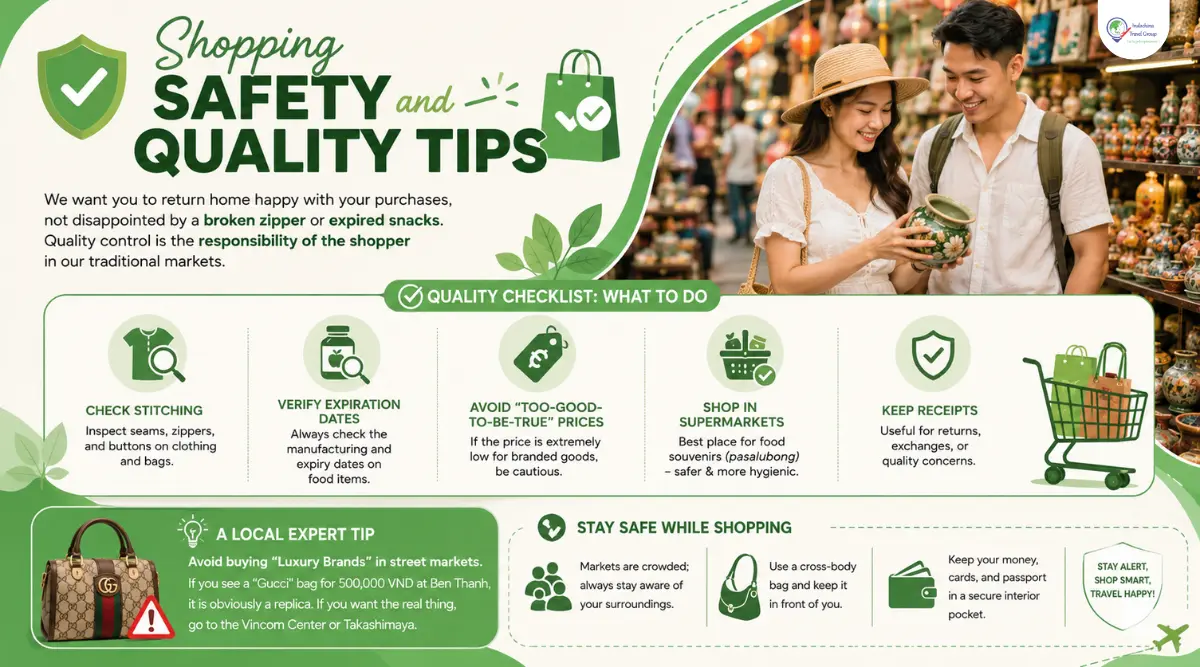
The useful checks depend on the item: inspect stitching and sizing for clothing, packaging and expiry dates for food, finish and fragility for crafts, and warranty or product details for higher-value goods.
Do not assume a low price on a branded product means it is factory surplus or an authorised bargain. If authenticity matters, buy through a channel where the seller, receipt, product information and return or warranty terms can be verified.
Markets can also be crowded. Keep phones, wallets and bags under normal travel-level control, especially while handling cash or trying on products. For scams, traffic awareness and broader personal-safety questions, continue to the Vietnam safety guide.
You probably do not need a full shopping day
Most trips do not need a separate shopping day. If you see something you want near your hotel or the places you are already sightseeing, buy it there. Save extra time only for things such as tailoring or a specific craft shop that you genuinely care about.
Ho Chi Minh City
Combine central shopping with the historical core or hotel area, and use a separate district only when a specific purchase justifies the transfer.
Hanoi
Use the Old Quarter or another existing sightseeing zone for browsing; food gifts or fixed-price purchases can happen later near the hotel or transport hub.
Hoi An
If tailoring matters, let fittings set the shopping schedule. Other souvenir browsing can remain flexible around the heritage stay.
Keep the shopping list simple
You do not need to come home with a suitcase full of souvenirs for the shopping to feel worthwhile. Pick a few things you genuinely like, buy food gifts with clear packaging, give fragile items enough protection, and leave room for the unexpected find that you did not plan before the trip.
If you are still deciding which cities to include, our Vietnam tour packages from the Philippines can help you compare route lengths first. Shopping can then fit around the places you were already going to visit.

Recommended Tours

Group Tour
Hanoi – Sapa – Danang – Ho Chi Minh 10D9N
Hanoi - Sapa - Fansipan Peak - Ninh Binh - Halong Bay Overnight On Cruise - Danang - Hoi An Ancient Town - Bana Hills - Golden Bridge - Ho Chi Minh - Cu Chi Tunnels - Mekong Delta


Private Tour
Ho Chi Minh – Cu Chi Tunnels – Mekong Delta 4D3N
Ho Chi Minh - Cu Chi Tunnels - Mekong Delta

Private Tour
Vietnam Highlights 7 Days 6 Nights Tour
Hanoi Arrival - Hanoi City Tour - Ha Long Bay Day Cruise - Fly to Da Nang - Coconut Village - Hoi An Ancient Town - Ba Na Hills - Golden Bridge - Fly to Ho Chi Minh City - Cu Chi Tunnels - Mekong Delta - Departure

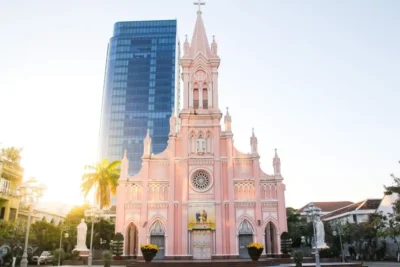
5D4N DELIGHT DANANG TOUR (DANANG – BA NA HILL FRENCH VILLAGE – HOI AN – HUE CITY) (SEAT IN COACH)

Private Tour
Vietnam Panorama Discovery 16D15N
Ho Chi Minh - Cu Chi Tunnels - Mekong Delta Tour - Can Tho - Da Lat - Nha Trang - Hoi An - Da Nang - Hue - Hanoi - Halong Bay Overnight On Cruise