
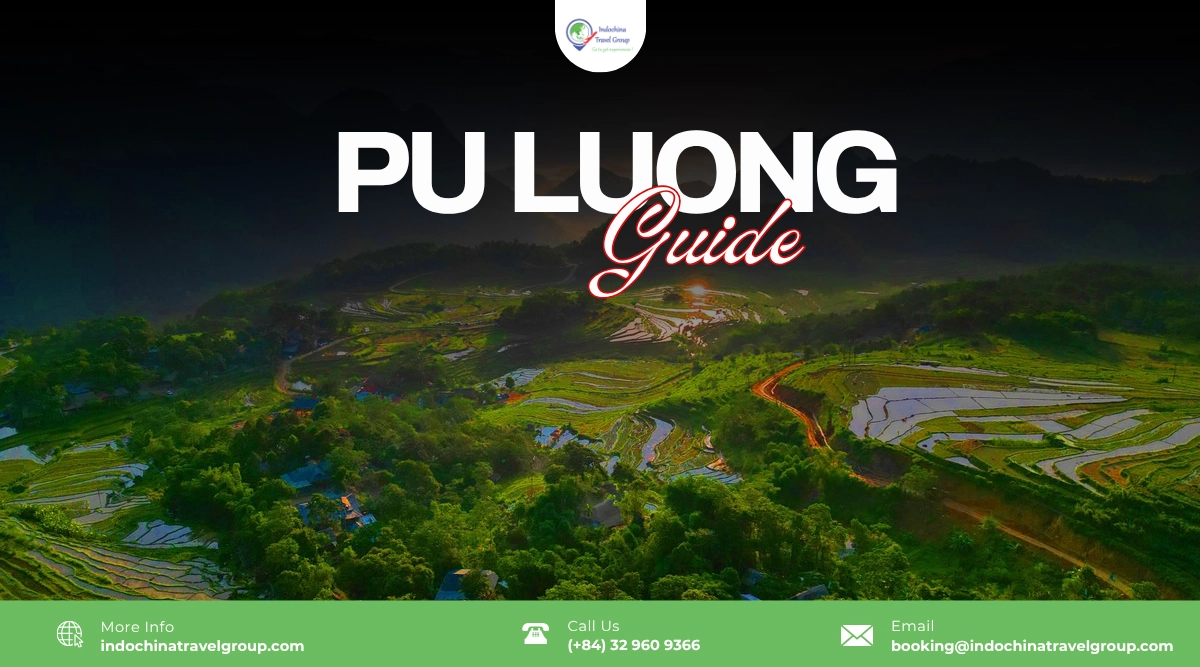
Pu Luong is a nature reserve in Thanh Hoa where rice terraces, village-based stays, waterfalls, bamboo waterwheels and walking routes shape the trip. The useful planning question is how many nights the route can support and how much walking you actually want.
Quick answer: Choose Pu Luong when you want a rural mountain stop built around terraces, village scenery and light-to-moderate walking. It works best as its own countryside chapter in a northern route, not as a claim to be a “quieter Sapa” or a more “authentic” alternative to another destination.
Located in western Thanh Hoa Province, Pu Luong requires more route planning than its map distance from Hanoi suggests. Lodge location, road access, walking surface and weather can change how much of the reserve fits comfortably into one stay.
If Pu Luong is part of a Northern Vietnam journey, connect it with Hanoi, Mai Chau or Ninh Binh only when the transfer sequence makes sense. Decide the base and number of nights first, then add trekking or village activities around that structure. If you are also considering Sapa, compare the two by walking style, transfer time and accommodation rather than assuming one is simply the quieter or more authentic choice.
When does Pu Luong fit a Northern Vietnam trip?
Pu Luong fits when rice terraces, rural landscapes and walking are important enough to justify a separate mountain stay. It is less useful when the itinerary is already transfer-heavy or when the group needs city-style transport, dining and accessibility throughout the day.
The reserve combines terraced farmland, limestone hills, forest, streams, waterfalls and villages. Those are lived-in working landscapes, so the trip should be planned around public or agreed access, current trail conditions and respectful village interaction rather than a promise of “untouched” or private local life.
Pu Luong fits well when
- Rice terraces and village landscapes are a main reason for adding the stop.
- The group is comfortable with light or moderate walking on rural paths.
- A lodge or homestay-style base suits the accommodation expectations.
- The route has enough time for a countryside stay rather than a rushed day trip.
Another stop may fit better when
- The trip needs frequent nightlife, shopping or a large restaurant choice.
- Mobility needs require consistently paved, step-free access.
- Only a few hours are available between long transfers.
- The itinerary cannot flex when heavy rain changes rural road or trail conditions.
Pu Luong at a glance
Pu Luong is close enough for a short trip from Hanoi, but the rural roads, village locations and trekking routes mean it needs thoughtful planning. These quick facts will help you decide how to fit it into your Vietnam itinerary.
| Planning point | What to know |
|---|---|
| Location | Thanh Hoa Province, Northern Vietnam. |
| Distance from Hanoi | Usually around 150 to 180 km depending on the route. |
| Travel time | Usually 4 to 5 hours by private car or limousine van. |
| Trip length | An overnight gives only a short introduction; two or more nights create more room for walking, weather changes and a second part of the reserve. |
| Main landscapes | Rice terraces, limestone mountains, forests, waterfalls, valleys and village paths. |
| Main communities | Thai and Muong villages. |
| Main activities | Trekking, bamboo rafting, waterfall visits, village walks, rice terrace photography and local homestays. |
| Trip role | Rural nature stop with walking, village scenery and lodge-based downtime; suitability depends on mobility, weather tolerance and the wider route. |
Practical tip: Do not plan Pu Luong only by distance on a map. A lodge may look close, but mountain roads, weather and village access can affect travel time. It is better to plan by real driving time and walking difficulty.
When to visit Pu Luong for terraces and walking
Season changes the terrace colour, heat, rain and trail surface, but no month guarantees harvest scenery or ideal walking. Use the patterns below to choose the kind of trip you want, then check current weather and local field conditions closer to departure.
| Time of year | Best for | What to expect | Travel advice |
|---|---|---|---|
| Late May to early June | Rice fields and photography | Fresh green to golden terraces, farming activity and humid weather. | Good for scenic walks, but avoid packing the day with too much hard trekking. |
| September to October | Harvest season | Golden rice terraces, clear views and strong landscape appeal. | Useful when terrace colour is the priority; harvest timing still varies by year. |
| November to February | Cooler trekking | Cooler air, drier walking conditions and less dramatic rice scenery. | Good if hiking comfort matters more than rice field color. |
| March to April | Shoulder-season walking | Milder conditions can suit village walks, while rain and visibility still vary. | Use current trail and weather conditions rather than crowd expectations to choose the walking plan. |
| July to August | Lush scenery and waterfalls | Green valleys, stronger waterfalls, rain and slippery trails. | Keep plans flexible and avoid difficult treks during heavy rain. |
Rainy season warning: Pu Luong can still be beautiful in rainy months, but trekking plans should be flexible. Rice terrace edges, forest paths and waterfall trails can become slippery. If rain is heavy, choose shorter village walks, bamboo rafting or a lodge-based slow day instead of a long trek.
How to reach Pu Luong without making transport the whole trip
Access depends on the origin, the exact lodge and the service operating on the travel date. From Hanoi, shared tourist vans and private road transfers are common planning options; from Ninh Binh or Mai Chau, direct road connections can avoid returning to Hanoi. Do not choose from a fixed travel-time promise until the pickup and drop-off points are known.
| Route | Common approach | What to check |
|---|---|---|
| Hanoi → Pu Luong | Shared van or private road transfer. | Pickup point, lodge drop-off, luggage policy and the actual road time for that service. |
| Mai Chau → Pu Luong | Road transfer arranged independently or through the accommodation/operator. | Whether the connection is direct and how it fits the check-in or walking plan. |
| Ninh Binh → Pu Luong | Direct van or private transfer may be available. | Check the current schedule, pickup area and exact Pu Luong drop-off before building the day around this connection. |
| Self-drive | Only when the rider or driver is experienced with rural and mountain roads. | Weather, daylight, road condition, licence/insurance requirements and the final lodge access road. |
Planning rule: choose the connection from the itinerary and lodge location, not from traveller labels such as family, senior or backpacker. Door-to-door convenience matters when luggage, mobility or a fixed trek start creates a real constraint.
If Pu Luong is part of a wider trip, it connects naturally with the best places to visit in Northern Vietnam, especially Hanoi, Mai Chau, Ninh Binh and Halong Bay.
Choose the Pu Luong base from the walking plan
The base should follow the part of the reserve you want to explore, the road access you are comfortable with and how much transfer time you want before the first walk. Don Village, Kho Muong, Hieu and other areas solve different access and activity needs rather than different traveller personas.
| Area | Best for | Why stay here | Planning note |
|---|---|---|---|
| Don Village | Terrace views and easier access to short walks. | Good rice terrace views, more lodge options and easier access to short walks. | A strong choice for your first night in Pu Luong. |
| Kho Muong | Remote valley atmosphere. | Quiet setting, mountain scenery and access to Bat Cave. | Better for travelers who are comfortable with deeper rural access. |
| Hieu Village | Waterfall lovers and slow nature stays. | Close to Hieu Waterfall and good for relaxed walking. | Road and trail conditions can vary by season. |
| Bang and Bam villages | Longer rural access and less central village stays. | Useful when the route specifically includes these villages rather than as a search for a “more local” experience. | Check road access, accommodation standard and whether a guide is useful for the planned walk. |
| Pho Doan area | Market access and practical routing. | Useful for local market visits and transfer connections. | Less scenic than staying deeper in the valley. |
Base-selection rule: Use Don Village when terrace views and simpler access fit the plan; move toward Kho Muong or Hieu only when their walking, cave or waterfall role justifies the extra access time. Choose accommodation and transport from actual mobility, dietary and schedule needs rather than a traveller label.
Choose Pu Luong walks by terrain, not traveller type
Walking difficulty changes with rain, the exact start and finish points, elevation and the condition of village or field paths. Treat named routes as examples, then confirm the actual path and duration for the day.
Short terrace or village walk
Terrain: village lanes, field edges and gentle slopes. Use this when walking is a supporting activity rather than the main purpose of the stay.
Longer valley walk
Terrain: mixed village paths, terraces and climbs. A guide becomes more useful when the route crosses working farmland or has an unclear finish/pickup point.
Kho Muong / cave-side route
Terrain: stronger elevation changes, rural access and cave or forest sections. Confirm current access and whether a guide is required or advisable for the chosen path.
Hieu area walk
Terrain: village and waterside paths that can become slippery near the waterfall. Water level and rain should decide whether the waterfall section belongs in the day.
Longer forest or mountain route
Terrain: steeper, more remote and more weather-sensitive. Use a locally appropriate guide or operator when navigation, access or emergency planning is not straightforward.
Safety note: Do not rely only on an old online track. Rural paths and access can change, and wet terrace edges or forest sections can become unsuitable after heavy rain. Confirm the current route, daylight and return plan before leaving.
If you are comparing Pu Luong with a higher-elevation mountain trek, the Sapa trekking guide covers route difficulty, guides and homestays there in more detail.
Best things to do in Pu Luong besides trekking
The best things to do in Pu Luong besides trekking are bamboo rafting, visiting Hieu Waterfall, seeing the giant waterwheels, exploring Kho Muong and spending time respectfully in Thai and Muong villages. These experiences add cultural depth to the landscape.
See the bamboo waterwheels
The bamboo waterwheels are one of Pu Luong’s most memorable sights. Built from bamboo and local materials, they use the river’s flow to carry water toward the rice fields. They are practical, beautiful and deeply connected to the valley’s farming life.
Try bamboo rafting on Suoi Cham
Bamboo rafting can work as a lower-effort activity after a walking block when local operating and water conditions allow it. Treat it as one optional part of the reserve rather than a required “local experience”.
Visit Hieu Waterfall
Hieu Waterfall is best enjoyed slowly. In warm months, it can be a refreshing stop after a walk. During or after rain, paths near the waterfall may become slippery, so footwear matters.
Explore Kho Muong and Bat Cave
Kho Muong gives Pu Luong a deeper valley atmosphere. The cave and village setting are best for travelers who want more than a quick viewpoint stop.
Walk through rice terraces
The best light is often early morning or late afternoon. A short terrace walk can be more rewarding than a rushed long trek if the weather and season are right.
Join a local meal or market stop
A simple meal, market visit or homestay interaction can make the trip feel more connected, especially when a guide can explain local customs and translate respectfully.
For a deeper understanding of local life in the region, you can continue with ITG’s guide to ethnic minority cultures in Northern Vietnam.
Pu Luong, Sapa, Mai Chau or Ninh Binh?
These destinations solve different route problems, so compare the experience rather than ranking one as more “authentic”, less crowded or simply better.
| Destination | Strongest trip role | Main planning trade-off |
|---|---|---|
| Pu Luong | Rice terraces, rural lodge stay and light-to-moderate walking. | Rural road, lodge and trail logistics need more planning than a city-based stop. |
| Sapa | Mountain trekking with a larger tourism base and access to higher-elevation scenery. | The route and weather decision is different; use the Sapa trekking guide for the walking layer. |
| Mai Chau | Valley scenery, cycling and village-based countryside time. | Often chosen for a gentler activity mix rather than a trekking-led stay. |
| Ninh Binh | Karst scenery, boat routes, temples and compact sightseeing. | It fills a different sightseeing role; combine it with Pu Luong only when the overland sequence supports the wider route. |
How many nights does Pu Luong need?
The number of nights should follow transfer time, walking ambition and weather margin rather than a fixed “best” itinerary.
1 night: short introduction
Use one village or terrace walk plus one lighter activity close to the lodge. This only works when arrival and departure timing do not consume most of the stay.
2 nights: better balance
Protect one substantial walking block and one separate waterfall, rafting or village-based activity. This also gives more room to shorten or move a walk when rain changes trail conditions.
3 nights or more: trekking-led stay
Use the extra time only when different valleys, longer routes or a second base genuinely add something. Do not extend the stay simply to repeat similar terrace walks.
How to combine Pu Luong with a Northern Vietnam route
Pu Luong combines best with Hanoi, Mai Chau, Ninh Binh and Halong Bay when the route is planned in the right order. It should feel like a natural countryside chapter, not a tiring detour.
Hanoi → Mai Chau → Pu Luong → Ninh Binh
This route works well if you want a soft mountain-and-rice-field journey before moving toward limestone landscapes in Ninh Binh.
Hanoi → Pu Luong → Ninh Binh → Halong Bay
This is a strong Northern Vietnam flow for travelers who want countryside, trekking, river landscapes and an overnight cruise without too much backtracking.
Hanoi → Pu Luong → Hanoi
This simple return route works for short trips, but it is less efficient if you already plan to visit Ninh Binh or Mai Chau.
If the wider northern route is still undecided, compare Pu Luong with the regional sequence first so the countryside stay does not create unnecessary backtracking between Hanoi, Mai Chau, Ninh Binh or Ha Long Bay.
What changes the cost of a Pu Luong stay?
Pu Luong costs vary most by transfer type, accommodation level, guide arrangement and whether you connect it with other destinations. Compare the same components—road transfer, lodge, meals and guiding—before treating one option as cheaper or more comfortable.
| Cost factor | Lower-cost choice | Higher-comfort choice | What to consider |
|---|---|---|---|
| Transport | Shared van or bus plus local transfer. | Private car from Hanoi, Ninh Binh or Mai Chau. | Private transfer becomes more useful when luggage, mobility, fixed pickup times or multi-stop routing make door-to-door coordination valuable. |
| Accommodation | Local homestay. | Boutique eco-lodge or private bungalow. | Comfort level changes the whole Pu Luong experience. |
| Trekking | Short village walk. | Guided half-day or full-day route. | A guide adds safety, cultural context and route flexibility. |
| Meals | Simple local meals. | Pre-arranged lodge meals and dietary planning. | Dietary needs should be communicated before arrival. |
| Route design | Hanoi return only. | Pu Luong combined with Ninh Binh, Mai Chau or Halong Bay. | Multi-stop routes need better timing and transfer coordination. |
When coordinated support helps: It becomes more useful when the stay includes a rural transfer, a guided trek, different mobility or dietary needs, or an onward connection to Ninh Binh or Mai Chau. The value is in coordinating those moving parts, not in making a simple lodge stay unnecessarily complex.
What to pack for Pu Luong trekking
Pack for changing mountain weather, muddy paths and simple rural conditions. You do not need expedition gear for most Pu Luong treks, but you do need practical footwear, rain protection and small essentials.
- Trekking shoes or trail sandals: avoid flip-flops on rice terrace edges or wet limestone paths.
- Light rain jacket or poncho: weather can shift quickly in the mountains.
- Quick-dry clothing: useful for humidity, rain and waterfall visits.
- Small cash in Vietnamese dong: many village services do not rely on card payment.
- Insect repellent: especially in green and rainy months.
- Sun hat and sunscreen: open rice terraces can feel hotter than expected.
- Reusable water bottle: helpful for longer walks.
- Swimsuit: useful if your route includes Hieu Waterfall.
- Dry bag or waterproof phone pouch: practical during rain or rafting.
- Personal essentials: carry any routine items you normally need, plus simple blister protection if longer walking is planned.
Local etiquette in Thai and Muong villages
Responsible travel in Pu Luong means treating villages as living communities, not photo sets. The best experiences come when travelers move slowly, ask permission and let local customs guide the pace of interaction.
Do
- Ask before taking photos of people, homes or private spaces.
- Remove shoes before entering a stilt house if requested.
- Dress modestly when walking through villages.
- Follow your guide’s advice around rice fields and family areas.
- Support local meals, guides, crafts and homestays when appropriate.
Avoid
- Walking onto rice terraces without permission.
- Flying drones near homes without clear consent.
- Photographing children or elders without asking.
- Treating cultural encounters as staged attractions only.
- Leaving plastic waste on trails, riversides or village paths.
Local insight: A guide can make cultural encounters more respectful. They can explain village customs, translate simple conversations and help visitors understand what is appropriate in each setting.
Independent travel or a coordinated Pu Luong route?
Independent travel works when you are comfortable arranging rural transfers, lodge pickups and simple walking plans. A coordinated route becomes more useful when the trek, weather contingency, accessibility needs or onward transfer create several dependencies that need to line up.
| Travel independently if… | Book a local or private tour if… |
|---|---|
| You are comfortable arranging rural transfers and lodge pickups. | You want one coordinated plan from Hanoi, Ninh Binh or Mai Chau. |
| You have a flexible schedule and can adjust plans yourself. | Your group has mixed fitness, mobility or pacing needs that affect the trek and transfers. |
| You only want a simple overnight stay and short walks. | You want guided trekking, cultural context and safer route choices. |
| You are comfortable with changing weather and local transport gaps. | You want backup plans, dietary coordination and local support during the trip. |
Fit Pu Luong into the wider northern route
Once the base, walking level and number of nights are clear, compare the transfer sequence with the rest of the trip. Use the Northern Vietnam route guide to decide whether Pu Luong belongs before or after Ninh Binh, Mai Chau or a return to Hanoi.
If you want a bookable structure after the route is settled, compare Vietnam tour packages without forcing Pu Luong into a package that creates unnecessary backtracking.
FAQs about Pu Luong travel and trekking
How many days do you need in Pu Luong?
An overnight gives only a short introduction, while two or more nights create more room for one substantial walk, a separate nature activity and weather flexibility. Choose the stay length from transfer time and the walking plan rather than a universal day count.
How does Pu Luong differ from Sapa?
Pu Luong is a rural nature-reserve stay built around terraces, villages and lower-elevation walking, while Sapa is a larger mountain tourism base with a different trekking network and higher-elevation landscape. Choose by route, walking goal and accommodation expectations rather than treating one as simply better.
Can you visit Pu Luong without a guide?
You can visit Pu Luong without a guide for simple lodge stays and short walks, but a guide is recommended for trekking routes. Trails are not always clearly marked, and a local guide adds safety, cultural context and route flexibility.
Can Pu Luong work for a group with mixed walking ability?
Yes, when the lodge access and daily activities match the least mobile person in the group. Use shorter walks or lodge-based activities when needed, and check steps, slopes, vehicle access and bathroom setup instead of relying on a generic “family-friendly” label.
When should you visit Pu Luong for terraces or trekking?
Rice colour and harvest timing vary from year to year, while walking comfort depends on rain, heat and trail conditions. Use the seasonal table above as a planning pattern, then check the short-range forecast and current local conditions before fixing a demanding trek.
Is trekking in Pu Luong difficult?
Pu Luong trekking can be easy, moderate or challenging depending on the route. Short rice terrace walks are suitable for many travelers, while longer jungle or peak routes require good fitness and a local guide.
Can you combine Pu Luong with Ninh Binh?
Yes, Pu Luong combines well with Ninh Binh in a Northern Vietnam route. Many travelers use Pu Luong for rice terraces and village trekking, then continue to Ninh Binh for limestone rivers, temples and boat trips.
Is Pu Luong suitable during the rainy season?
Pu Luong can still be beautiful during the rainy season, but trekking needs more caution. Trails may be muddy or slippery, so choose shorter walks, keep flexible plans and avoid difficult routes during heavy rain.
What should I wear for Pu Luong trekking?
Wear light, quick-dry clothes and shoes with good grip. Bring a rain layer, sun protection and a small day bag. Avoid flip-flops for trekking because village paths and rice terrace edges can be uneven or slippery.
Should you rely on ATMs, cards or phone signal in Pu Luong?
Do not assume the same payment and connectivity options available in Hanoi will work at every lodge or village service. Confirm payment methods with the accommodation, keep an appropriate backup, and expect mobile/Wi-Fi quality to vary by location and provider.
Final planning advice: Choose Pu Luong when the wider route has room for a rural mountain stay. Set the number of nights and base first, then choose walking distance and other activities from the weather, trail conditions and the group’s actual pace. The strongest plan is not automatically the longest trek or a fixed three-day template.

Recommended Tours

5D4N HANOI + SAPA VALLEY + SUN WORLD FANSIPAN LEGEND – LIMOUSINE VAN (SEAT IN COACH)

Private Tour
Vietnam And Cambodia Discovery 18D17N
Hanoi - Ha Giang (The Far North) - Halong Bay - Hoi An - Hue - Ho Chi Minh City - Mekong Delta - Siem Reap (Angkor)
6D5N HANOI + HALONG BAY (OVERNIGHT ON CRUISE) + SAPA VALLEY (SEAT IN COACH)
7D6N DISCOVER HANOI – HALONG – SAPA – TAM COC / NINH BINH (SEAT IN COACH)

Private Tour
Grand Tour Of Indochina 22D21N
Ho Chi Minh - Cu Chi Tunnels - Mekong Delta Tour - Hoi An Ancient Town - Hue - Hanoi - Mai Chau - Halong Bay Overnight On Cruise - Luang Prabang - Vang Vieng - Vientiane - Phnom Penh - Siem Reap - Angkor Wat - Tonle Sap Lake
Hanoi – Halong Bay – Bai Dinh – Trang An 5D4N
Hanoi - Halong Bay - Bai Dinh - Trang An