

The best time to visit Vietnam from the Philippines depends first on whether your travel dates are fixed. If leave, Holy Week, a long weekend or Christmas already determines the dates, keep the dates and choose the Vietnam region with the fewest weather compromises. If your dates are flexible and you want a multi-region first trip, March to April is a useful starting window, but it is not a universal “best season” for every route or activity.
North, Central and South Vietnam follow different weather patterns. Choose the date window first, then the region, then check any weather-sensitive activity such as a beach stay, mountain route or cruise before locking the itinerary.
| Your constraint | Start with | Then check |
|---|---|---|
| Fixed Philippine holiday or leave dates | Keep the dates | Compare North, Central and South for those exact dates |
| Flexible dates, multi-region trip | Compare broad seasonal trade-offs | Use March–April as a starting window, then test the actual route |
| Beach or island priority | Sea and coastal conditions | Check the exact coast or island rather than a national season label |
| Mountain, trekking or cruise priority | Visibility, road, trail or marine conditions | Recheck the current forecast close to departure |
When is the best time to visit Vietnam from the Philippines?
If this is your first Vietnam trip and you want to see more than one region, March to April is often one of the easier periods to work with. It is not a promise of perfect weather, though. Vietnam is long enough that the same week can feel cool in the North, bright on part of the Central coast and properly hot in the South.
If you are staying in one region, you have more room to choose. Spring and autumn often suit northern routes, the Central coast has its own drier beach months, and the South is usually easiest to plan in the drier November-to-April period.
| Travel period | North Vietnam | Central Vietnam | South Vietnam | Useful for |
|---|---|---|---|---|
| March–April | Spring conditions; check mountain visibility | Often a useful beach-and-heritage window | Warm, with the wetter period approaching later | First trips and multi-region routes |
| May–August | Hotter and wetter overall | Often the stronger region for beach-focused trips | Wetter period; city travel can still work | Central-focused itineraries |
| September–November | Often attractive for northern routes | Rain and storm risk becomes more important | Transition toward the drier period | North-led trips |
| December–February | Cooler, especially in mountain areas | Check the exact destination and month | Drier and easier for many city/island plans | Southern routes or cooler-weather North |
Use this table to choose a region, not to predict the weather for one exact day. For January-to-December detail, see the Vietnam Weather by Month guide.
How is Vietnam weather different from the Philippines?

PAGASA describes the Philippines as tropical and maritime, with high temperatures, humidity and abundant rainfall, so Filipino travellers are already familiar with heat and wet-season planning. Vietnam is more complicated because its long geography creates distinct regional patterns. The Vietnam Tourism climate guide separates Northern, Central and Southern destinations rather than treating the country as one weather zone: the North has a cooler winter, the Central coast follows a different rain and storm pattern, and the South stays warm through the year with broader wetter and drier periods.
That means Vietnam can feel much colder than the Philippines in some places and months. Hanoi can be cool in winter, while Sapa and other highland areas can be colder still. At the same time, Ho Chi Minh City and the Mekong Delta remain much warmer.
This regional contrast is why a date that is awkward for one Vietnam route can still work well for another.
Choose the Vietnam region that fits your travel month
North Vietnam
Choose the North when you want Hanoi, Ha Long Bay, Ninh Binh, Sapa or Ha Giang and the season suits walking, mountain roads or scenery. Spring and autumn are often easier starting points, while winter can appeal to travellers who prefer cooler weather.
Central Vietnam
Da Nang, Hoi An and Hue follow a different seasonal pattern from Hanoi and Ho Chi Minh City. If beach time matters, the Central coast can be a stronger choice during months when the North and South are wetter. Late-year trips need a closer weather check because rain and storm exposure become more important.
South Vietnam
Ho Chi Minh City, the Mekong Delta and Phu Quoc stay warm through the year. The drier November-to-April period is generally easier for a city-plus-island route, but wetter months do not automatically make a city trip a bad idea.
If you can choose your travel dates freely, the broader Best Time to Visit Vietnam guide will help you start from Vietnam’s regional seasons. If your leave dates are already fixed in the Philippines, start from those dates instead and pick the part of Vietnam that fits them best.
If your dates are fixed by a Philippine holiday
Holiday dates should narrow the route, not decide the weather. Start with the exact dates you have, check which Vietnam region fits them best, then build the itinerary around that region.
Long weekends: keep the route compact
With only three or four days, choose one city or one compact region. Ho Chi Minh City, Hanoi, or Da Nang–Hoi An can make sense depending on flight timing and regional weather. Avoid adding a domestic flight simply to increase the number of stops.
For actual long-weekend planning, see How to Plan a Vietnam Trip Around Philippine Long Weekends.
Holy Week: compare the exact dates with regional weather
Holy Week can give Filipino travellers a useful five-to-seven-day window, but the dates move from year to year. The right route depends on where that year’s dates fall, the available flights and the weather-sensitive activities in your plan.
For that specific travel window, use Vietnam During Holy Week for Filipinos.
Christmas and New Year: choose between warm South and cooler North
Late December can work well for Southern Vietnam, while Northern Vietnam can suit travellers who enjoy cooler city weather. Central Vietnam should be checked separately rather than assumed to follow the same conditions.
For festive-season logistics and planning, see Vietnam Christmas Travel Tips for Filipinos.
For exact Philippine and Vietnamese public-holiday dates, closures and crowd pressure, use the Vietnam Holiday Calendar for Filipinos. Once the date window and region are chosen, check the Philippines to Vietnam flights guide to see whether the gateway and actual flight timing still support that route; a good seasonal choice can still become a poor short trip if the flights consume too much usable time.
If the weather is not ideal, change the route before changing the trip

Do not cancel a Vietnam trip because one forecast or one season label says “rainy”. First ask what part of the itinerary actually depends on the weather.
- Beach or island stay: sea conditions matter as much as rainfall.
- Mountain route: visibility, trail and road conditions matter more than the national forecast.
- Ha Long Bay cruise: current marine conditions and operator notices matter close to departure.
- City break: a wetter period may still be workable if the itinerary has indoor options and some flexibility.
If one region looks poor for your fixed dates, compare another part of Vietnam before changing the dates themselves. This is the main advantage of planning Vietnam region by region. Close to departure, recheck weather-sensitive sectors against the Vietnam National Center for Hydrometeorological Forecasting rather than relying only on a seasonal table prepared months earlier.
Match the route to the number of days you have
| Available time from the Philippines | Route shape | What to avoid |
|---|---|---|
| 3–4 days | One city or one compact region | Domestic flights and multiple hotel changes |
| 5–7 days | One strong region or a compact two-base route | Trying to cover North, Central and South |
| 8–10 days | One region in depth or two regions with a clear flight connection | Adding a third region only to increase stop count |
| 10+ days | Two regions can work well when the weather and connections line up | Using one nationwide weather label for the whole trip |
Questions Filipino travellers often ask about timing
What month is the best time to go to Vietnam?
For a multi-region first trip, March and April are useful starting months. If you are visiting only one region, the best month depends on that region and the activities you care about.
Is March a good time to visit Vietnam?
March is often a practical month for a first trip because weather trade-offs are easier to manage across several regions. Northern spring can still be humid or misty, and Southern Vietnam can already feel hot, so check the exact route rather than treating March as a guarantee.
Which month is typhoon season in Vietnam?
There is no single nationwide “typhoon month”. Storm risk varies by coast and year, with Central Vietnam requiring particular attention from late summer into the later part of the year. Check the regional forecast when the trip depends on beaches, boats or exposed coastal travel.
Is Vietnam colder than the Philippines?
Parts of Vietnam can be much cooler. Hanoi has a cooler winter, and mountain destinations such as Sapa can feel cold compared with typical Philippine conditions. Southern Vietnam remains warm throughout the year.
When your dates are fixed, adjust the route instead
There is no need to wait for one “perfect” season. If your leave dates are fixed, compare North, Central and South for those dates and choose the region with the fewest weather compromises. If your dates are flexible, let Vietnam’s regional seasons choose the month. Once the timing decision is settled, return to the Vietnam travel guide for Filipino travellers to finish the entry, flight-gateway, budget and first-trip preparation sequence.
If your travel dates are fixed but you are still choosing between Hanoi, Central Vietnam or the South, our Vietnam tour packages from the Philippines can help you compare realistic trip lengths and routes before you decide.

Recommended Tours


Private Tour
Vietnam Highlights 7 Days 6 Nights Tour
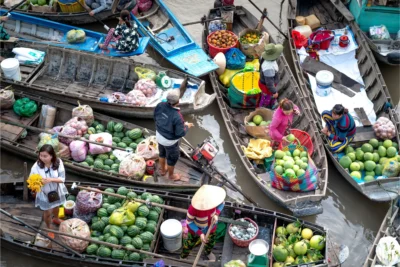
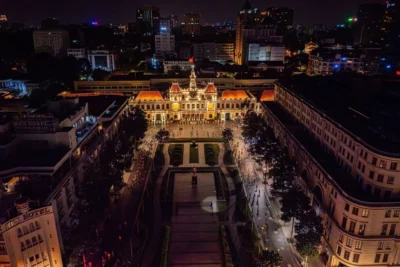
Hanoi Arrival - Hanoi City Tour - Ha Long Bay Day Cruise - Fly to Da Nang - Coconut Village - Hoi An Ancient Town - Ba Na Hills - Golden Bridge - Fly to Ho Chi Minh City - Cu Chi Tunnels - Mekong Delta - Departure

Private Tour
Vietnam Premium Discovery 21D20N Private Tour: Ha Giang to the South
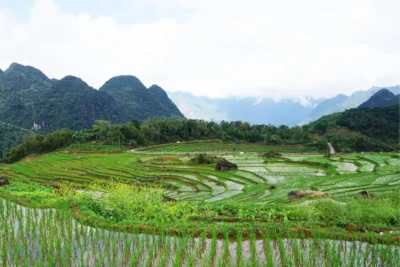
Hanoi - Ha Giang (The Far North) - Pu Luong - Ninh Binh - Halong Bay - Phong Nha Caves - Hue - Ba Na Hills - Hoi An - Ho Chi Minh City - Mekong Delta


Private Tour
Phu Quoc 4D3N: Southern Sights & Shared Island Boat
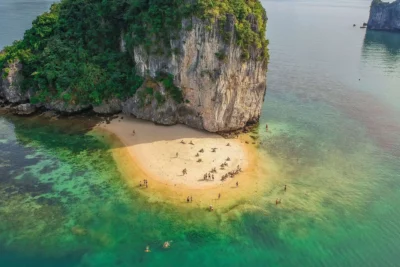
Phu Quoc - Sao Beach - Coconut Prison - Snorkeling - Souvernir Shopping

Group Tour
Vietnam & Laos 9D8N Group Tour: Hanoi, Ha Long & Luang Prabang
Hanoi - Halong Bay Overnight On Cruise - Vientaine - Xieng Khouang - Luang Prabang - Pakou Caves

Da Nang – Ba Na Hills – Hoi An 4D3N Seat-in-Coach Tour