
Do Filipinos need a visa for Vietnam?
 The 21-day rule comes from the bilateral visa-exemption arrangement between Vietnam and the Philippines. Vietnamese diplomatic guidance states that an ordinary Philippine passport must remain valid for at least six months and that the traveller should have a return or onward ticket. You can verify the current exemption on the Vietnam Ministry of Foreign Affairs visa-exemption list.
When do Filipino travellers need a Vietnam visa?
Start with the length and purpose of the trip. A short holiday of up to 21 days can use the bilateral exemption when its conditions are met. Longer stays need the appropriate visa, while work, journalism, employment and similar regulated activities should be checked separately with the relevant Vietnamese authority or sponsoring organisation.
Short leisure trips
For a short leisure trip that stays within the 21-day exemption, check that the ordinary Philippine passport meets the current validity requirement and keep the return or onward travel details available. Do not rely on package duration alone; the traveller still has to satisfy the entry conditions.Longer holidays
If the planned stay exceeds 21 days, arrange the appropriate visa before departure. Vietnam’s official eVisa system can issue visas for up to 90 days, so it may suit a longer leisure itinerary when the selected entry and exit points are eligible.Business travel
If the trip involves meetings, paid work, employment, journalism or another non-tourist purpose, confirm the correct immigration and any work-authorisation requirements with the Vietnamese authority, embassy or sponsoring organisation. Do not assume that the 21-day ordinary-passport exemption automatically covers every business activity simply because the visit is short.Visa-free entry or eVisa: which one fits your trip?
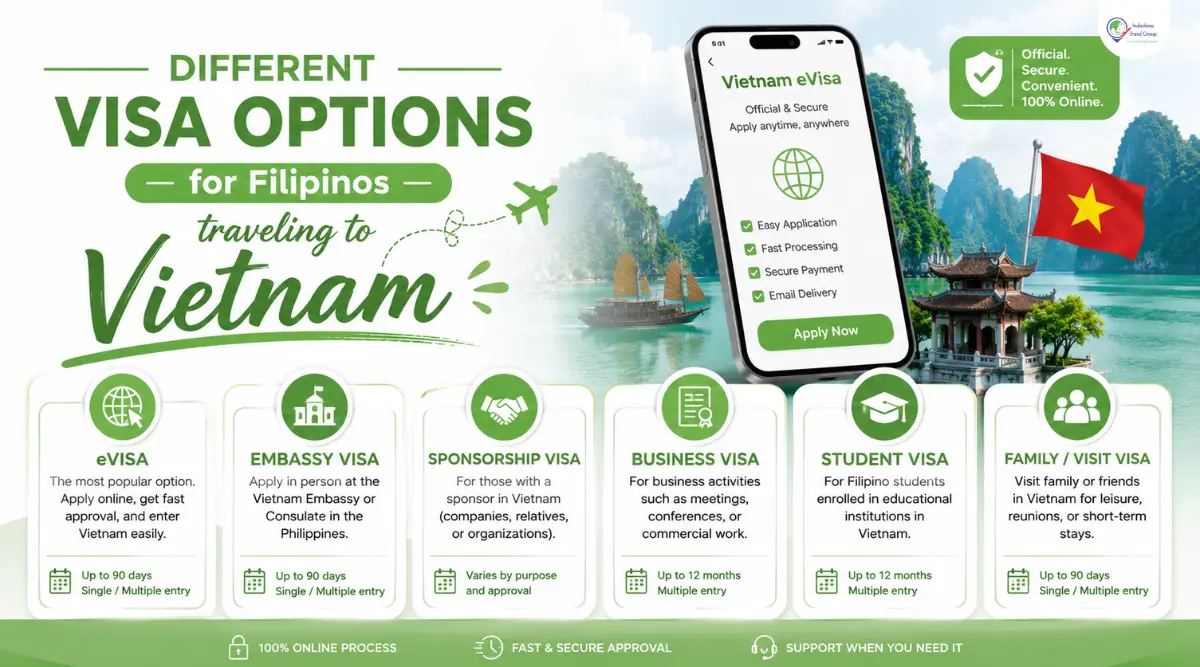 For Filipino travellers, the practical choices are the 21-day bilateral exemption when its conditions are met, the official eVisa for a longer or different entry pattern, and consular guidance for cases that do not fit the standard online route. Choose the permission from the passport, purpose, length of stay and border gates rather than from price alone. Our general Vietnam visa guide explains the broader system.
Visa-free entry under the Philippines–Vietnam exemption
This option can be used by Philippine ordinary passport holders for stays of up to 21 days when the bilateral exemption conditions are met. Check passport validity, return or onward travel and the current entry rules before departure rather than assuming visa-free means condition-free.The 90-day eVisa
Vietnam’s official eVisa system can issue a visa valid for up to 90 days with single or multiple entry. A multiple-entry eVisa can be useful when a longer itinerary leaves Vietnam and later returns, but the traveller should choose the visa type from the actual route rather than buying a multiple-entry visa by default.Consular or sponsor-specific cases
If the trip does not fit the standard visa-free or eVisa route, check the current consular guidance from the Vietnamese Embassy or the requirements supplied by the sponsoring organisation. Work, diplomatic, journalist and other regulated purposes can involve different procedures, so confirm the correct channel before submitting documents.What should you have ready before travelling?
Visa applications and visa-free entry depend on accurate passport data and the conditions that apply to the chosen entry route. Small differences in names, passport numbers or travel-document details can create problems, so copy the information directly from the passport and review the official requirements before submission.- Passport: For the 21-day bilateral exemption, check that the ordinary Philippine passport meets the current validity requirement. For an eVisa or other permission, follow the passport requirements shown by the official application channel.
- eVisa images: Use the portrait and passport-page images required by the official eVisa portal. Follow its current file, framing and image-quality instructions instead of relying on an old photo-size rule from another visa system.
- Return or onward travel: The bilateral exemption guidance lists a return or onward ticket as a condition. Keep the itinerary accessible at check-in and arrival rather than assuming the airline or immigration officer will not ask for it.
How to apply for a Vietnam eVisa as a Filipino?
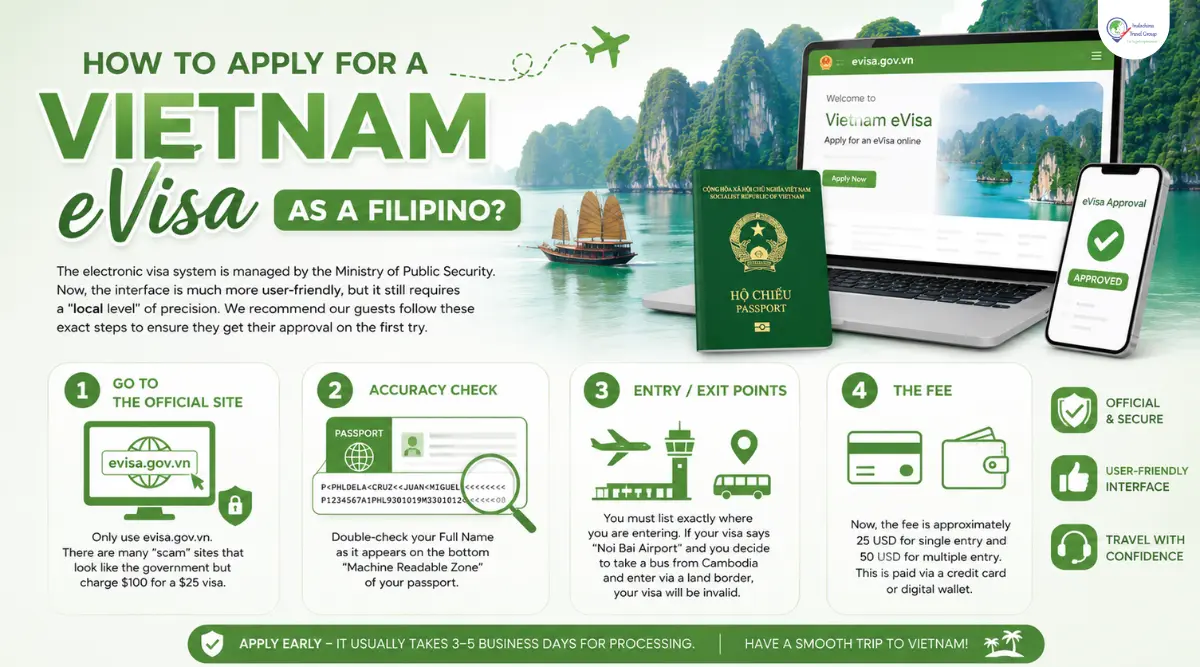 Vietnam’s electronic visa system is managed through the official government portal. The application depends on accurate passport data, the selected visa type and eligible entry or exit points. Complete each field from the travel documents and review the application before payment; no checklist can guarantee approval.Before you submit the application, check these four points:
- Use the official portal: Apply through evisa.gov.vn or the current government entry point linked by Vietnamese immigration. Third-party services may charge additional fees, so check the domain and the service terms before entering passport or payment details.
- Match the passport exactly: Enter your name, passport number, nationality and dates exactly as requested on the official form. Review the application carefully before payment rather than relying on an informal naming rule from another visa system.
- Entry and exit points: Choose border gates that are eligible for the eVisa and match the planned route. If the itinerary changes after approval, check the issued visa and current immigration guidance before assuming a different airport, seaport or land crossing can be used.
- Application fee: The official eVisa portal currently lists USD 25 for a single-entry eVisa and USD 50 for a multiple-entry eVisa. Check the portal again before payment because government fees and accepted payment methods can change.
The Phu Quoc 30-day visa exemption for Filipinos
Phu Quoc has a separate visa-exemption rule that can matter when the island is the only Vietnam destination or when the routing meets the official transit conditions. Treat it as an immigration rule to verify, not as a reason to choose the island by itself.Mistakes that can cause problems before or at the border
Most avoidable problems come from simple mismatches: a name or passport number entered incorrectly, travel dates outside the approved period, or an entry point that does not match the permission being used. Check those details against your passport and itinerary before departure.
Which entry permission fits your trip?
Start with three things: how long you will stay in Vietnam, whether you will leave and come back, and whether the trip is a normal short visit or has another purpose. That is more useful than choosing a visa simply because it has a longer validity period.| Your plan | What to check first |
| Up to 21 days in Vietnam on an ordinary Philippine passport | Whether you meet the bilateral visa-free entry conditions. |
| More than 21 days in Vietnam | An appropriate visa before travel; the official eVisa can be issued for up to 90 days. |
| Leave Vietnam and return later in the same trip | Check the entry permission for each planned entry. Do not assume a multi-country itinerary automatically needs or does not need a multiple-entry eVisa. |
| Phu Quoc only, up to 30 days | Check the separate Phu Quoc exemption and make sure the routing meets its conditions. |
Before you fly: a simple document check
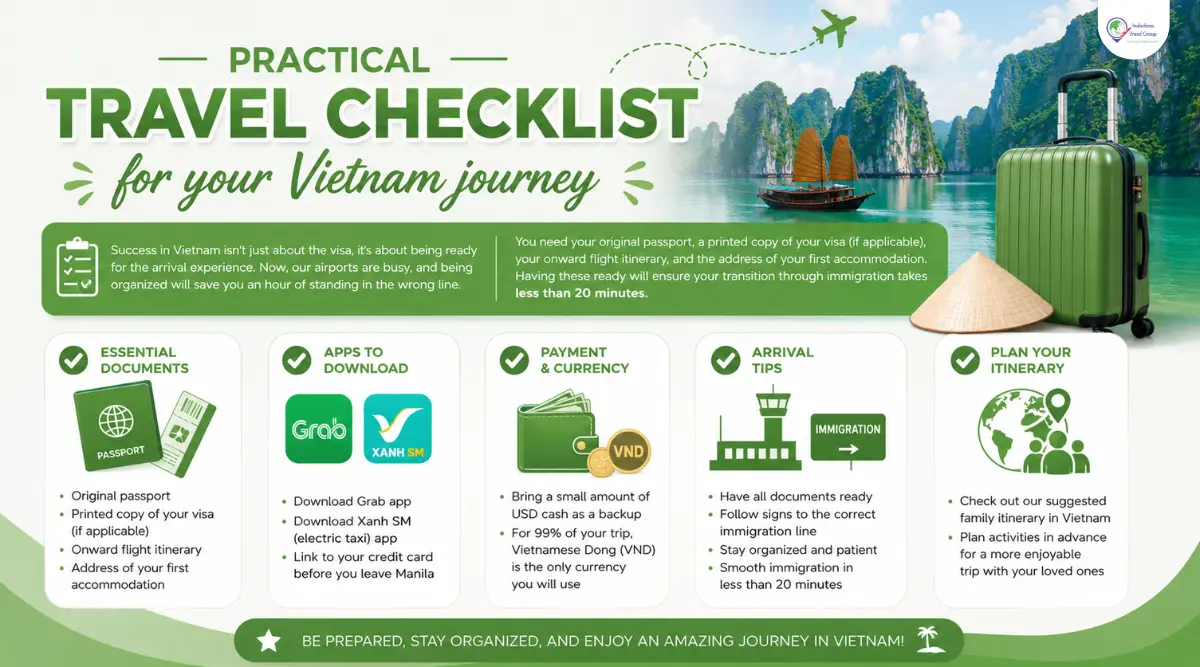
- Check that your passport meets the validity rule for the entry permission you are using.
- Keep your return or onward itinerary available if you are relying on the 21-day exemption.
- If you have an eVisa, check the name, passport number, validity dates and permitted entry details against your itinerary.
- Keep the address of your first accommodation and a copy of any approved visa or travel document easy to access.
Check the rule for the trip you are actually taking
For many Filipino holidaymakers, a Vietnam visa is not needed for a trip of 21 days or less. The important part is making sure your passport, travel dates and route fit the exemption you plan to use. For a longer stay, an eVisa may be the simpler option; for Phu Quoc, the separate island rule only helps when the itinerary meets its conditions.
Recommended Tours



Group Tour
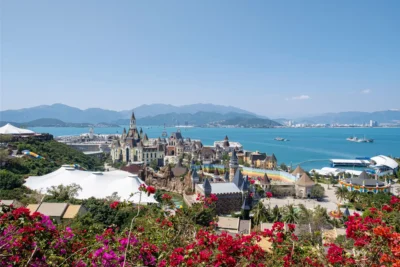
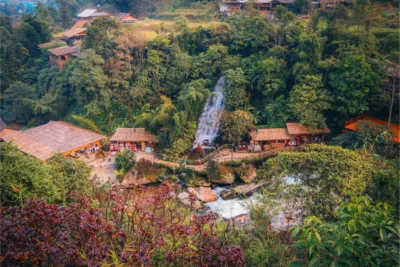
Hanoi – Sapa – DaNang 8 Days 7 Nights
Hanoi - City Tour - Sapa- Cat Cat Village - Moana Cafe - Fansipan - Muong Hoa Train - Ninh Binh - Tam Coc - Halong Bay - Da Nang - Hoi An Ancient Town - Bana Hills - Golden Bridge

Group Tour
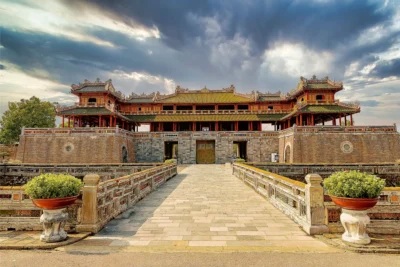
Vietnam – Joining Group Tour 12 Days
Ha Noi City Tour - Ninh Binh - Halong Bay Overnight On Cruise - Hue - Hoi An Eco Tour - Ho Chi Minh City - Cu Chi Tunnels - Mekong Delta
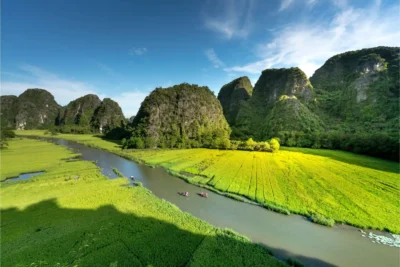
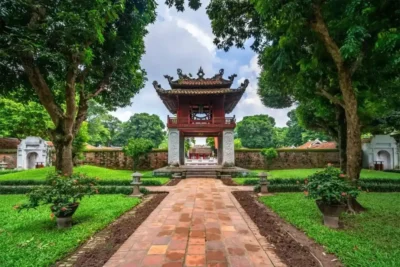
5D4N DISCOVER HANOI – HALONG (DAY CRUISE) – TAM COC (SEAT IN COACH)


Group Tour
Hanoi – Ho Chi Minh – Siem Reap 8D7N
Hanoi - Ninh Binh - Halong Bay Overnight On Cruise - Ho Chi Minh - Cu Chi Tunnels - Siem Reap - Angkor Wat Full Day