
Why should you use a Vientiane travel guide?
When people think of Laos, they often focus on the UNESCO charm of Luang Prabang or the adventure of Vang Vieng. However, as a seasoned tour organizer, we always tell our guests that skipping Vientiane is missing the modern soul of the country. It is a city of incredible resilience and quiet beauty, where ancient Buddhist traditions live side-by-side with a growing cosmopolitan café culture.This city is Southeast Asia’s most underrated capital, offering a serene Mekong-side atmosphere where French colonial architecture blends with spiritual landmarks like Pha That Luang. It serves as the perfect “recharge” stop for international tourists seeking a more authentic, less commercialized city experience. The allure of Vientiane lies in its human scale. Unlike other Asian megacities, you can explore the central district on foot or by bicycle without feeling overwhelmed. It is a place where you can spend your morning contemplating thousands of Buddha statues, your afternoon sipping a world-class Lao coffee in a colonial villa, and your evening watching the sunset over Thailand from across the Mekong. For the international traveler, Vientiane provides a necessary context for understanding Laos’s history, from its royal past to its modern aspirations.Vientiane at a glance
 Before we dive into the deep planning, it’s essential to understand the logistical “DNA” of the city. Vientiane’s unique position on the Thai border makes it a vital transit hub, but its climate and local customs require a bit of preparation to ensure you aren’t caught off guard by the heat or the local rhythm.Vientiane is the capital of Laos, situated directly on the Mekong River. The best time to visit is during the dry season (November to February) for comfortable weather, though the hot season (March-April) and wet season (May-October) offer their own advantages like lower prices and lush landscapes. To help you get oriented quickly, we have prepared a quick-reference for your planning:
- Location: Mekong River, Bordering Thailand. Cross the “Friendship Bridge” for an easy Thailand link.
- Currency: Lao Kip (LAK), ATMs are widespread, small cash is king for markets.
- Primary religion: Theravada Buddhism, dress modestly at all times near temples.
- Language: Lao (Thai is widely understood), English is good in hotels, use translation apps for markets.
- Best weather: Nov – Feb (Dry & Cool), perfect for walking the French Quarter.
READ MORE: Grand Tour Of Indochina 22D21N
How many days to spend in Vientiane?
As organizer for Indochina Travel Group, the most frequent question we receive is, “Is one day enough for Vientiane?” While you can see the “Big Three” sites in a day, rushing through Vientiane defeats the purpose of being here. The city’s greatest attraction is its slow pace.A stay of 2 to 3 days is the recommended minimum to experience the spiritual core, the quirky outer sites like Buddha Park, and the city’s excellent culinary scene. Those with 4 or more days can indulge in nature-based day trips and deeper cultural immersion. We have refined three durations that work for different traveler types:- 1 day: Focuses on the “Must-Sees” – Pha That Luang, Wat Sisaket, and a Mekong sunset. This is for those on a tight schedule moving between Vietnam and Thailand.
- 2 days: This is our most popular booking. It allows you to visit the Buddha Park (25km away) on the second morning, leaving the afternoon for the COPE Visitor Centre and café hopping.
- 3 – 4 days: For the “Indochina Edge,” add a day trip to the La Forêt nature reserve for canopy walks and zip-lining, or take a boat trip to the nearby islands to see the local fishing life.
Best time to visit Vientiane?
 Success in Vientiane depends on your relationship with the sun. Unlike Northern Vietnam, which has a distinct winter, Vientiane remains warm year-round. However, the humidity and rainfall shift significantly across the three tropical seasons.The “Golden Season” is from November to February, offering dry, cool air that is ideal for temple-hopping. The hot season (March-April) is intense but festive, while the monsoon (May-October) brings dramatic greenery and the best value for money. Here is the breakdown of what to expect during your Vientiane Travel Guide journey:
- Dry and cool (Nov – Feb): This is peak season. The skies are clear blue, and the temperatures (around 20∘C to 28∘C ) are perfect for cycling.
- Dry and hot (Mar – Apr): Temperatures can soar above 35∘C. This is when the Lao New Year (Pi Mai) happens in April – be prepared to get wet and have a lot of fun!
- Monsoon (May – Oct): Don’t let the “wet” label scare you. Rains usually fall in short, heavy afternoon bursts. This is the “Green Season,” where the surrounding rice paddies are at their most photogenic.
Top attractions to include in your Vientiane travel guide
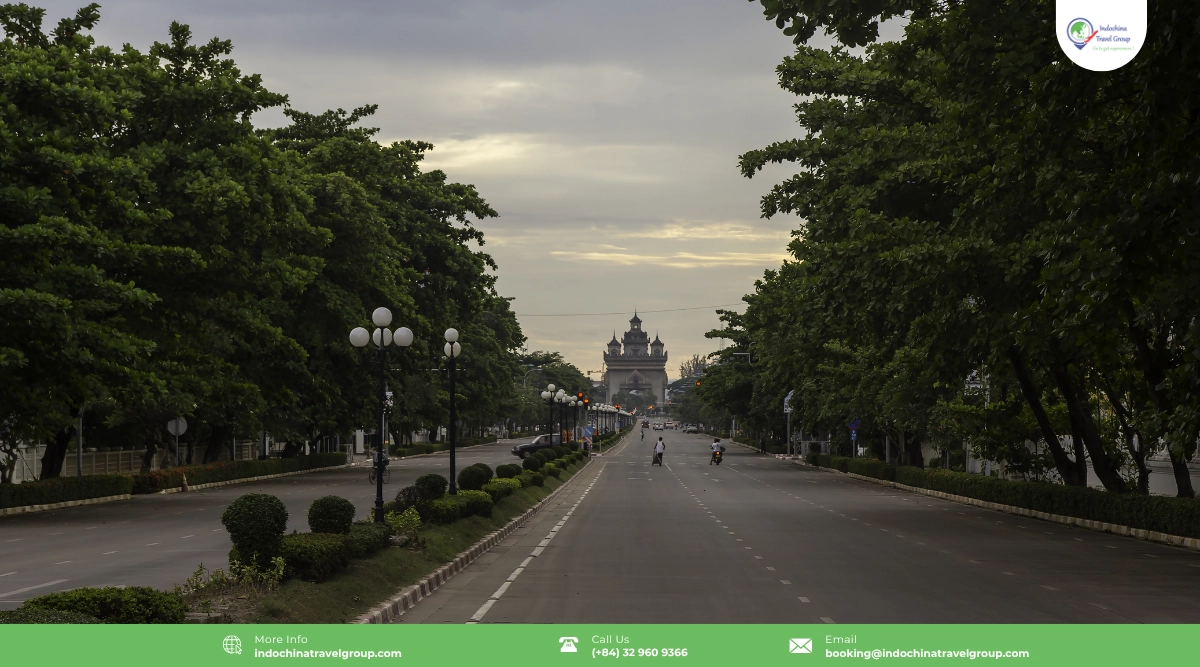
The sights in Vientiane are a blend of profound spirituality, revolutionary history, and architectural quirkiness. Every visitor must see the golden Pha That Luang, the ancient Wat Si Saket, the towering Patuxai, and the surreal Buddha Park. These sites provide a comprehensive overview of Lao Buddhism, the struggle for independence, and the nation’s creative mythology. To help you navigate these sites, let’s categorize them by their significance to the city’s character.Temple and cultural core
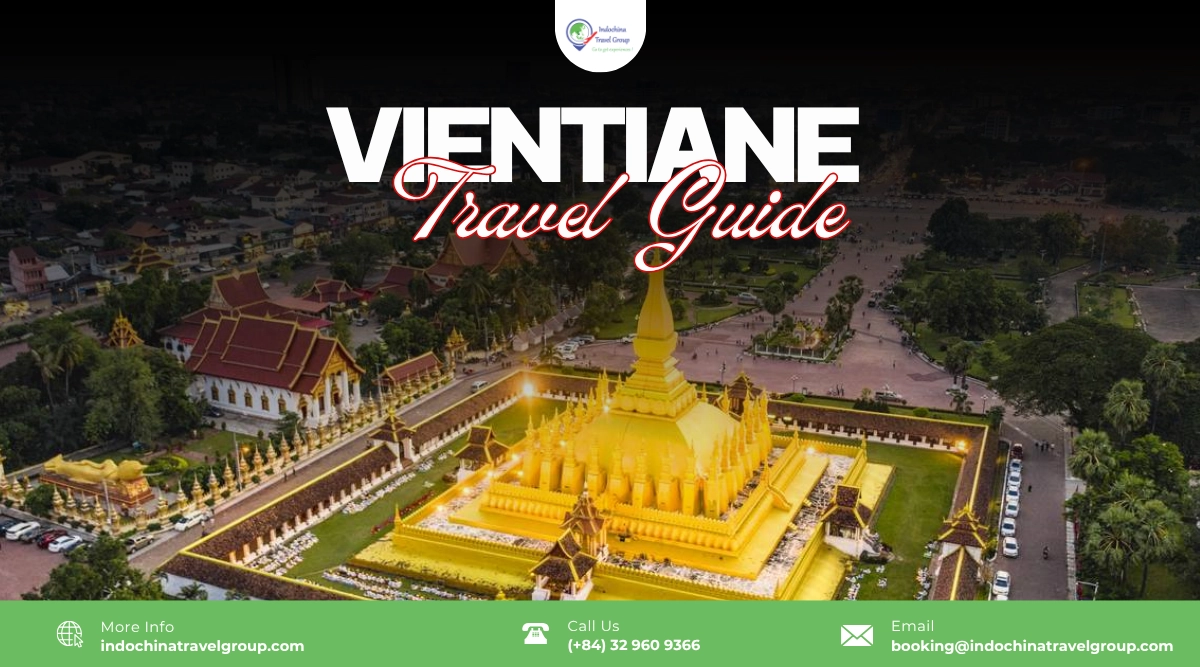
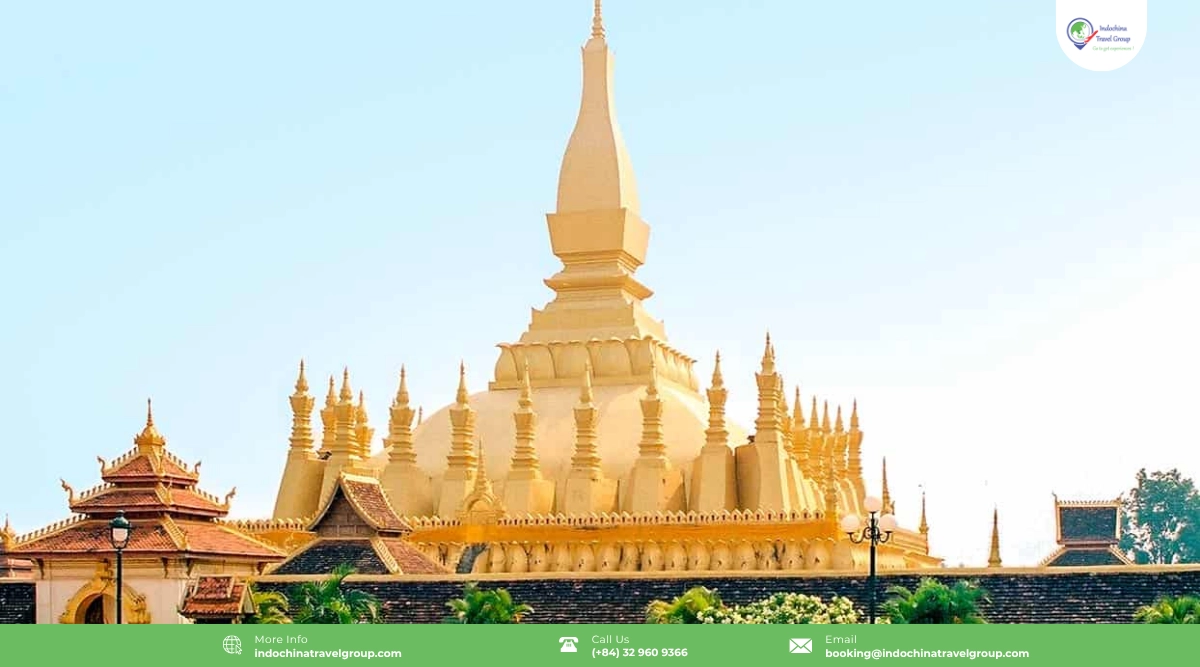
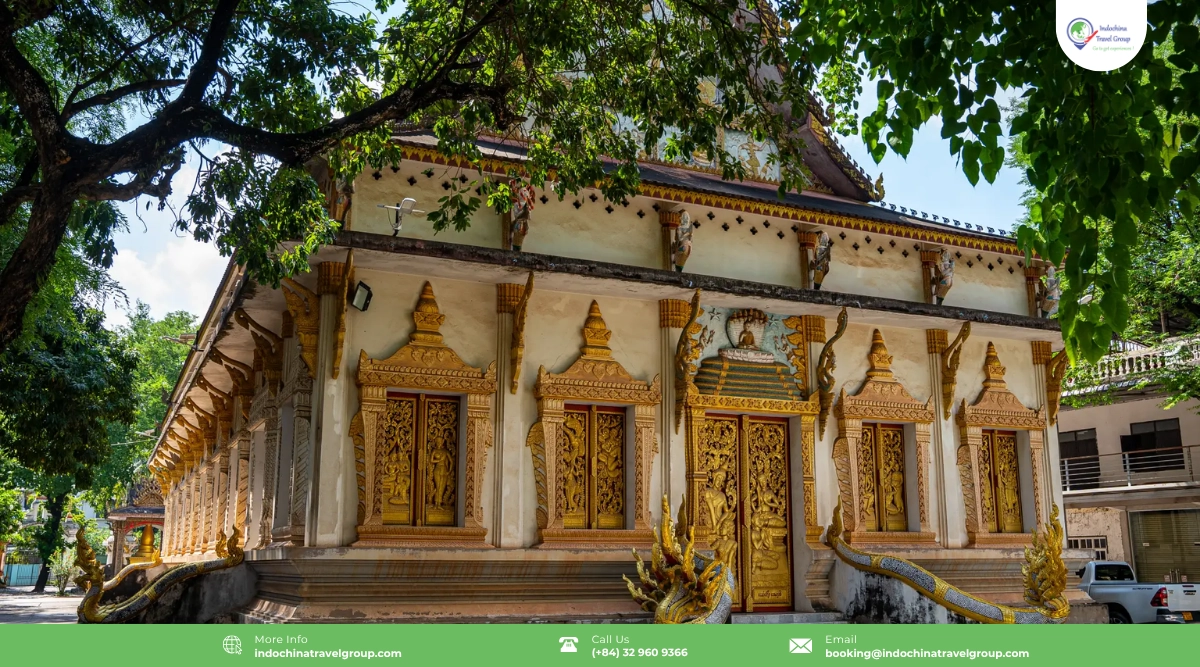
Pha That Luang (The Great Stupa) is the most important national monument. This 150-foot golden structure is a mechanical necessity for any itinerary, it symbolizes the sovereignty of Laos. Legend says it contains a breastbone of the Buddha. Nearby, Wat Si Saket is our personal favorite. Built in 1818, it is the only temple to survive the Siamese invasion. The interior cloisters house over 6,800 Buddha images of various sizes and materials – a hauntingly beautiful sight. Just across the street is Wat Ho Phra Keo, which once housed the Emerald Buddha (now in Bangkok) and currently serves as a museum for religious art.Museums and cultural centers
To understand the resilience of the Lao people, a visit to the COPE Visitor Centre is essential. It tells the sobering story of unexploded ordnance (UXO) in Laos and the work being done to help victims. For a broader view, the Lao National History Museum and the recently opened Lao Art Museum (2022) showcase the country’s journey from ancient kingdoms to the modern era through handcrafted woodwork and contemporary pieces.Quirky and unique sites
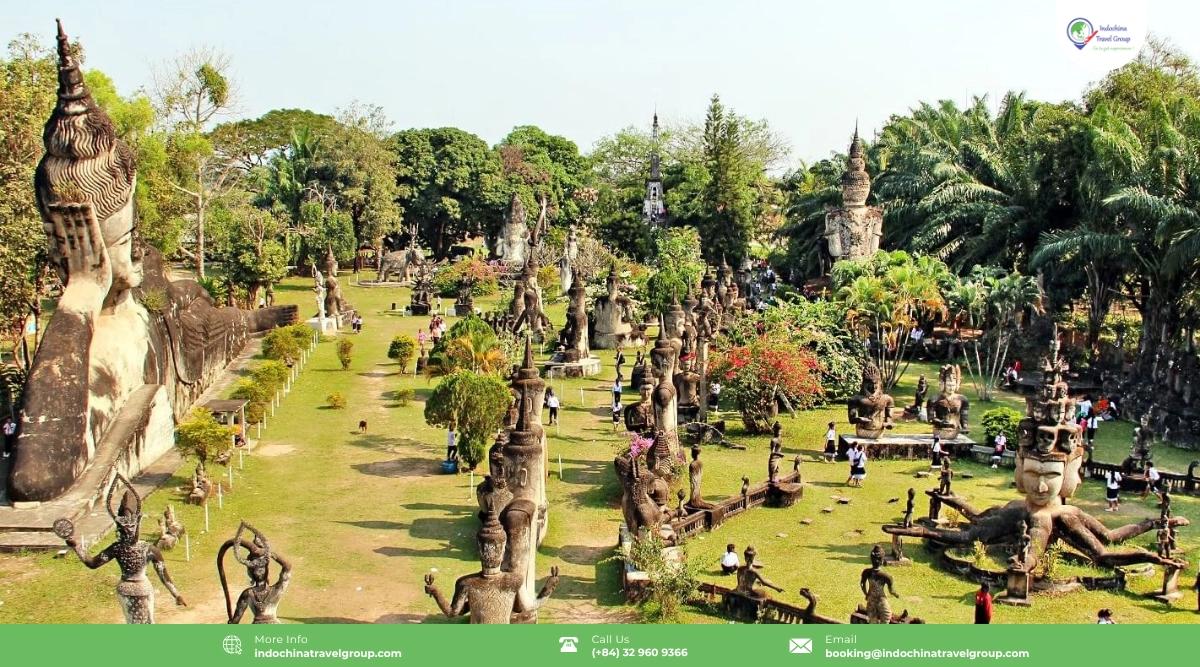
No Vientiane travel guide is complete without Buddha Park (Xieng Khuan). Located 25km downstream from the city, this isn’t a temple, but a collection of over 200 Hindu and Buddhist sculptures. Built in 1958 by a rogue priest-shaman, it features a 33-meter reclining Buddha and a massive “pumpkin” structure that you can climb to view the entire garden. For a dose of nature, La Forêt offers a modern eco-experience with its 21-meter-high Treehouse Café and canopy walks.Where to stay in Vientiane?
 Choosing where to stay in Vientiane is a choice between colonial nostalgia and modern convenience. The city is small, but the atmosphere varies significantly from the bustling riverfront to the quiet residential embassies. ITG categorizes the options into these experiences:
- The French Quarter: This is the soul of the city. Stay here to be walking distance from Wat Si Saket and the best bakeries.
- Riverside: Ideal for those who want to be steps away from the Night Market and the evening breeze.
- Boutique and luxury: Hotels like the Vientiane Plaza or the Settha Palace (a restored 1930s mansion) offer a glimpse into the grand colonial past with world-class Lao hospitality.
- Hostel picks: For social travelers, Sailomyen Cafe & Hostel and Barn 1920s Hostel offer incredibly stylish, central, and affordable rooms.
Getting around Vientiane
Navigating Vientiane is part of the fun. The city remains one of the few capitals in Asia where the traffic is manageable and the pace of movement is slow and intentional. For the city center, walking or renting a bicycle ($1 – $3.50/day) is the best choice. For longer distances like Buddha Park, tuk-tuks (jumbos) or private taxis are ubiquitous, though you should always negotiate the price beforehand.If you are an experienced rider, motorbike rentals are available, but be cautious – Lao traffic rules are more of a “gentle suggestion” than a strict law. For our guests at Indochina Travel Group, we always recommend the “morning bike, evening walk” strategy. Spend your morning cycling to the outer temples like Pha That Luang, and spend your evening walking the Mekong promenade to soak in the sunset atmosphere.Food and drink: Savoring the flavors of the Mekong
Lao cuisine is often overshadowed by its neighbors, but it has a unique, earthy flavor profile that uses fresh forest herbs and river fish. In Vientiane, the food scene is a mix of traditional stalls and a sophisticated café culture that is a legacy of the French era.You must try the national dish, Larb (spicy minced meat salad), alongside tam mak hoong (papaya salad) and sticky rice. For a modern experience, explore the city’s vibrant café culture or visit the Ban Anou Night Market for authentic street food. To eat like a local, you must master the “Sticky Rice” technique. It is served in a woven basket and eaten with your fingers.- Street food alleys: Head to Ban Haysoke or the lanes near Lane Xang boulevard. You’ll find grilled skewers, noodle soups (Khao Piak), and the famous Lao baguette sandwiches (Khao Jee).
- The café scene: Vientiane takes its coffee seriously. From the traditional Robusta beans grown on the Bolaven Plateau to the artisanal third-wave roasters, you are never more than a block away from a world-class cup.
- Riverside dining: At night, the Mekong riverfront transforms into a giant open-air restaurant. It’s the best place to try “Ping Gai” (grilled chicken) and “Bia Lao” (Lao beer) – arguably the best beer in Southeast Asia.
Nightlife and evening activities in Vientiane
If you are looking for the neon-lit clubbing scene of Bangkok, you won’t find it here. Vientiane’s nightlife is social, relaxed, and focused on the river. It is a city that goes to bed early, but the hours between 6:00 PM and 10:00 PM are magical. The primary evening activity is the Mekong Riverfront Night Bazaar, followed by a sunset walk along the promenade. The nightlife is low-key, consisting of casual bars, café-bars, and social dining at the Ban Anou Night Market.ITG always tells our guests to start their evening at Chao Anouvong Park. You will see thousands of locals participating in communal aerobics or simply watching the sun dip below the Thai skyline. The Night Bazaar is excellent for picking up traditional Lao textiles (Sinh) and handicrafts. For a more cultural evening, check the schedules at the COPE Visitor Centre or the National Museum for occasional performances or documentary screenings.Expanding your Vientiane trip
While Vientiane is a destination in itself, its location makes it the perfect “Base Camp” for exploring the rural and natural beauty of Central Laos. The top recommendation is Buddha Park (Xieng Khuan), followed by nature adventures at La Forêt (zip-lines and canopy walks). Located just 20 minutes from the center, it offers a dramatic canopy walk and a 21-meter-high Treehouse Café. It’s a literal breath of fresh air.Vientiane also acts as the primary hub for travelers heading north to the mountains of Vang Vieng or Luang Prabang. If you have an interest in local life, take a small boat to Don Chan island in the middle of the Mekong to see how farmers grow vegetables on the fertile riverbanks.Safety, health and practical tips
 Success in Vientiane comes down to the details. The city is safer and more modern than ever, but it still maintains the quirks of a developing nation that travelers must master. Vientiane is very safe for tourists, but travelers should drink only bottled water and carry plenty of Kip (LAK) for daily expenses. Staying hydrated in the heat and practicing “Face-saving” politeness are the keys to a smooth visit. Here are our professional “Local Expert” tips for your journey:
- Money: The exchange rate for the Lao Kip can be volatile. I suggest withdrawing small amounts frequently rather than one large sum.
- Health: The sun is intense! Wear a hat and use high-SPF sunscreen.
- Etiquette: Lao culture is based on “Saving Face.” Avoid shouting or aggressive bargaining. A smile and a “Sabaidee” (Hello) go a long way.
- Connectivity: Buy a local SIM card at the airport. 5G is surprisingly good in Vientiane, and it will make your Grab bookings and map navigation effortless.
READ MORE: Along The Heritages Of Vietnam And Cambodia In 16D15N
Sample itineraries: Making the most of your visit
To conclude this Vientiane Travel Guide, we have designed three frameworks based on our most successful private tours at Indochina Travel Group. These ensure you see the icons without feeling like you are in a race. A 1-day itinerary hits the city center highlights; a 2-day plan adds the essential Buddha Park, and a 3 – 4 day stay allows for nature adventures and a deeper dive into the café and museum scene.2-day itinerary sample (recommended)- Day 1: Morning visits to Wat Si Saket and Pha That Luang. Lunch at a French bakery. Afternoon at COPE Visitor Centre and Patuxai. Evening sunset walk and Mekong Night Market.
- Day 2: Morning trip to Buddha Park. Return for lunch at a “Larb” specialty stall. Afternoon café-hopping and a visit to the Lao Art Museum. Evening farewell dinner at a riverside grill.
Conclusion
Vientiane is a city that rewards the patient and the curious. It is a destination that doesn’t just change your itinerary, it changes your pace of life. At Indochina Travel Group, we are more than just a travel agency, we are your local friends on the ground. We handle the logistics so you can focus on the magic. ITG invites you to explore our Indochina Tour Packages and let us help you write your own story in the quiet heart of Laos.
Recommended Tours
4 Days 3 Nights from
Group Tour
Vietnam – Cambodia Discovery – Joining Group Tour
HotelCruiseFlightsTour
Hanoi - Ninh Binh - Halong Bay - Hue - Hoi An - Ho Chi Minh City - Mekong Delta - Chau Doc - Phnom Penh - Siem Reap
17 Days 16 Nights from
Group Tour
Hanoi – Sapa – Danang – Ho Chi Minh 10D9N
HotelCruiseFlightsTour
Hanoi - Sapa - Fansipan Peak - Ninh Binh - Halong Bay Overnight On Cruise - Danang - Hoi An Ancient Town - Bana Hills - Golden Bridge - Ho Chi Minh - Cu Chi Tunnels - Mekong Delta
10 Days 9 Nights from
Group Tour
Vietnam – Joining Group Tour 12 Days
HotelCruiseFlightsTour
Ha Noi City Tour - Ninh Binh - Halong Bay Overnight On Cruise - Hue - Hoi An Eco Tour - Ho Chi Minh City - Cu Chi Tunnels - Mekong Delta
12 Days 11 Nights from