

Treat this page as a route scenario for a fixed Australian summer break, usually across December and January. Start with the exact dates and usable days, then decide whether the trip should stay compact, add a beach finish or cover more than one region. Detailed school-holiday dates, regional weather and booking lead time each have their own guides; this page uses those inputs to shape the route rather than repeating them.
Start With Usable Days, Not a Destination Wish List
Vietnam works well for an Australian summer break because a single trip can combine cooler northern cities, a Central heritage section and a warmer southern finish. The trade-off is that these regions do not share one weather pattern, so the route should follow the dates rather than assuming every coast is equally suitable.Use the summer break to decide how much movement the trip can tolerate. A compact city-and-beach route can be easier for families, while a longer north-to-south itinerary needs more flights or hotel changes and should protect enough buffer around peak travel dates.
If beach time is central to the trip, use our Vietnam beach-holiday guide for Australians to compare mainland coast and island options by trip role and transfer cost. For the weather decision, use our best time to visit Vietnam from Australia guide. Flight schedules vary by departure city and travel date, so confirm the actual route before fixing the first hotel or domestic connection.Fix the Holiday Window Before You Choose the Route
Use the Vietnam Holiday Calendar for Australians to establish the school/public-holiday window first. Then use our Best Time guide for regional weather and When to Book for availability and lead time. On this page, December–January is only the fixed planning constraint used to compare route shapes.School holiday window: The high-demand reality
Christmas, New Year and school-holiday dates can tighten availability for popular cruises, resorts and family rooms. Book earlier when a specific property, cabin type or holiday date matters, but there is no universal six-month rule; availability depends on the route, hotel level and exact travel week.Weather by region: The North-to-South shift
- The North: December and January can feel cool or cold by Vietnamese standards, especially in mountain areas. Mist and lower visibility can affect scenery, so pack for the forecast and keep cruise or trekking expectations flexible.
- The Center: Late-year rain can continue into parts of the Australian summer, and improvement is not guaranteed on a fixed January date. Keep Da Nang and Hoi An plans weather-flexible and check the short-range forecast.
- The South: The drier part of the southern seasonal cycle often makes city, Mekong and island plans easier, but heat, rain and sea conditions still vary. Check Phu Quoc boat and beach conditions close to the travel date.
If Beach Time Matters Most, Choose the Coast as a Route Decision
 Australian summer holidays are long enough to combine a Vietnam city or cultural stay with several slower beach days. The key is choosing the coast that matches the month rather than assuming the whole country has the same summer weather.
Phu Quoc
Phu Quoc is a strong option for some Australian summer-holiday dates, particularly when Southern Vietnam’s seasonal conditions suit a beach finish. Check rainfall and sea conditions for your specific month before building the itinerary around the island.Da Nang
Da Nang works well when the trip needs airport access, a city base and beach time in the same stop. My Khe is convenient for a city-beach day, while Ba Na Hills, Marble Mountains and Hoi An should be chosen as separate excursions according to the time available and the weather.Hoi An / An Bang
An Bang can add beach time to a Hoi An stay without requiring a separate coastal base. It suits travellers who want the Ancient Town, countryside and beach in the same section, but weather and sea conditions should decide how much time is actually given to the coast.Nha Trang and Mui Ne
Nha Trang suits travellers who want a larger beach city with restaurants, cultural sights and organised water activities. Mui Ne adds a different mainland-coast option with dunes and wind-sport activity. Choose between them by route, sea conditions and travel time rather than by a superlative label.Add a Cruise Only When It Fits the Northern Route
An overnight cruise can be a useful Northern Vietnam experience when the weather and itinerary allow, but it is not mandatory for every trip. Cabin standard, transfer time and sea conditions matter more than treating a cruise as a checklist item.Ha Long and Lan Ha Bay
If you want an overnight bay experience, use our Ha Long Bay vs Lan Ha Bay guide to compare route, cabin, embarkation point and activities. Do not assume one bay is automatically quieter or better on every travel date.Saigon River dinner cruise
If you are spending several nights in Ho Chi Minh City, an evening river cruise can be an optional low-effort activity when the schedule and weather suit it. Check the current operator, departure time and inclusions instead of treating a dinner cruise as a required city experience.Use City and Heritage Stops to Balance the Route
 A summer itinerary does not need to be beach-only. Hanoi, Hoi An and Ho Chi Minh City can add history, food and neighbourhood experiences around the resort days, provided the regional weather suits the dates.
Hanoi
Hanoi in December can be cool, with conditions varying from clear to damp or misty. The Old Quarter, Hoan Kiem area and St. Joseph’s Cathedral can fit a city stay during the Christmas period, but church events and crowd levels should be checked for the actual dates rather than assumed from a previous year.Ho Chi Minh City
Ho Chi Minh City works well when a summer itinerary needs museums, food and an urban base before or after a beach section. A guided evening food experience can fit families with older children or teenagers, but vehicle type, traffic exposure and the operator’s safety setup should be checked before booking.Hoi An
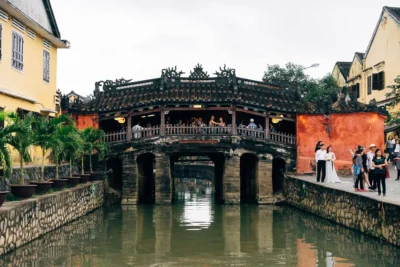
Hoi An works well for evening walking, heritage time, countryside activities and tailoring when the trip allows enough nights. Traffic restrictions vary by street and time, and tailoring quality, turnaround time and fitting requirements vary by shop, so leave enough margin rather than treating it as an instant purchase.Choose the summer route by usable days and weather
How should you structure your itinerary? Start from the number of usable days, then choose whether the trip should prioritise beach time, a northern cruise, or a broader family route. Domestic flights can connect distant regions, but each flight still adds airport transfers and hotel-change time.
Longer multi-region summer route
For a longer summer break, one route shape is to combine a Northern city-and-bay section with Central heritage and a Southern beach finish. Keep the exact number of nights flexible and let weather, flight times and the family’s transfer tolerance decide the sequence. For day-by-day examples, use our Vietnam itinerary from Australia.- Northern city base: Hanoi for food, neighbourhoods and heritage time when the cooler weather fits the family.
- Optional bay stay: add Ha Long or Lan Ha only when the cabin, transfer window and current weather fit the group.
- Central heritage section: use Hoi An or Da Nang when the weather supports walking, heritage time and a possible beach day without another hotel move.
- Southern beach finish: use Phu Quoc only when the island conditions, flight schedule and remaining nights justify the extra transfer.
Focused southern summer route
If you only have a short window, focus on the South:- Ho Chi Minh City + optional Mekong layer: protect city time first, then add a Delta day or overnight only when it earns the transfer.
- Phu Quoc island stay: give the island enough nights to justify the extra flight and hotel change, and let current sea conditions shape boat-led days.
- This keeps the route compact; confirm the actual seasonal and marine conditions before building the trip around the island finish.
Tips for Australian summer travelers
 A few practical checks make an Australian summer trip easier to manage, especially when the route crosses different weather zones or peak holiday dates. Planning checklist:
- Visas: Check the current Vietnam entry requirements and apply early enough to correct any error before departure. See our Vietnam visa guide for Australians.
- Packing: Pack for the route rather than the country label. Northern stops may need a warmer layer, while southern and coastal sections often need light clothing, sun protection and a rain option.
- Connectivity: A local SIM or eSIM is useful for maps and operator contact. Save hotel addresses and important booking details offline in case the connection drops.
- Local transport apps: Ride-hailing apps can make city fares and pickup points easier to understand, but availability and payment support vary by city, account and travel date. Keep another transport and payment option available.
Conclusion
A good Australian summer itinerary should follow the regional weather and the amount of time you actually have. Compare our Vietnam Tour Packages From Australia as a starting point, then adapt the route into a beach, culture or mixed trip without forcing every region into the same holiday.

Recommended Tours


5D4N DELIGHT DANANG TOUR (DANANG – BA NA HILL FRENCH VILLAGE – HOI AN – HUE CITY) (SEAT IN COACH)
HotelCruiseFlightsTour
from


Group Tour
Phu Quoc Island 4 Days 3 Nights Group Tour
HotelFlightsTour
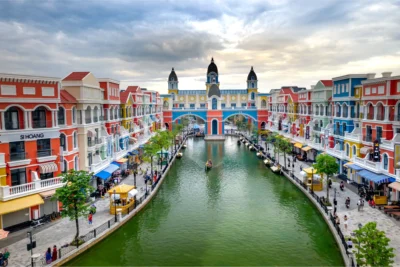
Phu Quoc Arrival - Grand World Tour - VinWonders Phu Quoc - Duong Dong Night Market - Sun World Hon Thom - Kiss Bridge - Phu Quoc Departure
3 Nights 4 Days from
Private
Phu Quoc 5D4N With Grand World
HotelTour
Phu Quoc - Grand World - Hon Thom Cable Car - 4 Island Tour - Aquatopia Water Park - Vin Wonders Theme Park - Vin Safari - Kiss Of The Sea Show
5 Days 4 Nights from

4D3N HIGHLIGHT OF MIDDLE OF VIETNAM (SEAT IN COACH)
HotelCruiseFlightsTour
from

4 Days 3 Nights from


Private Tour
Vietnam And Cambodia Discovery 18D17N
HotelCruiseFlightsTour
Hanoi - Ha Giang (The Far North) - Halong Bay - Hoi An - Hue - Ho Chi Minh City - Mekong Delta - Siem Reap (Angkor)
18 Days 17 Nights from