Quy Nhon Travel Guide: Beaches, Where to Stay & Coastal Trip Planning
Quy Nhon works best when you treat it as a coastal base with three different directions, not as one beach stop. The city itself gives you an easy seafront, food and evening time; the Phuong Mai Peninsula and Nhon Ly side lead toward Ky Co and Eo Gio; the road south changes again around Bai Xep and the resort coves. That geography is what should decide where you stay and how many nights you give the area.
Quy Nhon is a city-base destination with a peninsula branch and a separate south-coast branch.
How Quy Nhon’s three travel zones relate
South coast
Bai Xep and resort coves Best for slower beach time
Quy Nhon city
Main hotel and food base Best for mixed itineraries
Phuong Mai / Nhon Ly
Ky Co, Eo Gio, Hon Kho side Best for peninsula days
Route logic: choose the hotel base around the coast you expect to repeat, not around one attractive beach photo.
How much time should you give Quy Nhon?
Trip shape
Useful time
What fits
Planning trade-off
Quick coastal stop
2 nights
City + one peninsula/coastal day
You will have to choose between Ky Co/Eo Gio, Cham heritage and the south coast.
Balanced first visit
3 nights
City + Phuong Mai/Nhon Ly + heritage or south coast
This gives enough room to change a sea day if conditions are poor.
Slow coast
4+ nights
City, peninsula, Hon Kho/Nhon Hai, Bai Xep or nearby Phu Yen
Best when the coast itself is a main reason for the trip.
Quy Nhon at a glance: city, peninsula and south coast
The easiest mistake is to book a hotel from a beach photo without checking the road pattern. Quy Nhon city is the practical centre: it is where you have the widest choice of hotels, restaurants and evening walks. Ky Co and Eo Gio sit away from the centre around the Nhon Ly and Phuong Mai side, while Bai Xep and several quieter coves lie south along the coastal road.
For most first-time travellers, the city is the simplest base because you can leave for a coastal day in the morning and still come back for dinner without changing hotels. A resort or village stay outside the city makes more sense when the beach itself matters more than restaurant choice or when you want to reduce repeated driving to one particular coast.
Which Quy Nhon base fits your trip?
Base
Best for
What becomes easier
What to accept
Quy Nhon city
First visit, food, flexible sightseeing
City beach, evening meals, taxis, mixed day trips
Longer road time to Ky Co/Eo Gio and remote beaches.
Nhon Ly / Phuong Mai side
Ky Co and Eo Gio priority
Earlier access to the peninsula coast
Less convenient for city evenings and south-coast days.
Bai Xep / south coast
Quieter beach or resort-led stay
Slow coastal time
You rely more on the hotel, driver or planned transport.
Getting to Quy Nhon and moving around
Current administrative note: older hotel, map and tour listings may still show Bình Định. Since the July 2025 provincial reorganisation, Quy Nhon is part of the new Gia Lai province; the destination name Quy Nhon remains the practical travel reference.
Phu Cat Airport is the main air gateway for Quy Nhon, while Dieu Tri is the useful rail stop for many north–south trains. If Quy Nhon is part of a longer central-coast route, road travel from Nha Trang or onward toward Phu Yen can also make sense. The important point is to count the hotel-to-hotel transfer, not just the flight or train time.
Inside the destination, a city stay can be handled with taxis or app-based rides for short hops. Peninsula and south-coast days are different: stops are spread out, so a private car or pre-planned driver is usually easier for couples, families and groups. Self-driving can offer more freedom, but only use it when the licence, insurance, road experience and weather all make sense for the traveller.
City taxi, private car or self-drive?
Mode
Works best for
Main trade-off
Taxi / app-based ride
City beach, meals, short urban hops
Easy in town but less convenient for a long multi-stop coastal day.
Private car / driver
Ky Co–Eo Gio, Hon Kho/Nhon Hai, Bai Xep, Cham sites
Higher cost, but easier for timing, luggage and families.
Self-drive
Experienced travellers who want maximum flexibility
Only sensible with the correct licence, insurance, road confidence and suitable weather.
Ky Co and Eo Gio: plan them as a coastal day, not two checklist stops
Eo Gio on the Nhon Ly side of Quy Nhon.
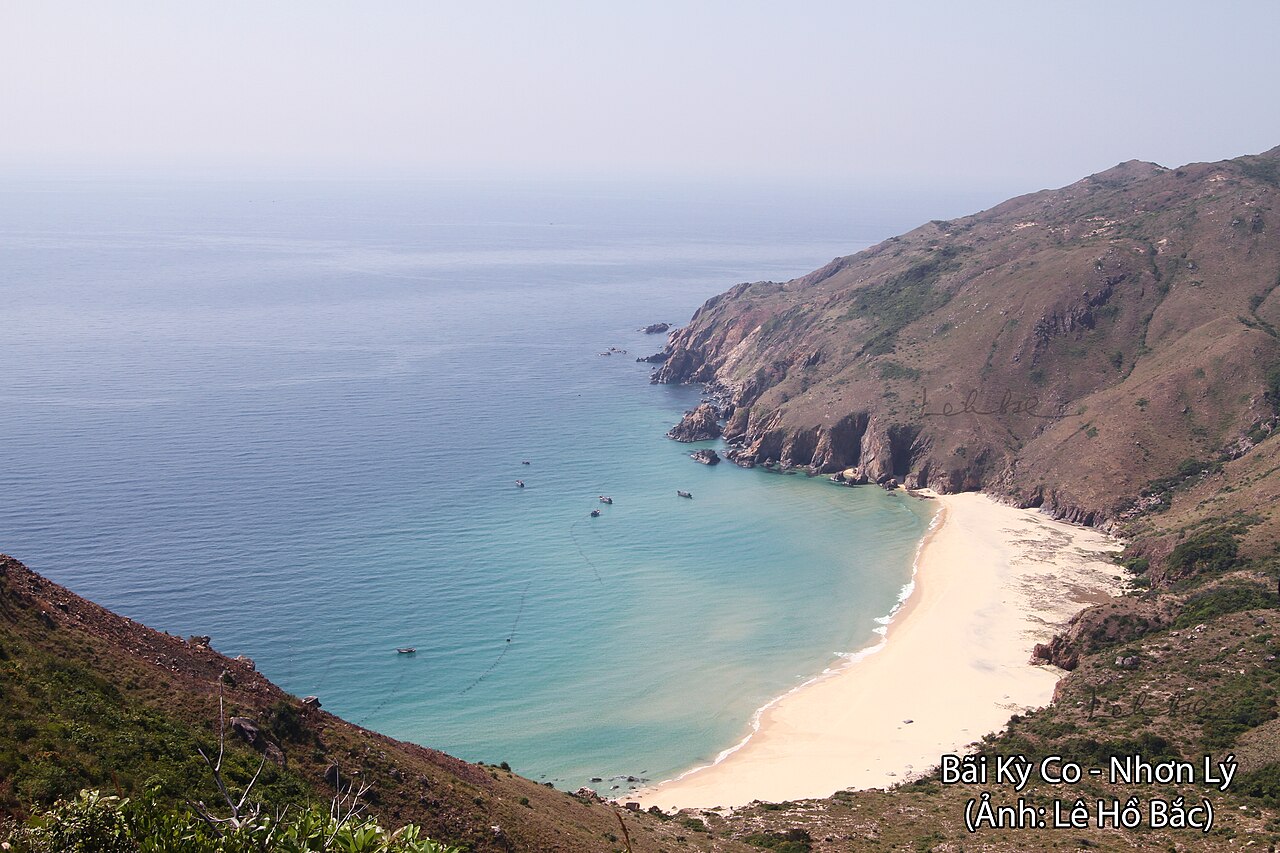
Ky Co and Eo Gio are often grouped together because they sit on the same side of the city, but they are not the same experience. Ky Co is the beach-led part of the day; Eo Gio is more about the exposed coastal landscape and walking viewpoints. Boat access, swimming and snorkelling depend on sea conditions, so the day should not be built around a guarantee that every water activity will run.
When the sea is rough, a road-based version of the peninsula day can still work. That is one reason we prefer to give Quy Nhon at least three nights when the coast is important: you have room to move a sea-dependent day without sacrificing the rest of the route.
Hon Kho and Nhon Hai: useful when you want a second coastal texture
Hon Kho and Nhon Hai create a different day from Ky Co and Eo Gio. Nhon Hai has a fishing-village setting, while boat trips around Hon Kho are usually chosen for water time, coastal views or snorkelling when conditions allow. Do not assume that adding another island automatically improves a short itinerary. If you only have two nights, one well-planned coastal day is usually better than trying to fit both areas.
For travellers staying longer, Hon Kho can be the flexible second sea day. Confirm the operating boat route, return time, sea state and what is actually included before leaving the hotel. This is especially important for families or groups carrying extra gear.
Cham heritage gives Quy Nhon a reason to be more than a beach stop
Banh It Cham Towers near Quy Nhon.
The Banh It tower complex is one of the strongest reasons to keep a heritage section in the itinerary. It sits outside the beach-city rhythm and works particularly well on an arrival, departure or inland road day when you do not want another full sea excursion. The towers also connect Quy Nhon to the wider Champa story across central Vietnam rather than presenting the destination only through beaches.
Depending on the route, other Cham remains around the wider area can be added, but the useful decision is whether heritage is a main interest or a supporting stop. If your trip already includes My Son or Po Nagar, Banh It still feels different because of its hilltop setting and the way it fits the historic Bình Định coastal landscape, now within Gia Lai province.
Quy Nhon city: leave space for the seafront and evening food
The city is not just where you sleep before leaving for Ky Co. The long seafront is useful at sunrise or late afternoon, and staying centrally makes dinner much easier after a road day. Rather than chasing one famous restaurant, we normally keep the evening flexible: seafood, local noodles and simple street-side meals are widely available, and the best choice is often the one close to where the day finishes.
This is also where a spare half-day becomes valuable. If your flight or train timing breaks the day in half, a city-beach walk, café stop or market visit is easier to use than forcing another distant attraction into the schedule.
Bai Xep and the south-coast option
South of the city, the road changes from urban beach to smaller coves and resort sections. Bai Xep is the name most travellers recognise, but the planning value is broader: this side works when you want a slower beach stay or when Quy Nhon is a transition toward Phu Yen rather than a stand-alone return to the city every night.
If you stay south of town, check how often you expect to go back into Quy Nhon for food or sightseeing. A quiet hotel can be exactly the right choice for a couple or a rest day, but it is less convenient for travellers who still want city evenings, Cham sites and a peninsula excursion.
When to visit Quy Nhon
Weather on the south-central coast should be treated as an operating condition, not a promise that one month will always be perfect. Drier periods usually give you more flexibility for coastal roads and beach time; rougher sea conditions or heavy rain can affect boats, swimming and exposed viewpoints even when the city itself remains usable.
If Ky Co, Hon Kho or another boat-led day is important, check the short-range marine forecast and operator status close to the trip. For a route that also continues to Phu Yen or Nha Trang, it is useful to keep at least one day that can be switched between coast, heritage and city time.
A practical 3-day Quy Nhon structure
Day 1 – City and orientation. Arrive, settle into the city or chosen coastal base, walk the seafront and keep dinner close to the hotel. If the arrival is early enough, an inland heritage stop can fit without making the first day too long.
Day 2 – Phuong Mai / Nhon Ly coast. Use the best weather window for Ky Co and Eo Gio. Confirm whether your route is road-only or includes a boat segment. If the sea is not suitable, make the day more viewpoint- and village-led instead of forcing a water activity.
Day 3 – Choose your second theme. Pick Hon Kho/Nhon Hai for another sea day, Banh It and inland heritage for culture, or Bai Xep/south coast for a slower finish. This choice is what keeps a three-night stay from becoming repetitive.
How Quy Nhon fits with Phu Yen and Nha Trang
Quy Nhon and Phu Yen work well together because they solve different route needs. Quy Nhon is the easier city base with a clear peninsula day; Phu Yen is more spread out and works better when you split the coast into north and south road days. If both are included, avoid duplicating every beach and island experience. Use Quy Nhon for the city–peninsula–Cham combination and Phu Yen for its long coastal-road geography.
Nha Trang is a different product again: larger resort inventory, a more established city-beach environment and a wider commercial activity base. That makes the Quy Nhon–Phu Yen section useful when travellers want a quieter road-trip contrast before or after Nha Trang, not as a claim that one destination is “better” than another.
Operational checks before you lock the itinerary
Before a sea-led day, check more than the weather icon. Wind, wave conditions and the actual boat departure point can change whether the day feels easy or becomes a long sequence of transfers. If snorkelling or swimming is important, confirm that those activities are operating rather than assuming they are bundled into every Ky Co or Hon Kho trip.
For exposed coastal days, carry drinking water, sun protection and footwear that works on hot pavement, steps and uneven rock. Families may also want a dry bag or small change of clothes when the programme includes a boat. The useful fallback is a road-based day using viewpoints, villages, Cham heritage or city time instead of forcing the sea plan when conditions are poor.
Sea day: confirm boat operation, weather, pickup point and return time rather than treating snorkelling or island access as guaranteed.
Hotel base: check the road distance to the attractions you actually plan to use; “Quy Nhon” accommodation can cover very different areas.
Transport: for multiple coastal stops, one driver for the day is usually simpler than arranging separate rides between remote points.
Heat and exposure: Eo Gio, tower sites and open beaches have limited shade; move exposed walks away from the hottest part of the day when possible.
Next transfer: if continuing to Phu Yen or Nha Trang, keep the final day lighter so a delayed excursion does not collide with the hotel-to-hotel move.
Quy Nhon FAQ
How many nights do you need in Quy Nhon?
Three nights is a useful first-visit baseline because it gives you one main coastal day, one second theme and some city time. Two nights works when Quy Nhon is only a short stop; four or more makes sense when beaches and slower coastal time are a major part of the trip.
Should you stay in the city or near Ky Co?
Stay in the city if you want flexible dining, easier transport and a mix of attractions. Stay closer to Nhon Ly or the peninsula when Ky Co/Eo Gio is the priority and you accept less convenient access to city evenings.
Can Ky Co and Eo Gio be done on the same day?
They are commonly paired, but the exact sequence depends on road access, boat operation, sea conditions and how long you want at the beach. Do not overfill the day with extra island stops unless the operating schedule supports it.
Is Quy Nhon worth combining with Phu Yen?
Yes when you have enough nights for both. The combination is strongest when Quy Nhon handles the city/peninsula/Cham side and Phu Yen is given separate north- and south-coast road time rather than being reduced to one photo stop.
Do you need a motorbike?
No. A motorbike can suit experienced, properly licensed travellers, but taxis, app-based rides and private cars can cover the destination. For a multi-stop coastal day, a driver is often the simpler choice.
How Quy Nhon fits into a Central Vietnam route
Route
When it fits
Planning note
Da Nang / Hoi An → Quy Nhon
When you want to extend the central coast south without jumping directly to Nha Trang
Treat the transfer as a real travel day and protect the first evening in Quy Nhon.
Quy Nhon → Phu Yen
When both quieter coastal areas are a main part of the trip
Give each destination a different role: city/peninsula/Cham in Quy Nhon, north–south road days in Phu Yen.
Quy Nhon → Nha Trang
When a quieter coast should lead into a larger resort-and-activity base
Avoid duplicating every beach day; use Nha Trang for the city-resort and activity layer.
You want a climate and landscape contrast after the coast
The itinerary leaves the beach corridor for a cooler highland stay with countryside and outdoor days.
Continue planning from Quy Nhon
If this stop is part of a wider regional route, compare the surrounding destinations in our Central Vietnam route guide.
For travellers who want the transport, hotel bases and day order customised around flight times and sea conditions, a private itinerary can make the coastal days easier to adjust.
Once the route shape is clear, our Vietnam Tour Packages show the broader bookable options.
Image credits: Ky Co Beach — Lê Hồ Bắc, CC BY-SA 4.0, Wikimedia Commons; Eo Gio — Hưng Hồ Bá, CC BY 2.0, Wikimedia Commons; Banh It Towers — Thrar, CC BY-SA 3.0, Wikimedia Commons.