Phu Yen Travel Guide: Coastal Routes, Where to Stay & Trip Planning
Phu Yen works best as a coastal road-trip destination rather than a single beach stop. Tuy Hoa is the practical centre; Ganh Da Dia, O Loan and the Song Cau side pull you north, while Bai Mon, Mui Dien and Vung Ro pull you south. Those directions are far enough apart that a good itinerary usually separates them instead of trying to collect every viewpoint in one long day.
Phu Yen works as a north–south coastal route, with Tuy Hoa acting as the practical middle base.
Phu Yen works as a north–centre–south route
North coast
Ganh Da Dia, O Loan, Song Cau Give it its own road day
Tuy Hoa
Airport, rail, hotels and food Best flexible first base
South coast
Bai Mon, Mui Dien, Vung Ro Protect daylight and road buffer
Route logic: keep the north and south as separate sightseeing days instead of treating the whole coast as one loop.
Why Phu Yen needs a route plan before you choose a hotel
The destination area looks simple on a north–south map, but the main sights sit on different coastal roads. If you stay in Tuy Hoa, you can reach both directions without changing hotels, but you still need to give each side enough time. If you stay around Song Cau or Xuan Dai Bay, the north becomes easier while the far south becomes a much longer day.
This is the main difference from nearby Quy Nhon. Quy Nhon has a clearer city-plus-peninsula pattern. Phu Yen is more dispersed, so the hotel base should follow the sightseeing geography rather than the other way around.
Where to stay in Phu Yen
Tuy Hoa is the easiest first-visit base. It gives you the airport, rail access, a useful choice of hotels and restaurants, and the ability to drive north or south without moving luggage. It is also the most practical place to keep a lighter day when weather makes a long coastal route less attractive.
Song Cau / Xuan Dai Bay makes more sense when the north coast or the hotel itself is a major part of the trip. Ganh Da Dia, bays and northern coastal roads become easier, but Bai Mon and Vung Ro become less convenient.
Remote coastal stays suit travellers who want rest and scenery more than city access. Before booking, check restaurant options, transport after dark and how many times you still expect to return to Tuy Hoa. An isolated hotel can create unnecessary driving when the sightseeing plan is spread across both ends of the destination area.
Which Phu Yen base fits your trip?
Base
Good fit
What becomes easier
Trade-off
Tuy Hoa
First visit, mixed north/south route
Airport, train, food, flexible day trips
More driving to the far ends of the coast.
Song Cau / Xuan Dai
North-coast or resort-led stay
Bays and northern coastal stops
Longer south-coast days.
Remote beach / bay hotel
Rest-focused trip
Quiet setting and fewer daily moves
Less spontaneous dining and transport.
Getting to Phu Yen and getting around
Current administrative note: travellers will still see “Phu Yen” widely used as the destination name, while older addresses may refer to Phu Yen province. Since the July 2025 provincial reorganisation, the former Phu Yen area is part of the new Dak Lak province.
Tuy Hoa Airport is the main air gateway, and Tuy Hoa is also on the north–south railway. That makes Phu Yen easy to combine with Quy Nhon, Nha Trang or a longer central-coast trip when the transport schedule lines up.
Inside the province, the main challenge is the length of the sightseeing days rather than moving around Tuy Hoa itself. For several coastal stops in one day, a private car or pre-arranged driver is usually the simplest option for couples, families and small groups. Self-driving only makes sense when the traveller is properly licensed, insured and comfortable with local roads and weather.
Driver, taxi or self-drive in Phu Yen?
Mode
Best use
Planning note
Taxi / app-based ride
Tuy Hoa city, station, airport, short local trips
Useful in the centre but inefficient for a full north- or south-coast loop.
Private driver
Ganh Da Dia–O Loan day or Bai Mon–Vung Ro day
Usually the easiest way to protect daylight and avoid arranging separate rides between remote stops.
Self-drive
Travellers comfortable with long coastal roads
Only when licence, insurance, road experience and weather all support it.
North-coast day: Ganh Da Dia, O Loan and the Tuy An side
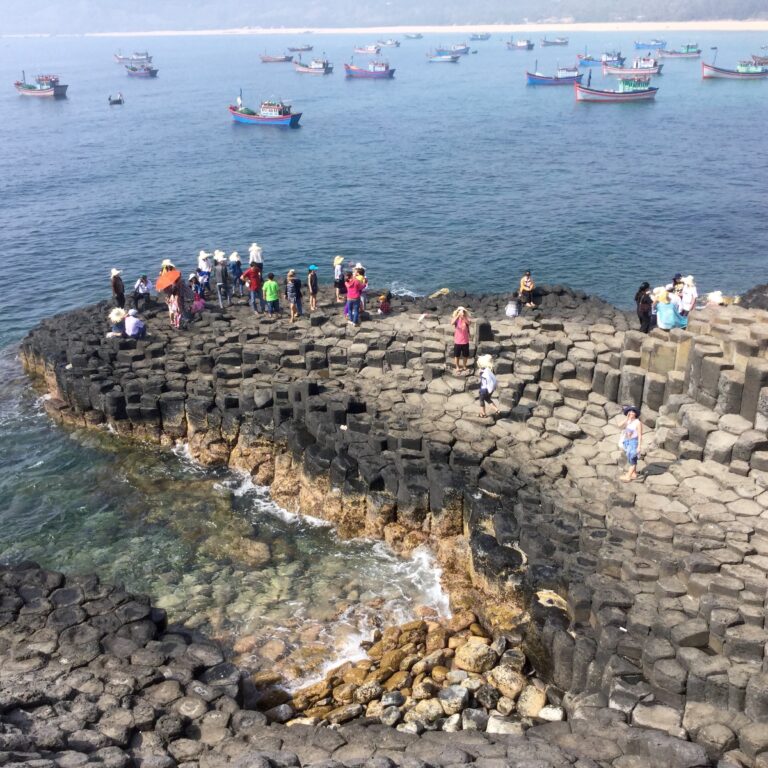
Ganh Da Dia is the geological anchor of Phu Yen’s north-coast day.
Ganh Da Dia is the geological anchor of the north coast, but the day works better when it is treated as part of the wider Tuy An route rather than an isolated photo stop. O Loan Lagoon adds a different landscape and food context, while Ganh Den or Mang Lang can fit if the schedule is not already crowded.
Timing matters because the basalt coast is exposed to sun and group arrivals. Earlier or later visits can be more comfortable than arriving at the hottest part of the day. Bai Xep can also fit the northern half of a Phu Yen trip, but it is better treated as an option than another compulsory stop.
Bai Xep, Mang Lang and Ganh Den: optional north-coast additions
Bai Xep, Mang Lang Church and Ganh Den all sit on the northern side of the province, but they solve different trip needs. Bai Xep adds a beach-and-viewpoint stop, Mang Lang adds local history and architecture, and Ganh Den is a short coastal extension close to Ganh Da Dia. They work best as optional additions around the main north-coast route rather than as three more boxes to tick.
For a three-night stay, we normally keep only one or two of these additions depending on weather, road pace and how long the group wants at Ganh Da Dia or O Loan. This protects the day from becoming a sequence of quick photo stops and leaves enough time for lunch and the drive back to Tuy Hoa or onward to a northern hotel.
Tuy Hoa: Nhan Tower, city beach and useful buffer time
Nhan Tower above Tuy Hoa.
Tuy Hoa is valuable because it gives the itinerary a low-logistics day. Nhan Tower adds a Champa heritage layer above the city, while the beach and central food streets can fill the rest of the day without another long road transfer. This is why we normally keep Tuy Hoa available for arrival, departure or poor-weather days.
The city also prevents a Phu Yen trip from becoming a sequence of viewpoints. After a long north-coast day, an easier evening near the hotel can be more useful than adding another distant beach simply because it appears on a map.
Nghinh Phong and the Tuy Hoa city layer
Nghinh Phong Tower can fit naturally into a Tuy Hoa-led half day because it sits within the city-beach context rather than requiring another long coastal transfer. We treat it as a city orientation stop, not a reason to rearrange the whole route. Combined with Nhan Tower, the seafront and an easy dinner, it gives arrival or buffer days enough structure without using the energy needed for the north and south road days.
This city layer matters most when flight or train times split the day. Instead of forcing a distant attraction into a short window, keep the programme close to Tuy Hoa and protect the longer coastal routes for full daylight days.
South-coast day: Bai Mon, Mui Dien and Vung Ro
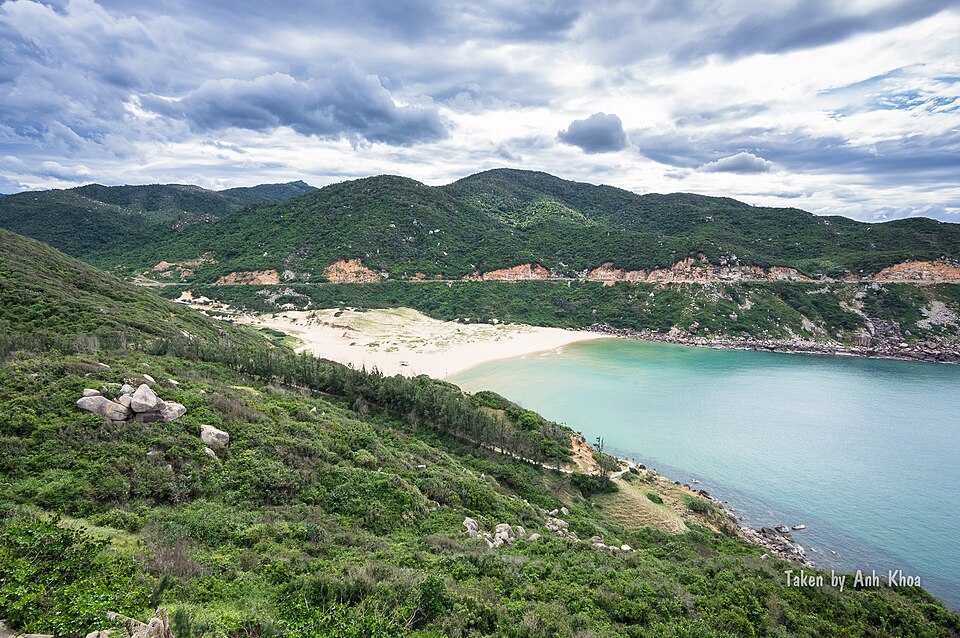
The south is a separate road day. Bai Mon sits below the Mui Dien / Dai Lanh headland area, while Vung Ro lies farther around the bay system. The combination works when the group wants exposed coastal scenery, but it still needs enough daylight and road buffer rather than being squeezed into the end of a north-coast itinerary.
Do not build the plan around sunrise unless the traveller actually wants the early start and current access is confirmed. For many groups, a normal daylight visit is more practical. Heat, walking tolerance, road time and the next hotel transfer matter more than chasing one fixed photo moment.
Song Cau and Xuan Dai Bay: when to stay north
Song Cau and Xuan Dai Bay fit travellers who want a slower coastal stay rather than repeated day trips from Tuy Hoa. If two of your main days are on the north side, changing the base can reduce repeated driving. If you still want Nhan Tower, Bai Mon and Vung Ro, however, staying north can create more total road time than it saves.
The useful rule is simple: choose the hotel after you know which coast you are actually using. “Phu Yen” accommodation can refer to very different parts of the province.
How many nights do you need in Phu Yen?
Two nights gives you one full coastal day plus arrival and departure time. It works for travellers passing through, but you will normally need to choose north or south.
Three nights is a balanced first-visit structure: one north-coast day, one south-coast or Tuy Hoa-led day, and enough buffer around transport.
Four nights or more makes sense when you want both ends of the province without rushing, or when the hotel, bay time and slower meals matter as much as sightseeing.
A practical 3-day Phu Yen route
Day 1 – Tuy Hoa and orientation. Check in, use Nhan Tower if timing and weather work, then keep the rest of the day close to the city. This protects the first day from flight or train delays.
Day 2 – North coast. Build the day around Ganh Da Dia and O Loan, then add one or two nearby stops according to pace. Ganh Den, Mang Lang, Bai Xep or a longer move toward Xuan Dai should be choices rather than mandatory additions.
Day 3 – South coast. Use the day for Bai Mon, Mui Dien and Vung Ro, keeping enough road buffer to avoid racing between viewpoints. If the next hotel is toward Nha Trang, the day can be shaped around that onward direction.
Weather and sea conditions
Later-year rain and storms can affect Phu Yen’s road days, exposed headlands and sea-based activities. Treat the season as a risk factor rather than a guarantee that an entire month is unusable. Short-range weather and marine conditions matter more when the itinerary includes boats, kayaking or long exposed coastal sections.
On rougher days, Tuy Hoa, Nhan Tower and road-based cultural stops give you alternatives. A flexible three-night stay is therefore much easier to manage than a two-night itinerary built around one weather-dependent activity.
How Phu Yen fits with Quy Nhon and Nha Trang
Pairing Phu Yen with Quy Nhon works well when each destination has a different role. Keep Quy Nhon focused on the city, Phuong Mai/Nhon Ly, Ky Co/Eo Gio and Cham heritage; use Phu Yen for the longer north-versus-south coastal road split. That avoids selling both places as the same “quiet beach” experience.
If the route continues to Nha Trang, the contrast is even clearer. Nha Trang is the stronger city-resort and commercial activity base; Phu Yen is better used as the scenic road section between larger hubs. The right choice depends on whether the traveller values resort infrastructure or dispersed coastal scenery.
Operational checks before a Phu Yen road day
A Phu Yen sightseeing day can look short on a map but become long once photo stops, lunch, heat and access roads are included. For the north coast, decide the anchor stop first, then add Ganh Den, Mang Lang or Bai Xep only if the group still has time. For the south, protect enough daylight for Bai Mon, Mui Dien and Vung Ro instead of adding northern stops to the same day.
Keep water, sun protection and offline map access in the vehicle, and check the return plan before leaving a remote stop. If the next hotel is in Quy Nhon or Nha Trang, avoid using the final morning for a long out-and-back excursion; the hotel-to-hotel move should have its own buffer.
Choose north or south first: avoid putting Ganh Da Dia and Bai Mon into the same day unless the group deliberately wants a long drive-heavy schedule.
Check hotel location: a property marketed as “Phu Yen” may sit far from Tuy Hoa and change the entire transport plan.
Prepare for exposed roads: carry water, sun protection and offline map access.
Confirm access: headlands, boat points and smaller attractions can have changing hours or operating conditions.
Protect the onward transfer: if moving to Quy Nhon or Nha Trang, keep the final sightseeing section light enough to absorb traffic or weather delays.
Phu Yen FAQ
Is Tuy Hoa the best base for a first visit?
For most first-time itineraries, yes. It gives you the easiest mix of airport and rail access, food and the ability to drive north or south without moving hotels.
Can you see Ganh Da Dia and Bai Mon in one day?
The road network connects them, but the result is a long north-to-south day with less time at each stop. We normally separate them unless the traveller accepts a transport-heavy schedule.
How many nights should you spend in Phu Yen?
Three nights is a useful first-visit baseline. Two nights means choosing one coastal direction; four or more works for slower bay stays or a route that includes both ends without rushing.
Should you stay in Song Cau instead of Tuy Hoa?
Choose Song Cau or the Xuan Dai side when the north coast and the hotel itself are the priority. Choose Tuy Hoa when you want a mixed north/south itinerary, easier transport connections and more flexibility at night.
Can Phu Yen be combined with Quy Nhon?
Yes. The combination is strongest when Quy Nhon handles the city, peninsula and Cham side while Phu Yen is given separate north- and south-coast road time.
How Phu Yen fits into the wider route
Route
When it fits
Planning note
Quy Nhon → Phu Yen
When you want two different south-central coastal sections
Use Quy Nhon for city/peninsula/Cham; use Phu Yen for dispersed north and south road days.
Phu Yen → Nha Trang
When scenic road travel should lead into a larger city-resort base
Keep the final Phu Yen day lighter so the hotel-to-hotel transfer is not squeezed by sightseeing.
Tuy Hoa standalone
When time is limited or Phu Yen is the main short break
Base in Tuy Hoa and choose either the north coast or south coast rather than forcing both into one day.
Use the highlands as a climate and landscape contrast only when the extra inland transfer earns its place.
Continue planning from Phu Yen
Use our Central Vietnam route guide to decide whether Phu Yen belongs with Quy Nhon, Nha Trang or a longer north–south trip.
If the route needs hotel-to-hotel transfers and flexible coastal days arranged around the group, a private itinerary can make the road days easier to adjust.
Image credits: Ganh Da Dia — Prince Roy, CC BY 2.0, Wikimedia Commons; Nhan Tower — Ms Sarah Welch, CC0 1.0, Wikimedia Commons; Bai Mon — Tran Anh Khoa (zorrotran), CC BY-SA 2.0, Wikimedia Commons.