
Vietnamese family culture and local customs are deeply rooted in respect, harmony, and community. For travelers visiting Vietnam, understanding these traditions can completely transform the travel experience — helping you connect more meaningfully with local people, avoid cultural misunderstandings, and experience the authentic soul of Vietnam.
Unlike many Western cultures that prioritize individuality, Vietnamese society is built around family relationships and collective responsibility. Respect for elders, ancestor worship, communal dining, and social harmony remain central to everyday life, from bustling Hanoi streets to peaceful countryside villages.
If you are planning a trip to Vietnam, this guide will help you understand:
- Vietnamese family values
- Local etiquette and social customs
- Dining and temple etiquette
- Important cultural do’s and don’ts
- Major Vietnamese festivals and traditions
- How travelers can respectfully engage with local culture
Why do Vietnamese family culture and local customs matter?
In many Western cultures, the individual is the primary unit of society. In Vietnam, the primary unit is the family. This is not just a theoretical concept; it is the mechanical foundation of our daily lives. From the way we address each other in the street using family titles (like “Older Brother” or “Auntie”) to the way we manage our finances, the family is the sun around which all other aspects of life orbit.
Why is family so central to the Vietnamese identity? The family serves as the core social safety net and the source of individual identity, where unity and mutual support take precedence over personal ambition. Understanding this collective mindset is the key to interpreting Vietnam local customs, as it explains everything from our dining habits to our public behavior.
When you join an Indochina Travel Group tour, you will see this cultural continuity everywhere. You will see it in the high-rise apartments of Hanoi, where three generations still share a dinner table, and in the remote villages of Sapa, where the entire clan gathers to harvest rice. For us, respect, unity, and love for family are not just values; they are survival strategies that have allowed our culture to remain resilient through centuries of change.
Quick Vietnamese Etiquette Rules
| Do | Don’t |
|---|---|
| Remove your shoes before entering a home | Touch someone’s head |
| Dress modestly at temples and pagodas | Point at ancestor altars |
| Use both hands when giving or receiving items | Stick chopsticks vertically into rice |
| Greet elders respectfully | Raise your voice in public |
| Wait for the eldest person to start eating | Display excessive public affection |
Vietnamese Family Structure and Values
To understand Vietnamese family culture, you must look at how we organize our homes. We are a culture of “togetherness.” While the world is moving toward nuclear families, the Vietnamese heart still beats for the extended household.
Extended multi-generational households
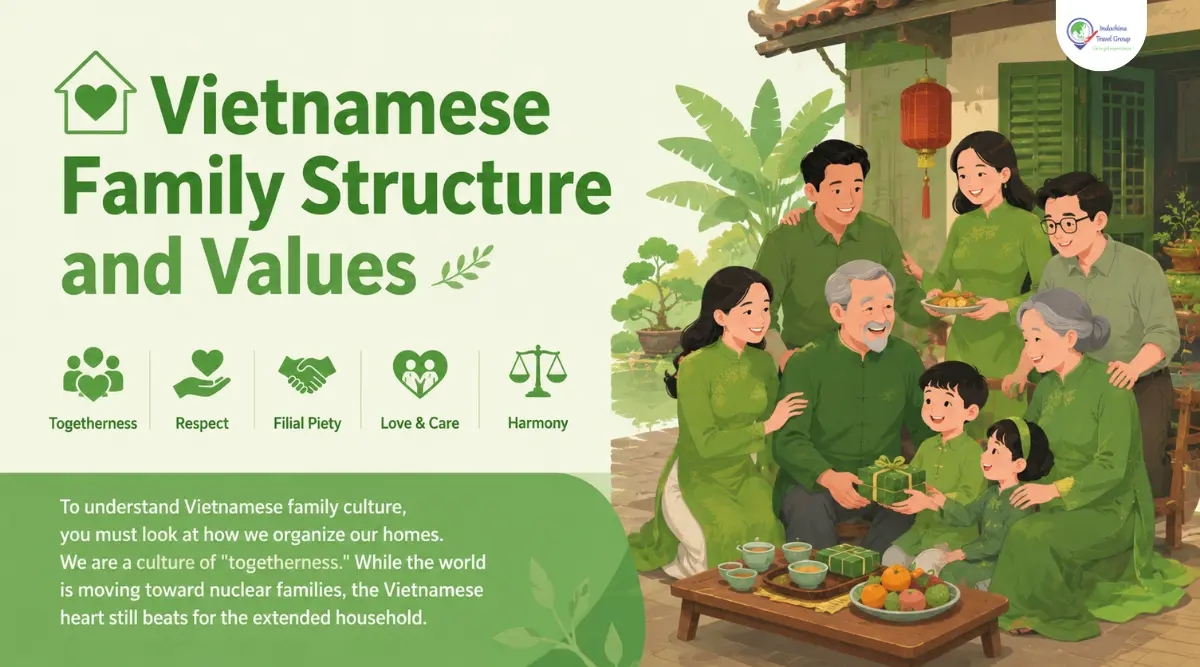
In the traditional sense, we follow the “Tứ đại đồng đường” (four generations under one roof) pattern. This usually includes grandparents, parents, their sons, the sons’ wives, and children. Now urban life in places like Saigon has pushed us toward three-generation homes, but the emotional bond remains just as tight. Grandparents are not sent to retirement homes; they are the “living treasures” who look after the children while parents work, ensuring that traditional wisdom is passed down directly.
Filial piety
If there is one word you must remember, it is “Hiếu.” This is the unconditional love and respect children owe their parents. It begins in the cradle. We teach our children that their success in school or work is not just for them – it is a way to pay back the “debt of birth and raising” (công sinh thành). Evidence of this is seen when young professionals send a portion of their first salary home to their parents as a gesture of gratitude.
Mutual obligation and family welfare
In our culture, if one person “makes it big,” the whole family “makes it big.” Strong members have a moral obligation to support the weaker ones. However, this also means that if one member behaves badly, the entire family feels the “shame” (mất mặt). This collective responsibility acts as a powerful informal law that keeps our communities safe and orderly.
Gender Roles and Family Hierarchy in Vietnam
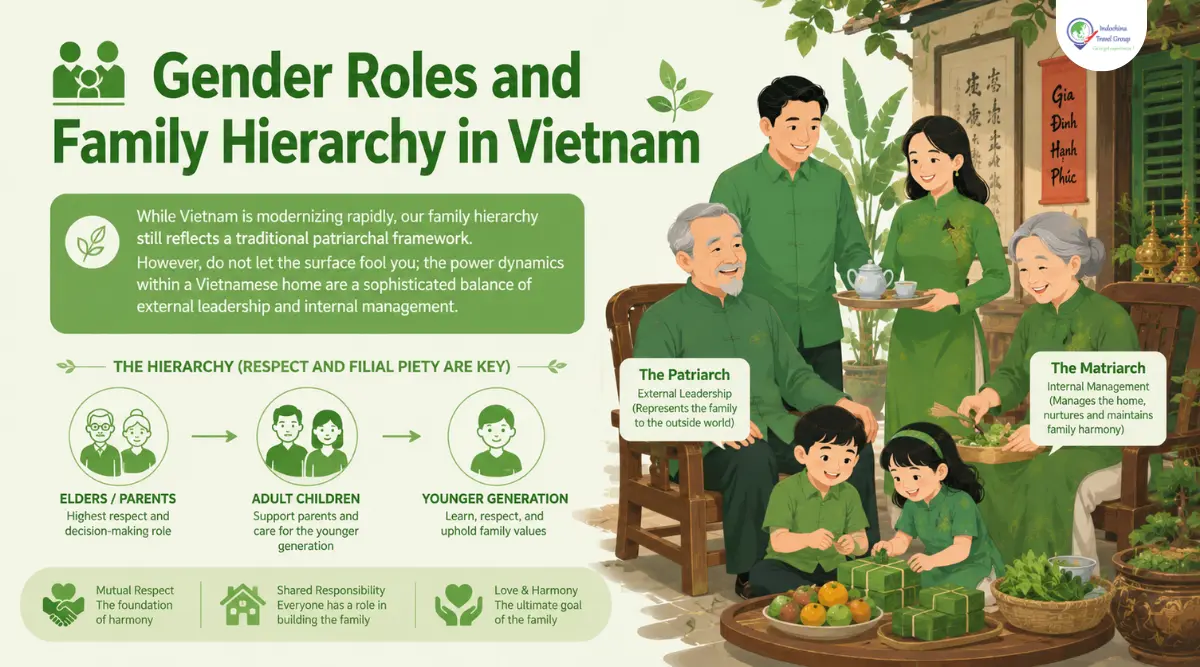
While Vietnam is modernizing rapidly, our family hierarchy still reflects a traditional patriarchal framework. However, do not let the surface fool you; the power dynamics within a Vietnamese home are a sophisticated balance of external leadership and internal management.
Patriarchal system and the man’s role
The father or eldest male is the official representative of the family in community matters. He is responsible for the “heavy” decisions – finances, construction, and continuing the lineage. There is an immense amount of pressure on Vietnamese men to be the “pillar” (trụ cột) of the house, and they take great pride in their ability to provide for multiple generations.
Woman’s role and the “General of the interior”
The term “Nội trợ” translates to “General of the Interior.” This is a role of high respect. The wife manages the “internal” world: she handles the daily budget, cares for the in-laws, and ensures the children are well-educated. We believe in the “Four Virtues” for women: Công (hard work/skill), Dung (beauty/grace), Ngôn (refined speech), and Hạnh (excellent conduct).
Roles of children and discipline
Children are the future of the family’s reputation. Older children are expected to be role models, often helping to cook, clean, and tutor their younger siblings. Discipline is taken seriously; it is viewed as a parent’s duty to ensure their child grows up with “virtue” (đức).
Marriage and Family Life
In Vietnam, marriage is not just the union of two individuals; it is the alliance of two families. This perspective shapes everything from the wedding ceremony to the low divorce rates found in rural provinces.
Marriage is considered a vital milestone for social stability, often involving parental input – especially in rural areas. Despite modern influences, family values remain the guiding force in marital life, emphasizing longevity and the preservation of the family name over individual desires.
In the countryside, the “Matchmaker” or parental introduction is still common, though “love marriages” are the standard in cities. When you visit a Vietnamese village, you will see that a wedding is a multi-day event involving the entire commune. This communal involvement serves as a reminder that the couple is now part of a larger social fabric. While divorce is becoming more common in urban HCMC, the social stigma remains significant because of the value placed on “harmony”.
Ancestor Worship and Vietnam Local Customs
If you walk into any Vietnamese home, the first thing you will see – usually in the most prominent spot – is the ancestor altar. This is the spiritual heart of the house. We believe that our ancestors do not “leave” us; they transition to another realm from which they continue to protect and guide their descendants.
Cultural Essence: Ancestor worship is the most pervasive of all Vietnam local customs, manifesting in the maintenance of elaborate home altars and regular rituals. It instills a deep sense of continuity and respect for elders, ensuring that the deceased are treated as active, albeit invisible, members of the family.
The altar is decorated with incense, fresh fruit, flowers, and photos of the departed. On the first and fifteenth days of each lunar month, as well as on death anniversaries, the family offers food and burns “votive paper” (hell bank notes, paper cars, or clothes) to ensure the ancestors have everything they need in the afterlife. As a traveler, you should never point at an altar or touch the items on it, as this is considered deeply offensive to the spirits of the house.
Major Festivals and Holidays
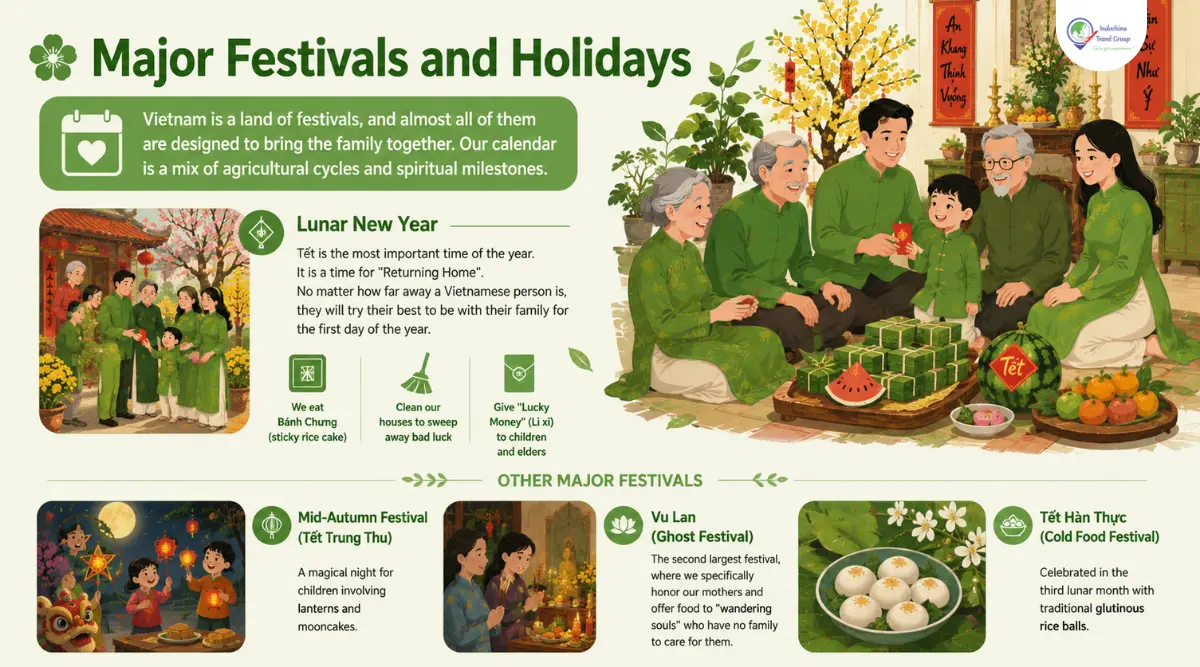
Vietnam is a land of festivals, and almost all of them are designed to bring the family together. Our calendar is a mix of agricultural cycles and spiritual milestones.
Lunar New Year
Tết is the most important time of the year. It is a time for “Returning Home”. No matter how far away a Vietnamese person is, they will try their best to be with their family for the first day of the year. We eat Bánh Chưng (sticky rice cake), clean our houses to sweep away bad luck, and give “Lucky Money” (Lì xì) to children and elders.
Other major festivals
- Mid-Autumn Festival (Tết Trung Thu): A magical night for children involving lanterns and mooncakes.
- Vu Lan (Ghost Festival): The second largest festival, where we specifically honor our mothers and offer food to “wandering souls” who have no family to care for them.
- Tết Hàn Thực (Cold Food Festival): Celebrated in the third lunar month with traditional glutinous rice balls.
Daily Etiquette and Vietnam Local Customs for Travelers
Navigating the social landscape of Vietnam requires a bit of local “finesse.” Our customs are designed to preserve “Face” and show respect to the hierarchy of age and status.
Greetings and respect
When greeting someone older than you, a slight bow of the head is essential. In 2026, many locals use a handshake, but the traditional way—placing your hands together or gently using two hands to grasp one—is the ultimate sign of respect. Always use the phrase “Cảm ơn” (Thank you) with a smile.
Dress and modesty
Vietnam is a tropical country, so light, well-ventilated clothing is practical. However, we are also conservative. When visiting temples, pagodas, or even a local family’s home, you should ensure your shoulders and knees are covered. Avoid tank tops or very short shorts unless you are at a beach resort.
The “shoes-off” rule
This is a non-negotiable Vietnam local custom. The floor of a home is where children play and where the family often eats. Entering with shoes is seen as bringing the “dirt of the world” into a sacred space. Look for the pile of shoes at the door—it is your cue to do the same.
Dining etiquette
Vietnamese meals are communal. You will have a small bowl of rice and use your chopsticks to take food from shared plates in the center.
- Wait for the eldest: Do not pick up your chopsticks until the eldest person at the table has started.
- Two hands: When passing a dish or a glass, always use both hands.
- Chopstick care: Never leave your chopsticks sticking vertically out of your rice bowl; this looks like the incense burned for the dead and is a major “taboo.”
Public behavior and affection
We are not a “PDA” (Public Display of Affection) culture. While it is common to see friends of the same sex holding hands or hugging, romantic physical affection between men and women should be kept private.
Bargaining and tipping
Bargaining is a social game in our markets. Do it with a smile and a sense of humor. Tipping is not traditional, but at Indochina Travel Group, we suggest leaving a small amount (around 10%) for exceptional service in restaurants or for your hard-working tour guides.
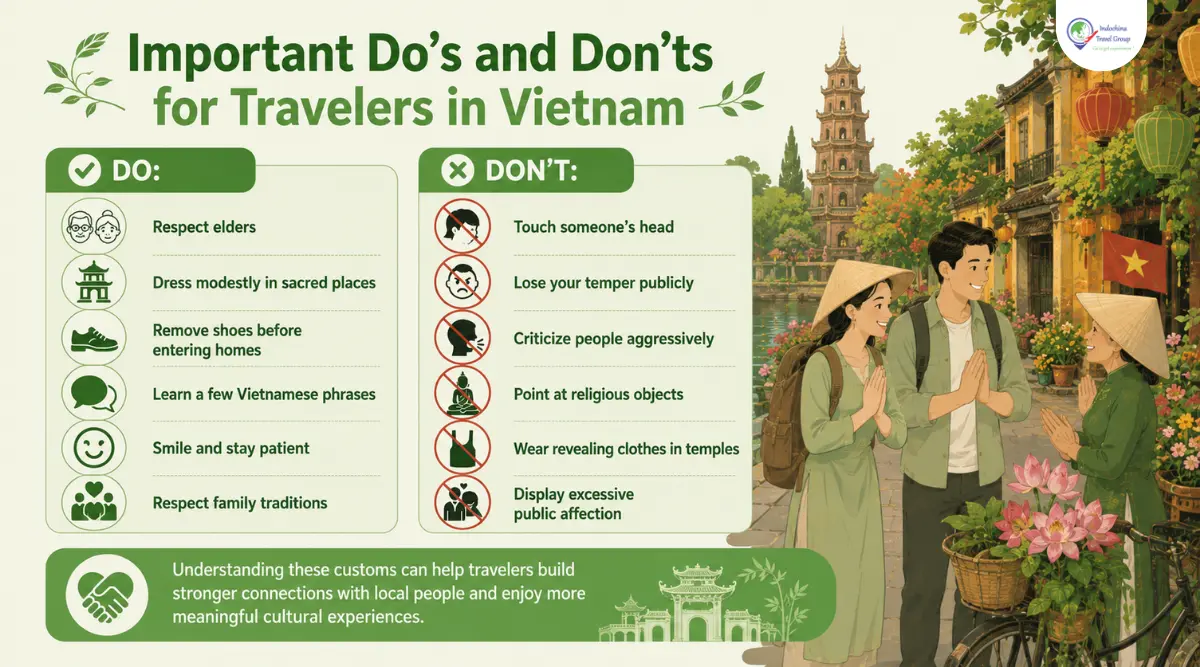
Important Do’s and Don’ts for Travelers in Vietnam
Do:
- Respect elders
- Dress modestly in sacred places
- Remove shoes before entering homes
- Learn a few Vietnamese phrases
- Smile and stay patient
- Respect family traditions
Don’t:
- Touch someone’s head
- Lose your temper publicly
- Criticize people aggressively
- Point at religious objects
- Wear revealing clothes in temples
- Display excessive public affection
Understanding these customs can help travelers build stronger connections with local people and enjoy more meaningful cultural experiences.
How Travelers Can Respect Vietnamese Culture
The best way to experience Vietnam is not only through sightseeing but through cultural understanding. Travelers who show curiosity and respect often receive incredible warmth and hospitality from Vietnamese people. Whether sharing tea with a local family, visiting a countryside village, or joining a traditional festival, cultural awareness creates deeper and more authentic travel experiences.
At Indochina Travel Group, we believe meaningful travel begins with understanding local people and traditions. Our Vietnam cultural tours and tailor-made itineraries are designed to help travelers experience not only famous destinations but also the cultural soul of Vietnam. Whether you are exploring Hanoi’s historic neighborhoods, visiting mountain villages in Sapa, cruising through Halong Bay, or discovering the Mekong Delta, cultural respect will always enrich your journey.
Conclusion
Understanding Vietnamese family culture and local customs allows travelers to experience Vietnam beyond its landscapes and attractions. Respect for elders, communal values, ancestor worship, and social harmony are all deeply woven into Vietnamese daily life. By learning these traditions and practicing respectful etiquette, travelers can build more genuine connections and discover the true spirit of Vietnam.
At Indochina Travel Group, we create journeys that go beyond sightseeing. Our tours are designed to help travelers experience authentic culture, local hospitality, and meaningful connections throughout Vietnam and Southeast Asia. Explore our Vietnam Tour Packages and discover the heart of Vietnam through its people, traditions, and stories.
Recommended Tours

Group Tour
Hanoi – Sapa – Danang – Ho Chi Minh 10D9N
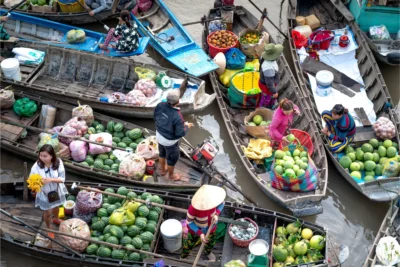
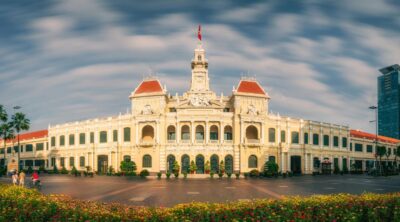
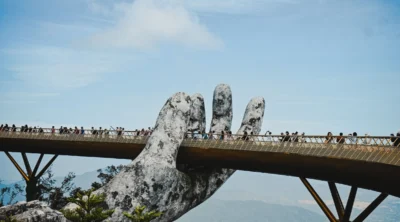
Hanoi - Sapa - Fansipan Peak - Ninh Binh - Halong Bay Overnight On Cruise - Danang - Hoi An Ancient Town - Bana Hills - Golden Bridge - Ho Chi Minh - Cu Chi Tunnels - Mekong Delta
Private Tour
Ho Chi Minh – Cu Chi Tunnels – Mekong Delta 4D3N
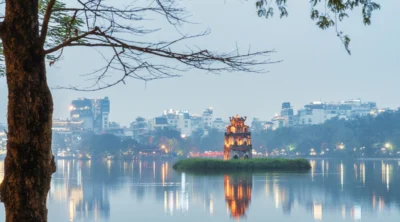
Ho Chi Minh - Cu Chi Tunnels - Mekong Delta
Private Tour
Vietnam Highlights 7 Days 6 Nights Tour
Hanoi Arrival - Hanoi City Tour - Ha Long Bay Day Cruise - Fly to Da Nang - Coconut Village - Hoi An Ancient Town - Ba Na Hills - Golden Bridge - Fly to Ho Chi Minh City - Cu Chi Tunnels - Mekong Delta - Departure
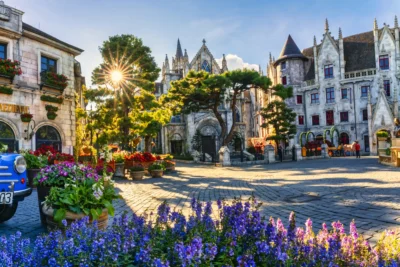
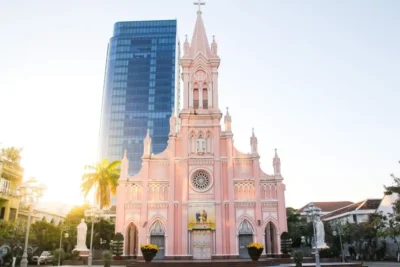
5D4N DELIGHT DANANG TOUR (DANANG – BA NA HILL FRENCH VILLAGE – HOI AN – HUE CITY) (SEAT IN COACH)

Private Tour
Vietnam Panorama Discovery 16D15N
Ho Chi Minh - Cu Chi Tunnels - Mekong Delta Tour - Can Tho - Da Lat - Nha Trang - Hoi An - Da Nang - Hue - Hanoi - Halong Bay Overnight On Cruise