The best time to visit Sapa is from March to May and September to November, when conditions are generally favorable for mountain sightseeing and village exploration. September is particularly rewarding for golden rice terraces, while December to February offers a distinctive winter experience. Located approximately 1,500 meters above sea level in Northern Vietnam, Sapa enjoys a cooler mountain climate than Hanoi and other lowland destinations. However, rainfall, fog and changing temperatures can significantly influence your experience. At Indochina Travel Group, we recommend choosing your travel dates according to the landscapes and activities you want to enjoy.
Sapa weather at a glance
| Travel period | Typical conditions | Best for |
| March – April | Mild, increasingly warm | Village visits and spring scenery |
| May – June | Warmer, increasing rainfall | Water-filled rice terraces |
| July – August | Cool, humid and rainy | Green rice fields |
| September | Mild, gradually improving weather | Golden rice terraces |
| October – November | Cooler, decreasing rainfall | Mountain sightseeing |
| December – February | Cold, sometimes foggy | Winter landscapes and cultural visits |
September is an excellent choice for rice-field scenery, while April and October offer attractive conditions for general sightseeing.
When is the best time to visit Sapa?
Spring and autumn are generally the best seasons to visit Sapa.
- March and April bring increasingly comfortable temperatures, spring flowers and opportunities to explore mountain villages.
- September and October are particularly attractive for their agricultural landscapes and cooler weather. However, rice harvesting dates vary between villages and elevations.
- November becomes colder but generally receives less rainfall.
If your itinerary covers several destinations, our best time to visit Vietnam guide explains how mountain weather differs from conditions along the coast and in Southern Vietnam.
Sapa weather by month: Temperature and rainfall
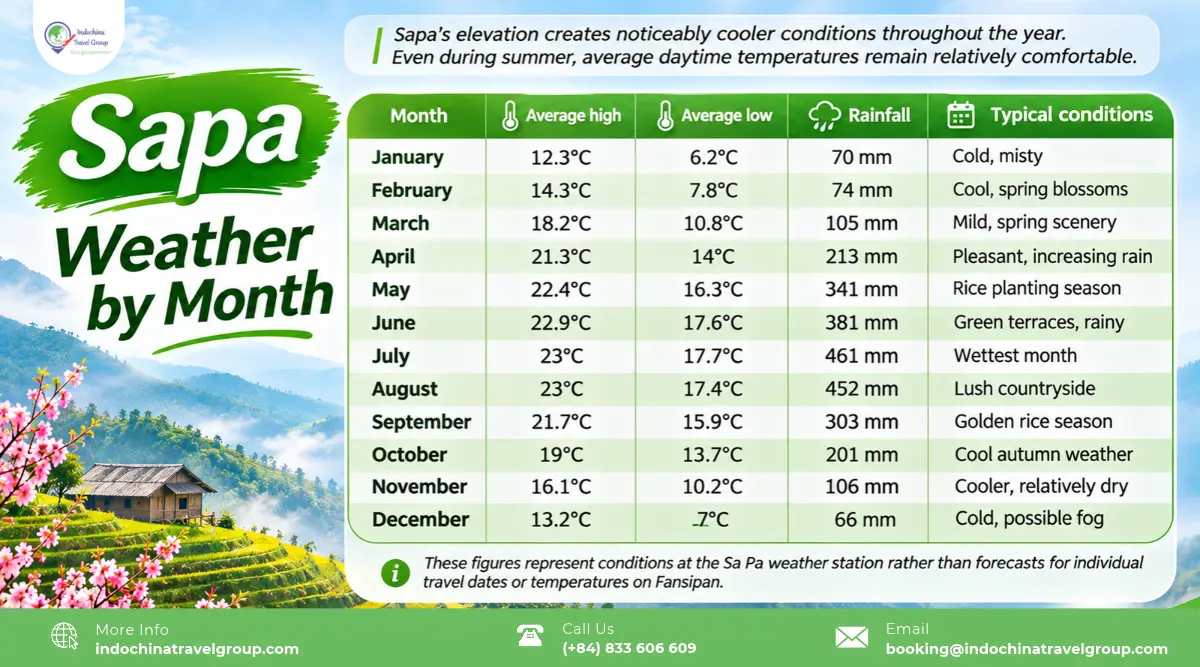
Sapa’s elevation creates noticeably cooler conditions throughout the year. Even during summer, average daytime temperatures remain relatively comfortable.
| Month | Average high | Average low | Rainfall | Typical conditions |
| January | 12.3°C | 6.2°C | 70 mm | Cold, misty |
| February | 14.3°C | 7.8°C | 74 mm | Cool, spring blossoms |
| March | 18.2°C | 10.8°C | 105 mm | Mild, spring scenery |
| April | 21.3°C | 14°C | 213 mm | Pleasant, increasing rain |
| May | 22.4°C | 16.3°C | 341 mm | Rice planting season |
| June | 22.9°C | 17.6°C | 381 mm | Green terraces, rainy |
| July | 23°C | 17.7°C | 461 mm | Wettest month |
| August | 23°C | 17.4°C | 452 mm | Lush countryside |
| September | 21.7°C | 15.9°C | 303 mm | Golden rice season |
| October | 19°C | 13.7°C | 201 mm | Cool autumn weather |
| November | 16.1°C | 10.2°C | 106 mm | Cooler, relatively dry |
| December | 13.2°C | 7°C | 66 mm | Cold, possible fog |
These figures represent conditions at the Sa Pa weather station rather than forecasts for individual travel dates or temperatures on Fansipan.
Sapa weather in March and April
Sapa weather in March becomes noticeably warmer as winter gradually ends. Average daytime highs reach approximately 18°C, although mornings and evenings remain cool.
April offers warmer conditions, with average highs around 21°C. Rainfall increases, but pleasant weather windows make village exploration and countryside sightseeing rewarding. Spring flowers and renewed vegetation add color to the mountain landscapes. These months are particularly suitable for first-time visitors who prefer comfortable temperatures over winter scenery or summer rice fields.
Our Hanoi – Sapa 5-day tour combines mountain landscapes, Cat Cat Village and a weather-dependent Fansipan excursion.
Best time to visit Sapa rice fields
The appearance of Sapa’s rice terraces changes throughout the agricultural season.
| Rice season | Typical period | Landscape |
| Water-pouring season | May – June | Reflective, water-filled terraces |
| Green rice season | June – August | Lush green mountainsides |
| Golden rice season | Late August – September | Ripening golden terraces |
| Post-harvest season | October onward | Harvested fields and mountain scenery |
September is generally the best month to visit Sapa for golden rice fields, particularly around Muong Hoa Valley, Lao Chai and Ta Van. Early October may still offer golden scenery in some locations, but many fields could already have been harvested.
We recommend checking local harvest updates before traveling rather than relying solely on fixed calendar dates. For more information about the villages and landscapes, explore our Sapa travel guide.
Sapa rainy season: July and August Weather
Sapa’s main rainy season generally extends from May to October, with July and August receiving particularly heavy rainfall.
Sapa weather in July remains relatively cool, with average highs around 23°C. However, monthly rainfall reaches approximately 461 mm. August offers similarly comfortable temperatures and lush rice terraces, but heavy rain remains common. Rain can reduce mountain visibility, affect road conditions and make countryside paths slippery. During prolonged heavy rainfall, travel disruptions are possible.
If visiting during summer, keep outdoor activities flexible and follow local weather warnings. Do not attempt mountain or countryside routes when authorities advise against travel.
Sapa weather in October
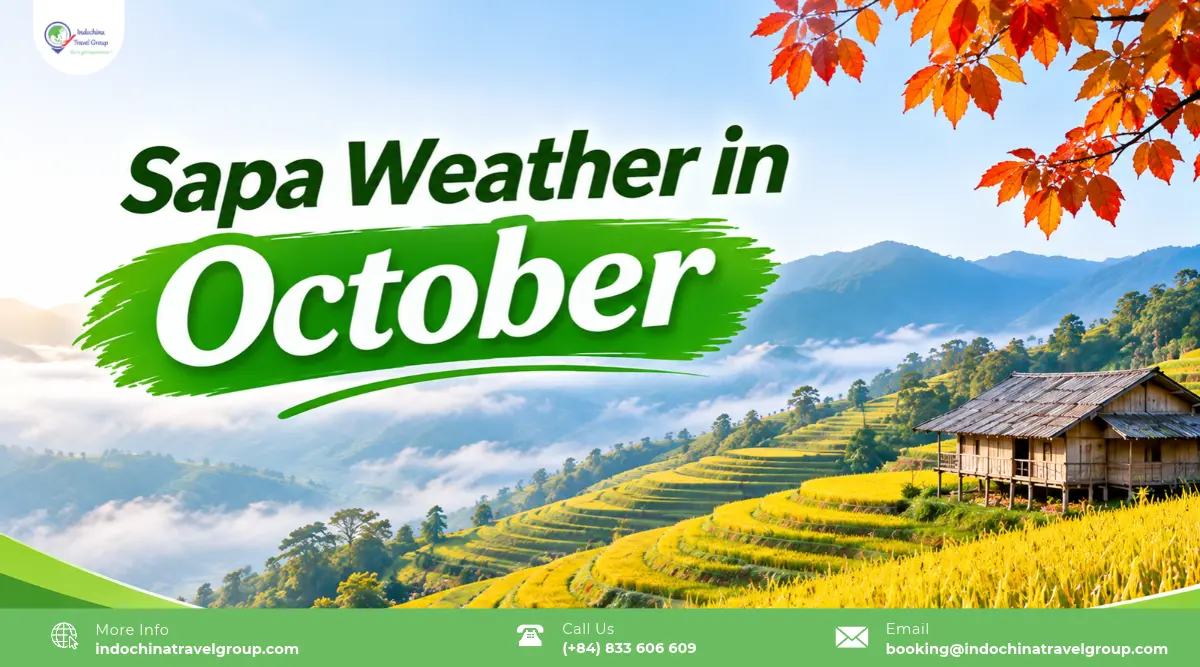
October is one of the most attractive months for travelers seeking cooler mountain weather. Average daytime highs reach approximately 19°C, while nighttime lows average around 14°C. Rainfall decreases compared with summer, although cloudy periods and showers remain possible.
October is suitable for village visits, mountain photography and exploring Muong Hoa Valley. However, travelers prioritizing golden rice fields should consider September instead, as harvesting may already be complete.
Sapa weather in December and January
Sapa weather in December
December in Sapa is cold, with average daytime highs of 13.2°C and nighttime lows around 7°C. Although monthly rainfall averages only 66 mm, fog, damp air and cold spells can make conditions feel considerably colder.
December is suitable for cultural sightseeing, local cuisine and peaceful mountain stays. However, clear valley views and colorful rice fields are less reliable. Choose accommodation with adequate heating and bring warm layers, a waterproof jacket, gloves and suitable footwear.
Sapa weather in January
January is typically the coldest month, with average lows around 6°C. Temperatures can fall further during strong cold spells. Frost and occasional snowfall are possible at higher elevations, particularly around Fansipan.
However, snow is uncommon in Sapa town and cannot be guaranteed for any specific travel date.
Best time to visit Fansipan

March – April and October – November are useful starting points for planning a Fansipan visit.
At more than 3,100 meters above sea level, Fansipan can be substantially colder than Sapa town. Clouds, strong winds and poor visibility may affect the experience regardless of the season.
During winter, frost and ice can occur at higher elevations. Check summit forecasts and cable car operating updates before visiting, and follow all local safety restrictions.
Best time to visit Sapa and Halong Bay
March – April and October – November generally offer a favorable balance for combining Sapa and Ha Long Bay. Spring provides increasingly mild mountain weather, while autumn brings cooler temperatures and generally improving conditions across Northern Vietnam.
However, Sapa’s mountain visibility and Ha Long Bay’s marine conditions require separate weather checks. Our Vietnam destination guide explains how these locations connect within a wider Northern Vietnam itinerary. For travelers interested in both mountain scenery and an overnight cruise, our Hanoi, Ha Long Bay and Sapa 6-day tour combines these experiences in one journey.
FAQs
What is the best month to visit Sapa?
September is excellent for golden rice terraces, while April and October are attractive for general sightseeing.
Is December a good time to visit Sapa?
Yes, if you enjoy cold mountain weather and winter landscapes. However, fog and low temperatures can limit outdoor experiences.
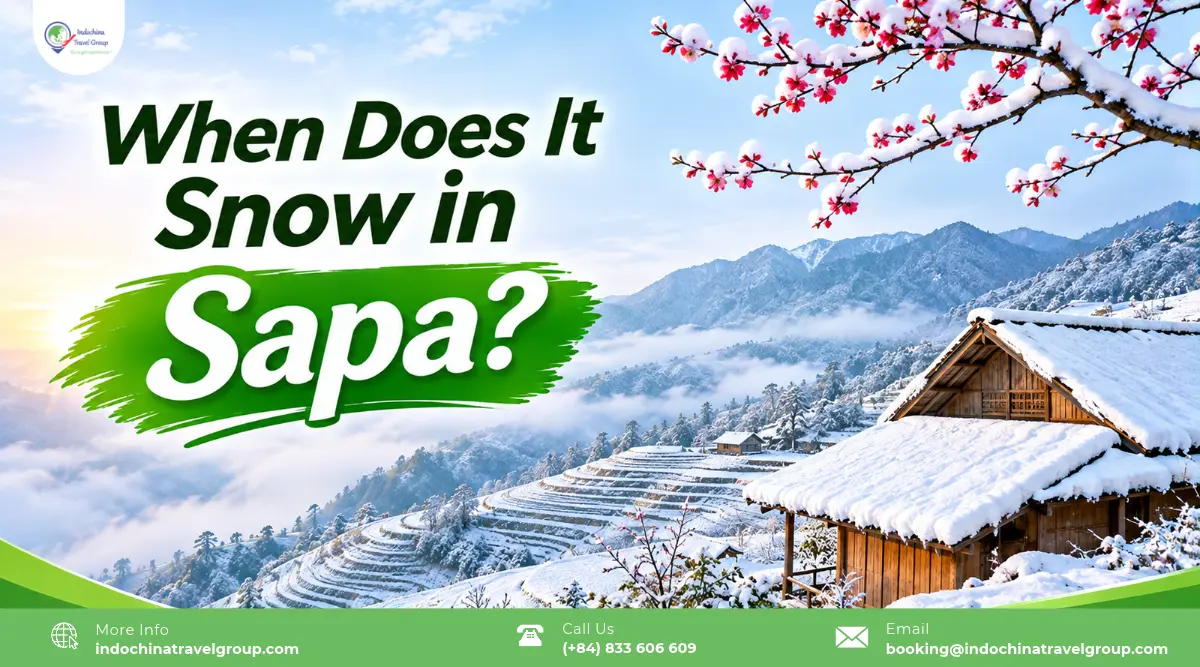
When does it snow in Sapa?
Snow occasionally occurs between December and February, particularly at higher elevations. It is never guaranteed.
How many days should you spend in Sapa?
Two to three nights provide useful flexibility for village visits, mountain sightseeing and changing weather conditions.
Conclusion
The best time to visit Sapa depends on your preferred experience. Choose spring for mild weather, September for golden rice terraces, autumn for mountain exploration or winter for cold-weather scenery. Explore our Vietnam tour packages to discover itineraries connecting Sapa with other remarkable destinations throughout Vietnam.